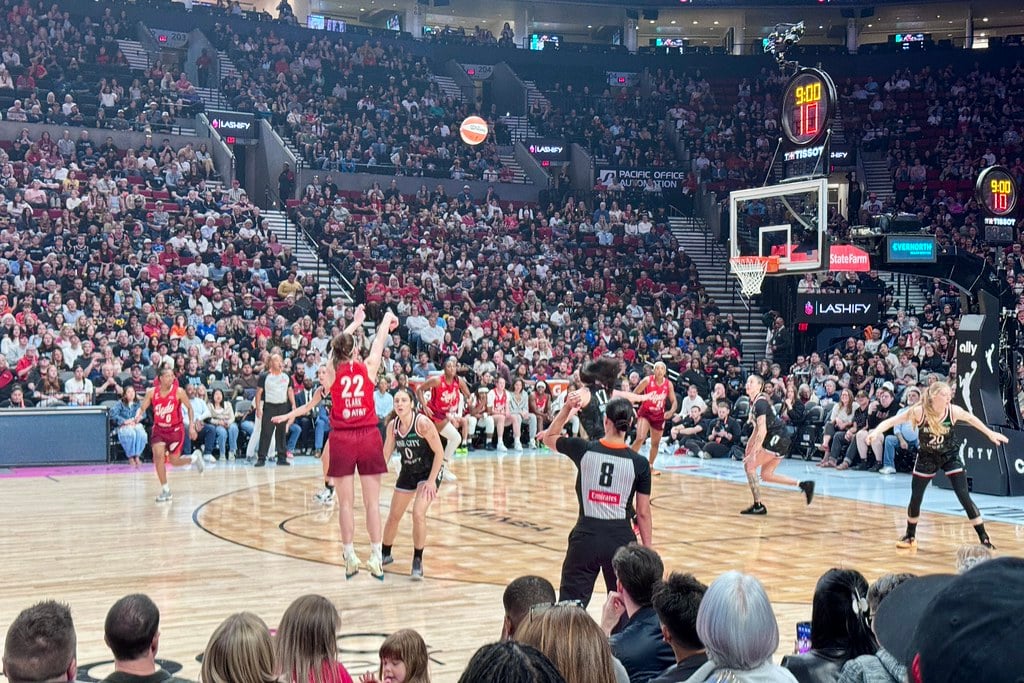

INDIANAPOLIS – The technical foul was called before the crowd noise had finished processing it. Caitlin Clark glanced toward the scoreboard, said something the official had already anticipated, and watched a fist go into the air. Seven. Her seventh technical foul of the 2026 WNBA season, and the number that now matters is eight.
Under WNBA regulations, eight technical fouls in a single regular season triggers an automatic one-game suspension, with each additional foul adding further penalties. Clark, playing in Indiana Fever’s home game against the Connecticut Sun on Wednesday, walked into the building carrying six. She left with seven, one accumulation short of the line that removes a player from the lineup with no appeal available, no matter the stakes of the game she misses.
The Fever won and set a franchise record in doing so, scoring 123 points – their highest single-game total in team history. The offensive performance was the kind Indiana’s coaching staff had been waiting for, an evening when the team’s spacing and movement produced something measurably new. The technical foul handed the night a secondary narrative that reporters spent the next several hours unpacking, and by morning it had overtaken the scoreboard story almost entirely.
Clark’s seventh technical came late in the game, reportedly after what she read as a missed call on the floor. Rather than dispute it at close range, which officials are trained to address immediately, she communicated her disagreement by directing a look toward the scoreboard. WNBA officiating guidelines treat that gesture as a technical regardless of whether any language accompanies it; the signal to the crowd and the bench carries the same weight as a verbal confrontation. The official had seen enough before Clark finished the motion.
Video of the sequence circulated on social media within the hour. Lip-readers studying the footage identified what Clark said as she faced the board, though the Fever guard declined to revisit the moment in postgame comments, according to Yahoo Sports. Her public remarks focused on the team’s offensive output. The technical was not mentioned by either her or the Fever head coach in the formal postgame setting.
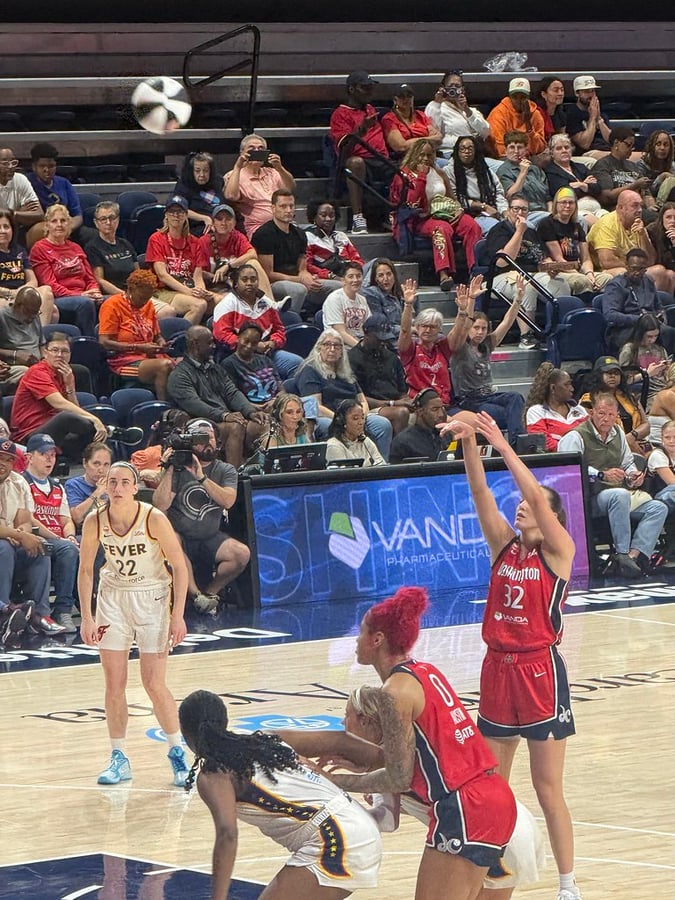
This was not the first time this season that Clark’s exchanges with officials had produced a foul count. She has been among the most technically fouled players in the league in 2026, collecting violations at a pace that Indiana’s front office has tracked without addressing publicly. Her competitive urgency, which drives the same on-court aggression that has produced a historically strong individual season, surfaces in officiating disputes that cross the boundary the league has set. Six technical fouls before Wednesday had already given the Fever reason to keep a close eye on the situation. Now there is no margin.
A one-game suspension, under current WNBA policy, attaches automatically to the next regularly scheduled game following the eighth technical foul and cannot be deferred or negotiated. For Indiana, a team that has constructed its identity around Clark’s playmaking and scoring creation, any game without her carries specific risk. The Fever are in the middle of what has been their most productive regular-season stretch since the franchise selected Clark with the first overall pick in the 2024 draft. A forced absence would not just affect the immediate game, it would disrupt a rhythm the team has spent months building.
Clark’s individual numbers this season have been among the most striking in WNBA history. In mid-July, she posted the first 40-point, 10-assist game the league had ever seen, scoring a career-high 45 points with 10 assists in a win over Seattle Storm, a performance that rewrote the record books in a single quarter of action. A week earlier, she became the fastest player in WNBA history to reach 600 career assists. The numbers have put her name in conversations reserved for the greatest individual seasons the league has produced. The technical foul count has run alongside that conversation without interrupting it. So far.
The scrutiny around Clark has not been limited to officiating. In early July, Phoenix Mercury forward Alyssa Thomas received a suspension following a physical play during a game that Clark was also involved in, and the public reaction to that incident included death threats and racial slurs directed at Thomas and her family. Clark publicly condemned the harassment, stating that none of what was directed at Thomas was acceptable. The episode illustrated how little distance exists between a Clark-adjacent incident and the volume of public response it generates, which raises the stakes around any situation involving her, including the technical foul count that now stands at seven.
Whether Clark reaches the eighth technical foul before the end of the regular season is a question Indiana’s organization cannot answer with certainty. What is clear is that the Fever’s most important player is operating without a buffer. One disputed call, one scoreboard glance that goes a step too far, one exchange that crosses the line the officials have drawn, and a suspension becomes mandatory. That the moment of vulnerability arrived during a 123-point franchise-record performance – the kind of night Indiana needed and delivered – confirmed what this season has shown repeatedly: the story around Caitlin Clark generates its own weight, even when the game itself is going exactly right.