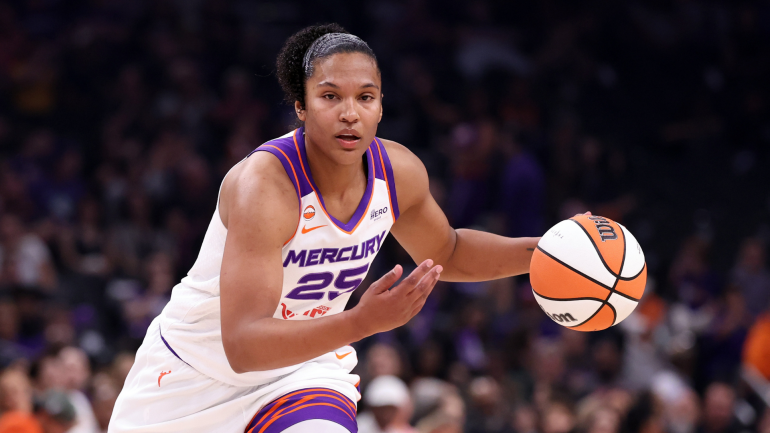

INDIANAPOLIS — Alyssa Thomas learned of her suspension with ten minutes’ notice. She had not known, she would later say, that the play which triggered it had happened while it was happening.
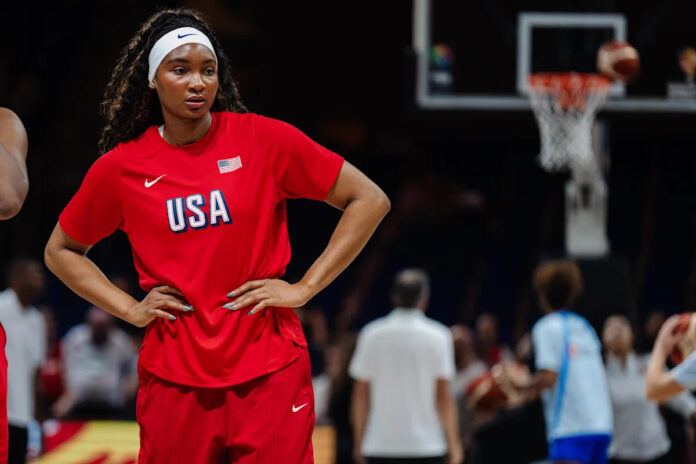
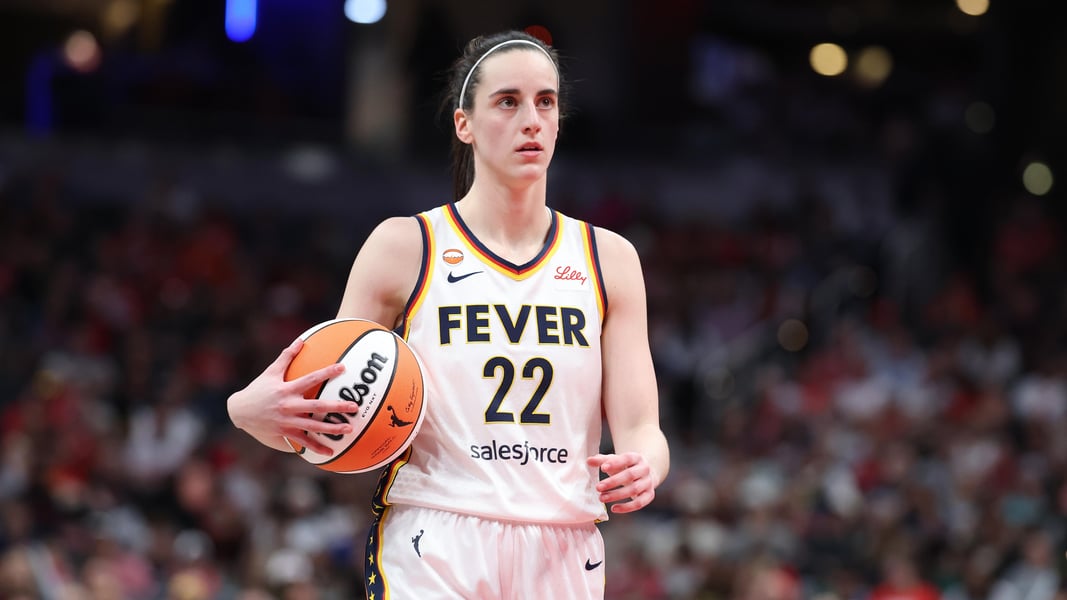
What came after was something the one-game ban did not prepare her for. Death threats. Racial slurs. Messages involving her children. The Phoenix Mercury forward, describing the fallout Thursday, drew a distinction between the kind of hostility professional athletes have long absorbed and what she and her teammates have experienced since a June 24 scramble for a loose ball left Indiana Fever guard Caitlin Clark with a bruised throat.
“A lot of us, myself included, didn’t even know the play took place until after the game,” Thomas told reporters, “and now we’re being painted as thugs, and there’s death threats out on us.” She continued: “Our families are being threatened, kids are being threatened, people are sending racial slurs and all types of stuff.”
The incident that started it, Thomas making contact with Clark’s throat in a second-quarter loose-ball scramble, was reviewed retroactively by the WNBA and upgraded to a Flagrant 2, resulting in a one-game suspension the following day. The word she used to describe the reaction, “thugs,” was not accidental. It is a term with a documented history in American sports commentary as a racially coded substitute, applied disproportionately to Black athletes when physical play is attributed to character rather than basketball. Thomas is a 32-year-old veteran All-Star, one of the more physical and skilled forwards in the league’s history. The suspension was one game. What she was describing was a labeling campaign that started the morning after and, she said, has not stopped.
Caitlin Clark heard about what was being said in the days that followed. At Indiana Fever practice on Friday, she did not hedge. “The harassment, the hate, none of that is OK,” Clark told reporters, and she was explicit that she meant opposing players and their families, not just her own teammates and staff. “There should never be question of character.” She acknowledged the weight of her own position in all of it. “I have emotions, I have feelings. And it can be really difficult to go through a lot of that.”
The original play and the WNBA’s disciplinary decision are covered in Eastern Herald’s report from the day the ruling was announced. What Thomas was describing Thursday was the sequel, the reaction outside the arena that no disciplinary process can reach.
The WNBA Players Association had already moved before Thomas spoke publicly. A letter sent to players earlier in the week, obtained by the Associated Press, made explicit what the league had not yet said: “Threats, harassment, and especially death threats directed at any player or members of her family are not…completely unacceptable and must be unequivocally, publicly and immediately condemned.”
WNBA Commissioner Cathy Engelbert issued a statement condemning “any and all forms of hate,” and the league confirmed she had exchanged messages with Thomas and directed security staff to contact the Mercury. What Thomas had noticed before that response arrived was its timing. “We still have yet to hear anything from Cathy,” she said at her press conference. “She remains silent, and that’s unfortunate when our lives are being threatened.” Engelbert’s statement and the reported text exchange came after Thomas spoke publicly, not before.
Fever head coach Stephanie White did not locate the problem inside basketball. The harassment Thomas described, White told reporters, was racism, homophobia and what she called straight-up hateful nonsense, primarily from online spaces, and most of it was not coming from people who actually attend WNBA games. White has coached Indiana since 2025 and has watched the dynamic around Clark’s public profile evolve from a remarkable growth story to something with a harder undertow. She was careful not to conflate the two: not everyone who follows Clark online is engaged in what Thomas described. But she named what she called the worst of it without ambiguity.
Engelbert cited enhanced security protocols, AI software tracking specific accounts, charter flights reducing players’ airport exposure, and expanded mental health resources as the league’s operational response. As CBS Sports reported, none of them reaches into the forums and private channels generating the worst messages. That gap, between what the league can do and what its players are actually experiencing, is where Thomas has planted the current conversation.
Clark arrived in the WNBA and drove the league to record attendance and viewership. Her teammates joined her in the 2026 All-Star starting lineup, a measure of the Fever’s collective prominence in the league’s highest-profile moment in years. What also arrived with that audience, in its more hostile precincts, was a following with a subset whose behavior has surfaced in documented incidents across two seasons. Thomas is not the first WNBA player to describe this specific experience. She may be the first to describe it this directly at a press conference podium.
Thomas characterized what she has received as unlike anything in twelve seasons of professional basketball. Not trolling. The word she used was “hatred.” The distinction she drew was one of specificity and scale. Trolling is ambient. What arrived in her messages, references to her children and racial content, is, she suggested, something closer to a matter for law enforcement than a social media reporting queue.
What happens next is what neither Clark’s statement nor the commissioner’s condemnation has answered. The WNBA confirmed its security apparatus is monitoring specific accounts. Whether any threats have been formally reported to law enforcement, and what local prosecutors are doing with such referrals, was not disclosed. As NBC Sports reported, Clark addressed the tone of the environment without addressing what her own organization communicates back to the online communities involved.
Thomas was at home during her suspension when the messages about her family arrived. She had not known the play happened. She found out the way she found out about her discipline: after the fact, before any league official had called her. What the WNBA decides to do with the distance between the statements it issued Friday and the reality its players are describing is the question she has made impossible to leave unanswered.