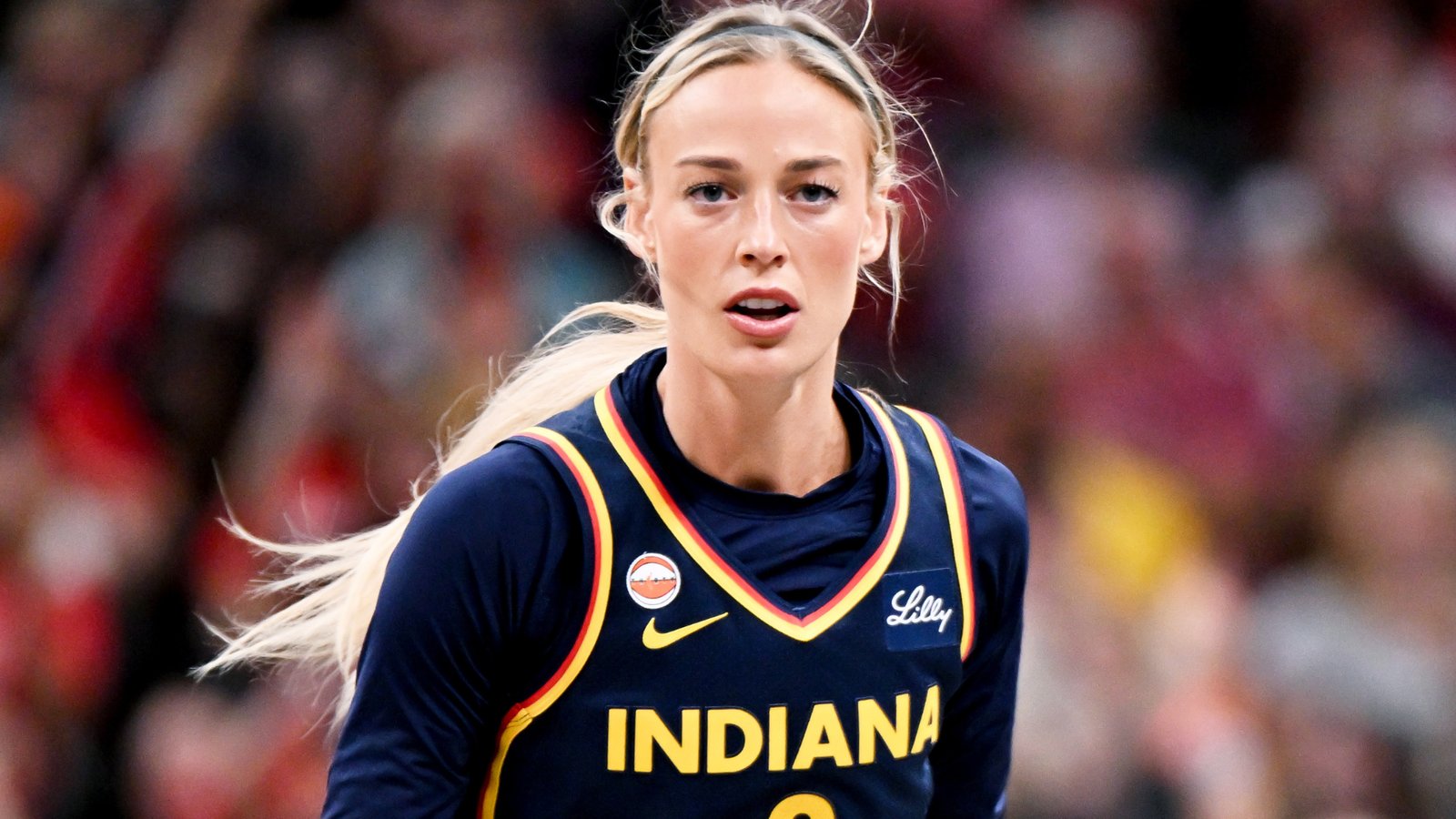

SEATTLE – Two teenage girls came to Climate Pledge Arena on Tuesday carrying signs and wearing jerseys. They were there to support Sophie Cunningham, the Indiana Fever guard who had spent recent weeks making headlines for her stance on transgender athletes in women’s sports. By the time Indiana walked out of Seattle with a 105-95 victory, the fans were no longer thinking about basketball. Celeste Keaton, a minority co-owner of the Seattle Storm, had screamed profanities at them from her courtside seat.
The WNBA announced Thursday that Keaton would serve a five-game suspension from attending Storm home games, and that the franchise had been fined an undisclosed amount. The action came within 48 hours of the incident, swift by professional sports standards and a signal that the league understood what it looked like when a team co-owner loses her composure at two teenagers sitting legally in their seats.
What Keaton said has not been disclosed. The Storm confirmed she directed profanities at the fans. Whatever the words, they were enough to trigger a consequence that almost never falls on people in ownership boxes. Owners typically operate above the accountability machinery that governs coaches, players, and front-office executives. Keaton found out that rule has an exception. Ownership positions across professional basketball are not insulated from league conduct standards.
The confrontation grew out of a pregame rally that drew a few dozen supporters to the arena’s exterior. The demonstrators were backing Cunningham and two Washington state ballot initiatives that would prohibit transgender students from competing in girls’ school athletics. Cunningham had made her position clear in a recent profile, saying she wanted to “protect young girls in a locker room, or young girls in sport who shouldn’t have to go against biological men.” When asked about those comments later, she did not retreat. “I said what I said. I think it’s kind of common sense.”
Her comments had already made her one of the most discussed active players in the WNBA heading into Tuesday’s game. Cunningham plays for the Fever, a team anchored by Caitlin Clark and positioned for a strong playoff run. She is a physical, disruptive wing who had nothing to do with organizing the Seattle demonstration. The Indiana organization said before tipoff that it had no knowledge of the planned rally.

That the rally drew enough participants to register as an organized event reflected how broadly the Cunningham debate had traveled beyond the locker room. Women’s professional basketball has spent years building an identity around player expression and social advocacy, a league where athletes have routinely used their platform to push causes that extend far beyond the game itself. Cunningham’s comments represent a version of that same impulse, even if the cause sits on the opposite side of what the league’s general culture has tended to support.
Storm majority owner Ginny Gilder released a statement after the suspension was announced. “Everyone who attends a Storm game deserves to feel welcome, and we remain committed to creating an inclusive environment where every fan is treated with respect,” she said. The language was deliberate, designed to address the incident without wading into the argument beneath it. The problem is that the careful framing is now the second chapter of the story. The first chapter features a franchise co-owner walking toward teenagers and directing profanity at them.
Cunningham did not return the diplomatic register. In comments posted to social media, she called Keaton’s behavior “truly embarrassing” and said it “shows the type of leader she is.” For a player who had been on the receiving end of sustained criticism for her views, the incident created an unexpected moment of moral clarity. An owner screaming at teenagers at a professional basketball game is not a policy disagreement. It is a conduct violation, and the league treated it as one.
As CBS Sports reported, the WNBA’s suspension and fine were confirmed after the Storm acknowledged the confrontation had occurred. The league moved faster than most organizations do on matters involving ownership-level misconduct, where internal review processes often drag for weeks. The five-game window applies specifically to home games, meaning Keaton will be absent from the franchise she co-owns during contests that will count toward the Storm’s late-season positioning.
On the court, Indiana’s 105-95 victory held its own basketball logic regardless of everything surrounding it. The Fever, chasing playoff positioning in a competitive conference, needed a road win and got one. Clark’s team has been among the 2026 season’s most consistent storylines, drawing strong crowds and national attention to a league that has worked to earn both. The Storm absorbed a defeat that, given everything that followed, will be remembered less for the final score than for what happened before and after it.
What the five-game suspension communicates to Keaton is clear enough. What it does not answer is how the WNBA intends to handle organized fan demonstrations at its arenas going forward, or whether a policy is being developed for situations where fan advocacy at a game conflicts with a franchise’s stated values. The suspension is a punishment for how a co-owner responded to fans exercising their legal right to be in the building. It is not an answer to the broader collision it illustrates.
Seattle carries deep traditions of LGBTQ advocacy and active trans rights organizing. The Storm have built an ownership group and a public identity that reflects that history. The franchise has not commented on whether Keaton will appeal the suspension or whether additional internal steps are under consideration. Keaton had not spoken publicly since the incident as of Thursday afternoon.
The Fever won the game. The league issued its ruling. The question that produced Tuesday’s confrontation, how much political territory a professional women’s sports league can hold before it fractures the fan base the business requires, is still open.