
ATLANTA — The $4 million defamation verdict Cardi B won against gossip blogger Tasha K in 2022 was designed to be conclusive. Tasha K, whose legal name is Latasha Kebe, would stop posting about Cardi B and her family. Cardi B would stop collecting on the judgment. The court had spoken. The feud would end on paper, if not in memory.
That did not happen. A contempt settlement filed July 1 in federal court requires Kebe to pay Cardi B an additional $60,000 after what the rapper’s attorneys documented as more than two dozen violations of the non-disparagement clause that was supposed to make the original judgment final.
The settlement agreement, which lawyers for both parties said was reached to avoid “the expense, delay and uncertainty of further litigation,” requires Kebe to pay $30,000 within 28 days of the court’s order, with the remaining balance due by December 31. If Kebe misses either deadline, Cardi B’s legal team is entitled to pursue the full $110,115 the court had calculated based on the totality of the contempt violations. The difference between $60,000 and $110,115 is not forgiveness. It is a deadline.
Kebe’s violations, as documented by Cardi B’s attorneys over a period that lawyers characterized as a “cat and mouse” monitoring effort lasting more than a year, consisted of social media posts about Cardi B’s estranged husband Offset and about Stefon Diggs, the NFL wide receiver who is the father of Cardi B’s youngest child. More than two dozen such posts were logged. According to Rolling Stone, which first reported the contempt settlement, Kebe allegedly acknowledged on at least one occasion that she planned to resume posting about Cardi B once her debt from the original judgment was paid. Cardi B’s legal team described that acknowledgment as evidence the non-disparagement agreement was being treated not as a binding obligation but as a countdown.
It was that acknowledgment, at least in part, that led to the April 2026 motion in which Cardi B’s lawyers asked the court to impose sanctions they described as “economically painful.” The July 1 filing is the resolution of that motion. Rather than proceed through an evidentiary hearing, both parties chose to settle the contempt question for a figure considerably below what the court had calculated for the violations.
The $60,000 figure is modest relative to the history of the case. The original verdict came after a jury trial in which Kebe was found liable for defamatory statements about Cardi B that her legal team argued had amounted to sustained harassment. The initial award was substantially higher before appeals reduced it to approximately $4 million. Throughout that litigation, Kebe was represented by counsel and engaged with the legal process, only to sign a non-disparagement agreement that she then violated repeatedly once the formal proceedings concluded.
Non-disparagement clauses have become a standard feature of defamation resolutions involving social media personalities and the public figures they target. The mechanism assumes that the financial consequences of a judgment create sufficient incentive for compliance. Under the original terms here, Cardi B’s team had agreed to delay collection of the $4 million in exchange for Kebe’s silence. That trade worked until it did not. The “cat and mouse” description her lawyers applied to more than a year of monitoring captures how the break in that arrangement played out in practice.
What the July settlement introduces is a more mechanized enforcement path. The $110,115 default provision converts what had been a compliance obligation into an automatic financial trigger, activated not by a new evidentiary hearing but by a missed payment date. Whether that mechanism changes the underlying dynamic is the question the court filing does not answer.
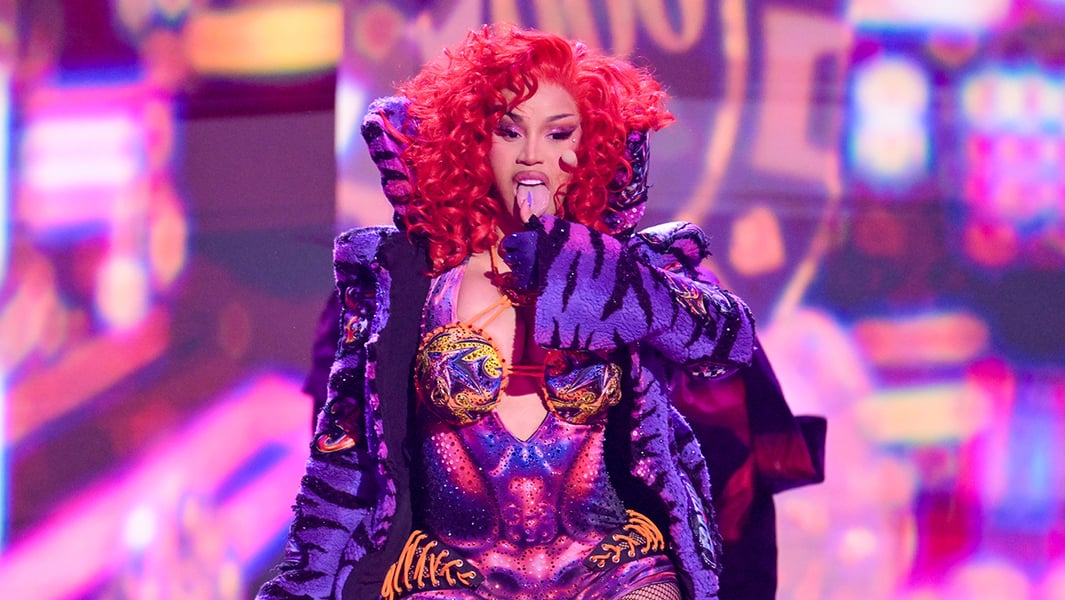
Cardi B’s profile outside the courtroom has been at one of its most active points. She led all nominees at the 2026 BET Awards with six nominations, including Album of the Year for “Am I the Drama?” and Best Female Hip-Hop Artist, and performed at the June 28 ceremony. The contempt proceedings, which ran parallel to that period, were not publicly contested by either party. Cardi B has not commented on the July settlement.
The case sits alongside a broader pattern of music industry legal disputes that have tested, in court, what damages are actually worth once a jury delivers them. Earlier this week, a federal jury declined to award punitive damages in the trade dress case brought by T.I. and Tameka “Tiny” Harris against toy company MGA Entertainment over the OMG Girlz dolls, leaving a $17.9 million compensatory recovery after four separate trials without proportional punishment for the harm a jury had already found. Both cases reflect the same practical limit: a verdict determines what happened; it does not automatically determine what follows.
Under the July 1 contempt settlement, what follows for now is a December deadline, a $30,000 first payment, and a non-disparagement clause both parties know Kebe has already violated more than two dozen times.