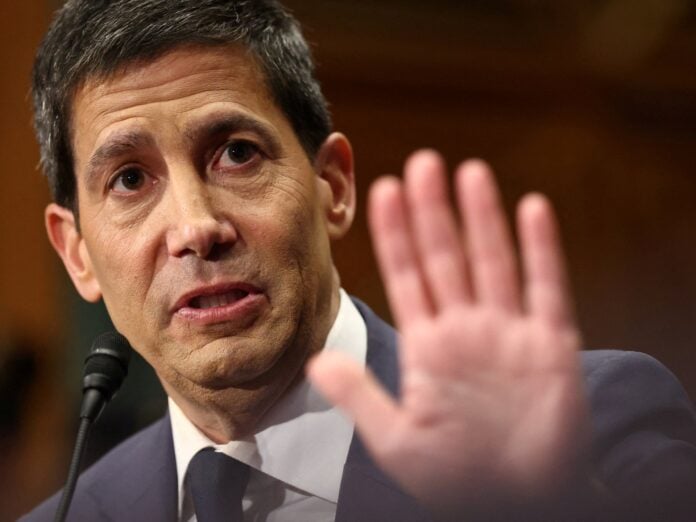

LOS ANGELES — A US federal judge issued a temporary restraining order Monday halting the $111 billion merger of Paramount Skydance and Warner Bros. Discovery through August 3, delivering the most consequential legal blow yet to a deal that has faced mounting opposition since twelve state attorneys general filed suit earlier this month. The order gives the states time to argue their motion for a preliminary injunction before the court before the pause expires.
The merger, if completed, would create a combined company controlling approximately 75 percent of US theatrical film distribution and 27 percent of basic cable television licensing, according to figures cited in the states’ antitrust filing. It would also consolidate streaming content from Paramount+, HBO Max, CNN, Turner, and the combined studio slates of two of Hollywood’s major production houses under a single corporate structure. No deal of comparable scope in American media has been attempted since AT&T acquired Time Warner in 2018 and was subsequently forced to divest Warner Media four years later.
The legal opposition has built quickly. California Attorney General Rob Bonta led a coalition of twelve states in filing an antitrust suit in federal court on July 14, arguing that the merger would harm competition in theatrical distribution, cable licensing, and streaming. The following day, the Writers Guild of America filed its own federal antitrust suit in San Francisco, focusing on labor market concentration — specifically, that a single studio controlling 35 percent of film writing jobs would have outsized leverage in collective bargaining negotiations.
A temporary restraining order is a procedural step, not a final ruling. It preserves the status quo while the court schedules a hearing on the preliminary injunction — a more durable form of relief that, if granted, would prevent the deal from closing until the underlying antitrust case is resolved. The state AGs must demonstrate to the court before August 3 that they have a reasonable likelihood of succeeding on the merits, and that proceeding with the merger before the case is heard would cause irreparable harm. Blocking a $111 billion corporate transaction at a TRO stage is already an unusual outcome that signals some judicial receptiveness to those arguments.
For Paramount and Warner Bros. Discovery, the pause compounds a period of significant operational uncertainty. Bloomberg reported the deal is at risk of delays that would cost billions — not only in direct costs such as deal financing, advisory fees, and regulatory compliance spending, but in the strategic costs of keeping two major content enterprises in limbo. Programming decisions, distribution agreements, talent negotiations, and advertising packages cannot proceed on a combined-company basis until a merger closes. Every week the legal question remains open is a week neither company’s management can make decisions as if the deal is settled.
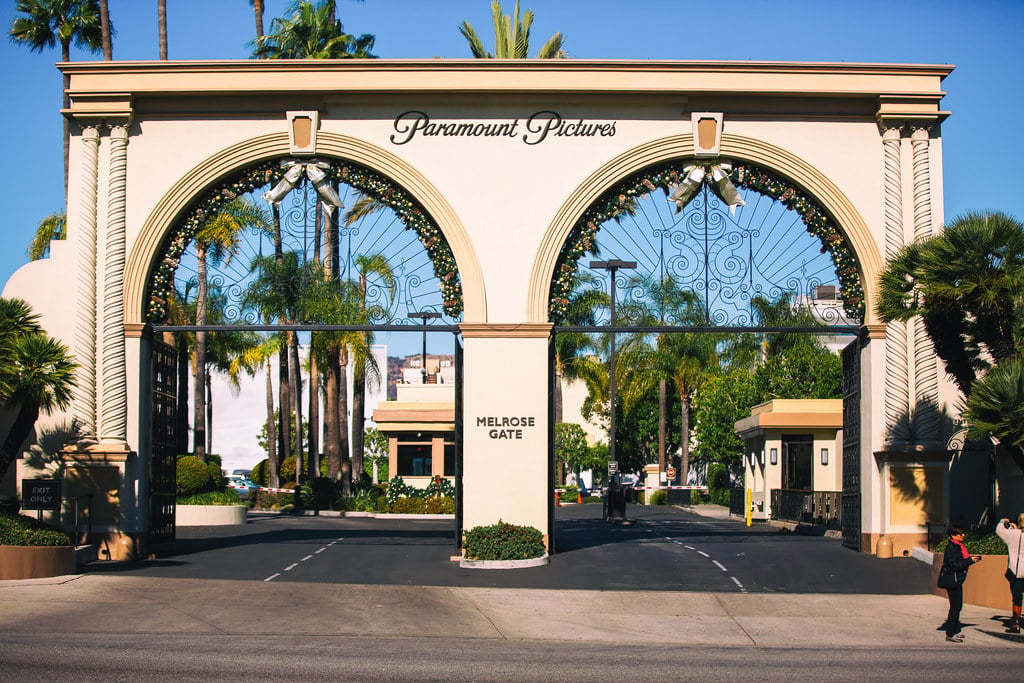
Paramount’s response to the state opposition had already departed from standard corporate legal procedure. Advisers to the company had flagged the possibility of relocating Paramount’s headquarters from California to New Jersey or Texas if AG Bonta filed suit — a threat representing a potential exit of $30 billion in annual content spending from California’s economy. That suggestion, remarkable for a company that has operated from its Melrose Avenue lot since 1926, underscored how seriously Paramount viewed the state-level legal threat. The threat did not prevent the states from filing, and the court’s TRO indicates that the filing found a receptive audience.
The deal’s structure has been more complicated than most media acquisitions. Skydance Media, backed by David Ellison, completed its acquisition of Paramount Global earlier in 2026, making Skydance the controlling entity. The Paramount Skydance entity then entered into the Warner Bros. Discovery acquisition agreement — meaning the legal opposition is targeting a company whose own corporate structure is itself recently assembled. Regulators evaluating the merged entity’s market power must assess it against a counterfactual that does not include the standalone Paramount that existed a year ago.
The writers’ argument cuts at a different layer of the same concentration concern. The WGA’s antitrust suit argues that when a single employer controls 35 percent of film writing jobs, collective bargaining loses much of its structural leverage. The union’s 2023 strike, which shut down Hollywood for 148 days, was fought against an AMPTP membership that included Warner Bros., Paramount, Disney, and the other majors as separate entities. A combined Paramount-Warner represents a qualitatively different negotiating counterpart — one with less competitive pressure to settle, and more financial capacity to absorb a prolonged work stoppage.
Whether the TRO extends into a full preliminary injunction, or whether the companies negotiate a behavioral remedy that satisfies the court before August 3, is the central uncertainty the entertainment industry is now tracking. A preliminary injunction would effectively put the merger in legal limbo through at least the remainder of 2026, pushing any potential closing into 2027 at earliest. The deal was expected to close by September. The judge’s order last Monday ensured that timeline will not hold.