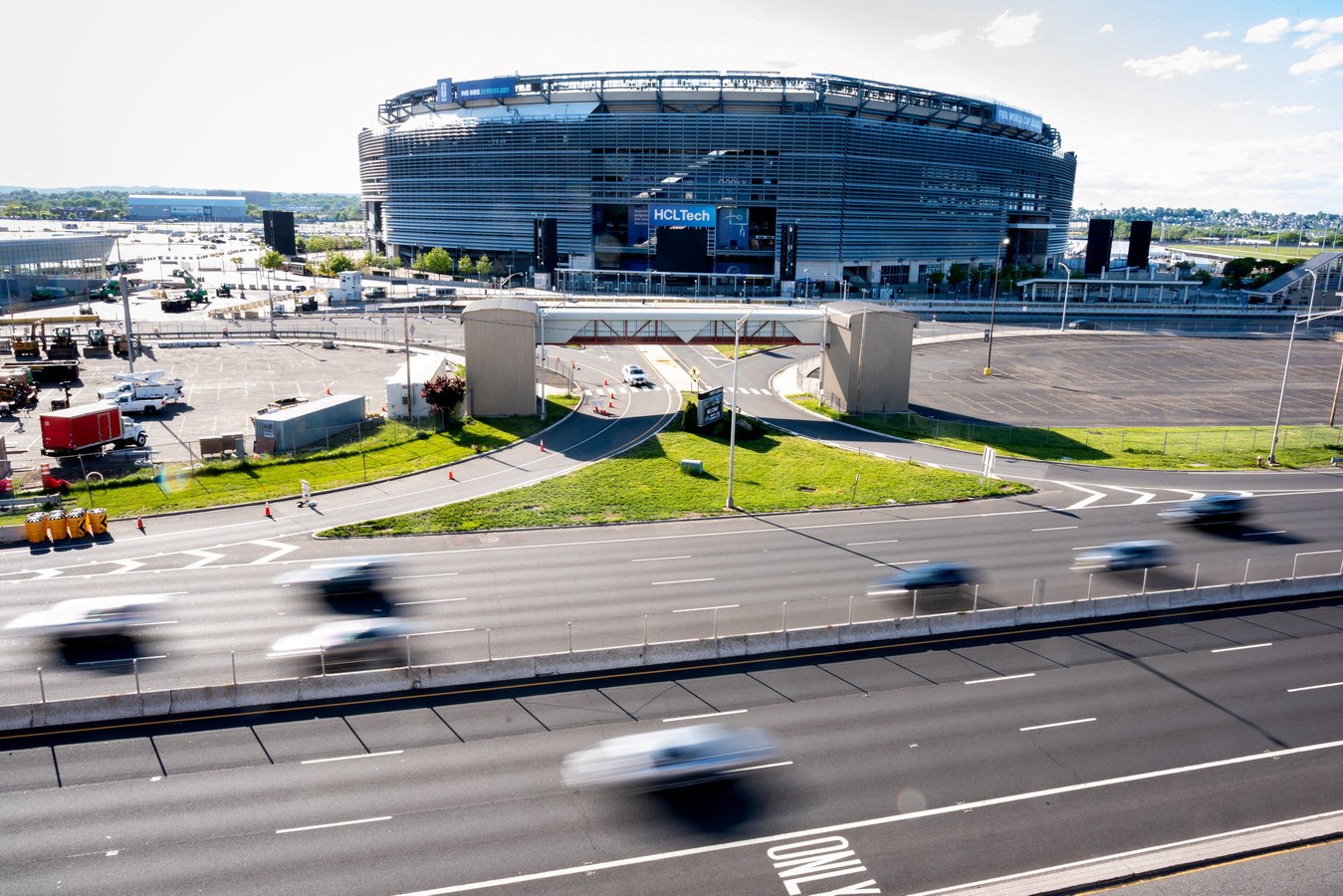

NEW YORK – For forty-eight years, a World Cup Final has never stopped for music. The break between halves has been eleven minutes of grass, water bottles, and tactical adjustments. Tonight at MetLife Stadium in East Rutherford, New Jersey, that changes. Shakira, Justin Bieber, and Madonna are among the headliners for the 2026 World Cup Final’s halftime show, the first in the tournament’s history. The interval between Spain and Argentina will run twenty to twenty-five minutes instead of the standard fifteen, long enough to dismantle and clear a stage while two of the world’s best teams try to reset.
The halftime show was curated by Chris Martin, the Coldplay frontman, who assembled a lineup that spans decades and continents. Shakira, whose performance at the 2010 World Cup in South Africa became one of the most watched moments in the tournament’s history, returns in a different capacity. Madonna performs at a World Cup event for the first time. Justin Bieber joins alongside BTS, the South Korean pop group whose audience extends well across language and geography, and Burna Boy, whose Afrobeats sound has become one of the defining musical movements of the past decade.
The closing ceremony runs separately, beginning at 1:30 PM Eastern, ninety minutes before kickoff at 3:00 PM. Post Malone headlines alongside Laura Pausini, Nicole Scherzinger, and Robbie Williams. IShowSpeed, the streaming personality whose enthusiastic coverage of this World Cup has drawn tens of millions of views, appears at the ceremony. Tom Cruise makes what organizers have described as a special appearance. Jennifer Hudson performs the United States national anthem before the match begins.
The halftime show is part of a deliberate choice by FIFA and the tournament’s North American hosts to reshape what a World Cup looks and sounds like when it arrives in the United States. The American market has the Super Bowl, where the halftime show has become one of the most watched live events in American broadcasting every February. FIFA, staging its first tournament in the United States since 1994, has been attentive to what the Super Bowl model produces in terms of audience and cultural reach. The 2026 World Cup brought record television numbers through the group stage. The Final was always going to receive the fullest version of that treatment.
The proceeds from the halftime show support the FIFA Global Citizen Education Fund, which has set a $100 million fundraising target. Global Citizen, the advocacy organization that has produced major concert benefit events for more than a decade, organized the creative component alongside FIFA. The World Cup Final partnership represents its largest integration with a sporting event.
The logistical challenge of a halftime show at a football match is not trivial. The Super Bowl operates in a stadium where the entire event is organized around the show; the halftime production crew has as much planning time and space as the teams. A World Cup Final works differently. Stage setup and removal happen within the extended window, while players remain in locker rooms and the ninety-minute clock formally pauses. Twenty to twenty-five minutes compresses hard against what a production of this scale normally requires.
The choice to extend the halftime interval has generated discussion among tactical analysts. Teams that build around a compact break use those eleven minutes to restructure without allowing players to cool. For Spain and Argentina, the question of managing an extended halftime against an opponent of this quality is a variable that neither side has encountered at this stage of the tournament. Neither coaching staff has indicated publicly how they intend to use the additional time.
For Spain, the adjustment falls on a team that has conceded one goal in seven matches. Argentina arrives with Lionel Messi playing purposeful football at 38. Five factors separate these teams going into tonight, and the extended halftime introduces a sixth that belongs to no previous World Cup Final. How coaches use the additional time may not determine the outcome, but it will be the first time either has had to account for it.
The show is not without critics. Several commentators in the European football press have argued that a halftime entertainment spectacle represents an Americanization of a competition that has traditionally kept football as its only spectacle. FIFA’s position is that the show is additive: the match runs its full ninety minutes, uninterrupted, regardless of what happened at halftime. The performers leave. The teams return. The global stakes of this final are not reduced by an interval show, though whether the crowd’s energy resets cleanly after one is a question the first halftime show in World Cup Final history cannot answer in advance.
For the crowd of more than 82,000 inside MetLife and the global television audience watching in the hundreds of millions, the halftime show is secondary to the question of which team lifts the trophy. Whether Spain claims back-to-back World Cup titles or Argentina secures a third will determine what gets written about tonight. But the show sets a template. If FIFA returns to the United States in future decades, a halftime show will very likely happen again. The 2026 Final is the first time.
The schedule, as reported by Al Jazeera: closing ceremony at 1:30 PM ET, kickoff at 3:00 PM, halftime show at approximately 3:45 PM ET. For everyone watching at MetLife and at home, the wait until then is the only thing that needs resolving first.