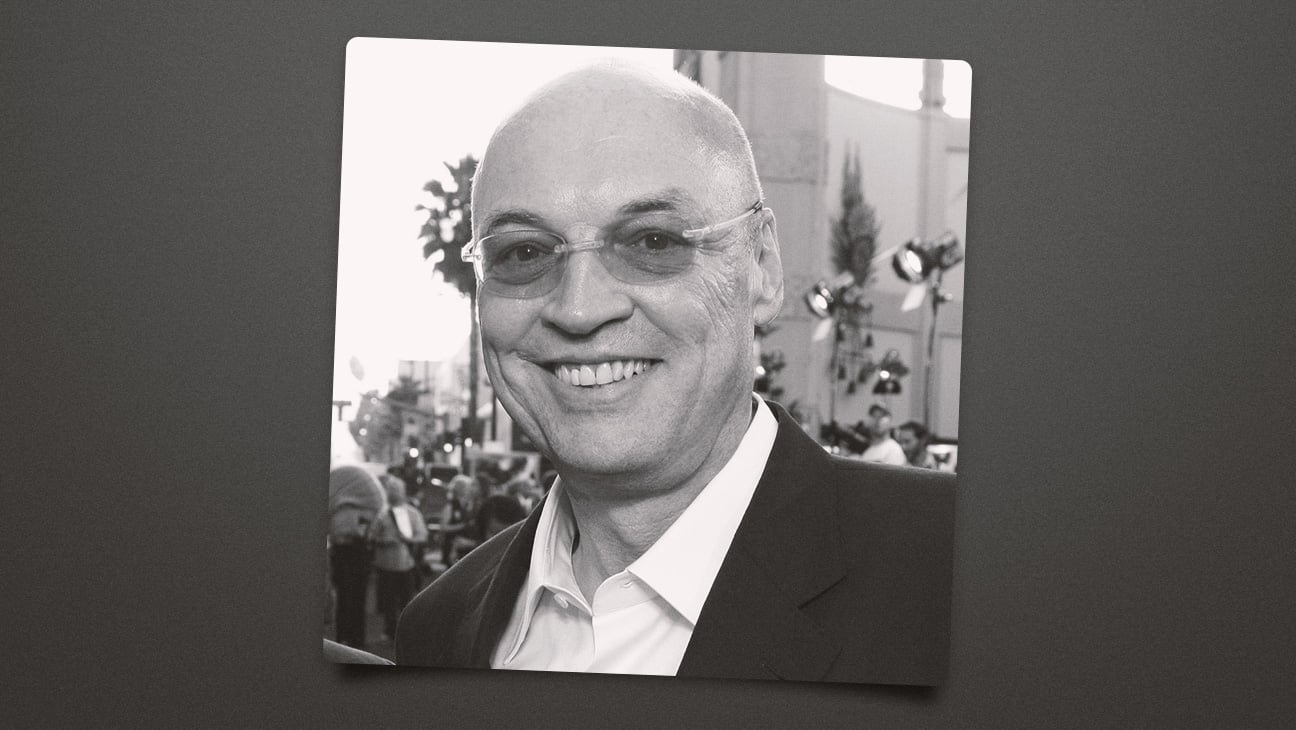

LOS ANGELES — The producers who keep independent film alive rarely make headlines. Their work happens in rooms where money meets vision: talking a European financier into the risk of a politically charged biopic, or persuading a director of Oliver Stone’s stature that the conditions are right for another collaboration. When Moritz Borman died on July 2 at the age of 71, the industry lost one of the most effective practitioners of that invisible craft.
The cause of death was not immediately disclosed. His production company, C2 Motion Picture Group, confirmed his passing. He leaves behind partners Eric Kopeloff and Philip Schulz-Deyle, who described him to The Hollywood Reporter as “one of the most accomplished and respected independent producers of his generation” who “helped shape the landscape of independent filmmaking, building creative and financial bridges between Europe and Hollywood.”
Those bridges were his signature. Born in Germany, Borman came to the United States and trained at the American Film Institute, which gave him technical fluency in Hollywood production language without severing the European sensibility he brought to financing and development. Over a career spanning more than four decades, he produced more than 25 films. The thread running through the strongest of them was a consistency of ambition: projects that needed someone to hold the creative and commercial architecture together while a director, often a difficult and singular one, made the film they were determined to make.
His first feature announced that ambition immediately. Under the Volcano, John Huston’s 1984 adaptation of Malcolm Lowry’s notoriously unfilmable novel, earned two Academy Award nominations and established Borman’s willingness to work in the register of literary adaptation, the kind of project that gets killed in development the moment someone runs the numbers. That it got made at all was a function of exactly the kind of producer Borman would become: someone with access to European money and enough belief in the material to absorb the risk.
That template carried forward for two decades before it found its fullest expression in his partnership with Oliver Stone. The two worked together on five films spanning more than a decade: Alexander in 2004, World Trade Center in 2006, W. in 2008, Savages in 2012, and Snowden in 2016. The collaboration speaks not just to professional compatibility but to something rarer: a shared understanding of which stories are worth the fight. Stone is not an easy director to finance. His films about historical subjects tend to be long, expensive, and designed to provoke. Borman kept the machine running.
Alexander, a nearly three-hour epic covering the life of Alexander the Great, was precisely the kind of project that strands a less resourceful producer: a vast international cast, location shoots across multiple continents, a director famous for his strong opinions about the final cut. World Trade Center, which Stone made two years later as a more intimate film about survivors of the September 11 attacks, required a different kind of navigation through material carrying distinctive emotional and political weight. Borman handled both. The collaboration continued through Stone’s presidential drama W. and his late-career international thriller Snowden, which traced NSA whistleblower Edward Snowden through the lens of a director who has spent a career following power into rooms it would prefer to keep closed. Five films over more than a decade, uninterrupted across genres and risk levels: the kind of record that defines a career in the industry’s memory long after the releases and reviews have settled.
Beyond Stone, Borman’s résumé ranged from the commercial success The Wedding Planner, starring Jennifer Lopez and Matthew McConaughey, to Graham Greene’s The Quiet American, which earned Michael Caine an Academy Award nomination, and into the Terminator franchise with Terminator 3: Rise of the Machines in 2003 and Terminator Salvation in 2009. That breadth is unusual. Most producers develop a lane and stay in it. Borman treated the studio and independent sectors as complementary spaces, drawing on whichever the project required.
Carl Rinsch’s sentencing this week on charges of defrauding Netflix out of $11 million has thrown into sharp relief how much of Hollywood’s independent sector depends on the integrity of individual producers working within complicated financial structures. Borman represented the other kind. He was in production at the time of his death, working on an untitled film for director John Lee Hancock. Whether that project will proceed with another producer attached has not been announced.
His partners at C2 Motion Picture Group described his approach in terms more useful as a professional epitaph than any box-office number: someone who built financial bridges. In a moment when studio consolidation is narrowing the field for independently financed films, and when figures across the industry are weighing in on how artificial intelligence is reshaping the craft of moviemaking itself, what Borman did quietly across four decades is harder to do than it has ever been. Whether his model finds successors is a question the industry will be answering for years.
He was 71. The cause of his death has not been disclosed.