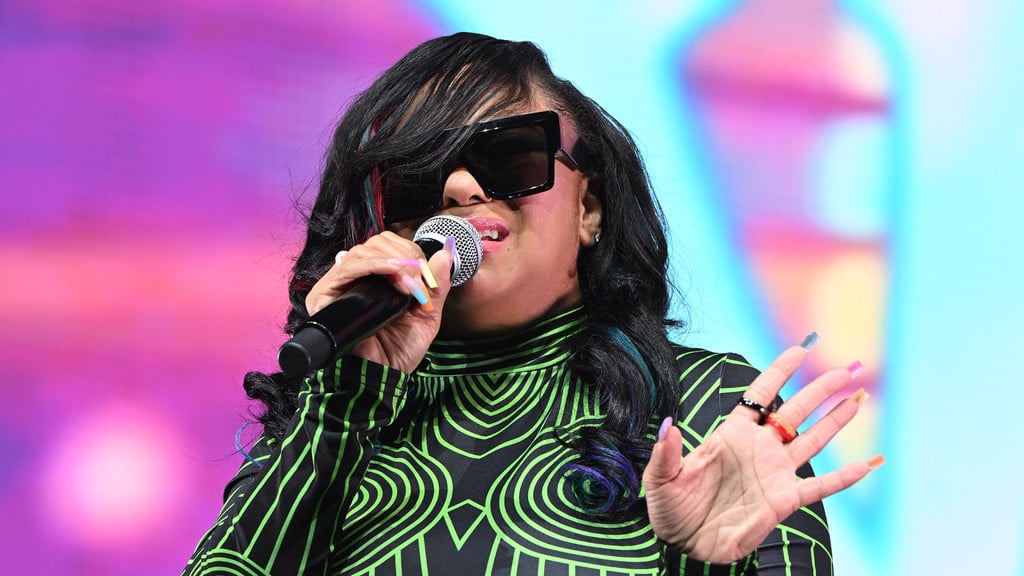

ATLANTA – She said it the way someone shares something that has already settled into fact. Nivea Hamilton sat down on Cadillac Chronicles, a video show hosted by Brian Freeman, and disclosed partway through the conversation that she has been battling leukemia since earlier this year. She is 44. She has four children. And she said treatment is going well.
“I was diagnosed with leukemia earlier this year, and I’m so grateful to God,” Nivea said. “I’ve been going through treatment, and everything is going great so far.”
The appearance circulated through entertainment media this week, first reported by Cover Media via Yahoo Entertainment. She did not specify the type of leukemia or the treatment regimen. What she chose to describe instead was the shift in how she sees time.
“It’s so cliché to say you don’t know the time nor the hour, but it’s true,” she said, “and it just helped me put a lot of things in perspective.”
Nivea peaked commercially in the early 2000s, when a run of R&B singles placed her in consistent rotation at urban radio. “Don’t Mess With My Man” generated as much coverage for the off-record drama it touched off as for the song itself, while “Complicated,” released in 2003, charted well and established her as a steady presence in the mid-decade R&B landscape. She worked alongside and appeared with some of the era’s most prominent figures and was connected, through two significant relationships, to two of its biggest names.
Her engagement to Lil Wayne produced one child. Her marriage to The-Dream, the Atlanta-born songwriter and producer Terius Gesteelde-Diamant behind hits that defined the late 2000s, produced three more. Both relationships ended. She has spoken previously about the personal weight of those years and the way the public interest in her private life outran the music.

There is a version of Nivea Hamilton’s story that runs through tabloid archives as relationship drama, the kind of coverage that followed the Lil Wayne chapter and the high-profile end of her marriage. She was rarely defined by the music alone. What the Cadillac Chronicles conversation suggests is that she has not carried that framing with her. She is talking about God, treatment outcomes, her children, and audio engineering. The illness has not reorganized the narrative around itself.
Since the diagnosis, what she expressed on Cadillac Chronicles ran against the usual register of a celebrity health announcement: gratitude rather than fear, perspective rather than urgency, and no prepared framing. She mentioned the leukemia, said treatment is going well, and the conversation kept moving. She has not issued further public statements since.
What she has shared about her current direction involves a pivot away from performing. Nivea said she is pursuing audio engineering education, focusing on music mixing and production. The move from artist to craftsperson is increasingly common among R&B acts who emerged in the early 2000s and have found the streaming economy unreceptive to catalog-era music. It also signals where her energy has gone: not toward a comeback arc, not toward a public health narrative, but toward learning a technical skill and being present for her children.
Leukemia is a category of blood cancers originating in the bone marrow and affecting blood cell production, with significantly varying prognoses depending on type, stage, and patient age. Without knowing which form Nivea has been diagnosed with, the clinical picture is incomplete. Her statement that treatment is going well is the only clinical information available. That she offered it casually, mid-interview, suggests the announcement was less a planned disclosure than an honest answer to a question about her life.
The announcement arrives as the entertainment industry has processed a run of losses and health disclosures among artists who built careers in the same era. Village People frontman Victor Willis died in July following a short aggressive illness, one of several musicians lost in the first half of 2026. The early 2000s R&B cohort, a generation of artists whose commercial peak preceded the streaming restructuring of the music industry, has not been exempt from that pattern.
Wai Ching Ho, the Hong Kong-born actress who played Madame Gao in Netflix’s Daredevil, died in July at 82, part of a broader run of departures from figures who built careers across decades of American screen and stage work. The entertainment world’s relationship with mortality has been unusually public in 2026, with disclosures and losses arriving in close succession.
Nivea’s announcement fits that moment without being shaped by it. She did not reference the broader pattern. She spoke about gratitude, treatment, children, and mixing boards. At 44, with leukemia, she is learning audio engineering and answering questions about it on a video show. What type of leukemia she has, what her treatment schedule looks like, what her prognosis is, and whether any of this intersects with new music remain undisclosed. What exists is the interview, the gratitude she expressed on it, and the fact that she said everything is going great so far.