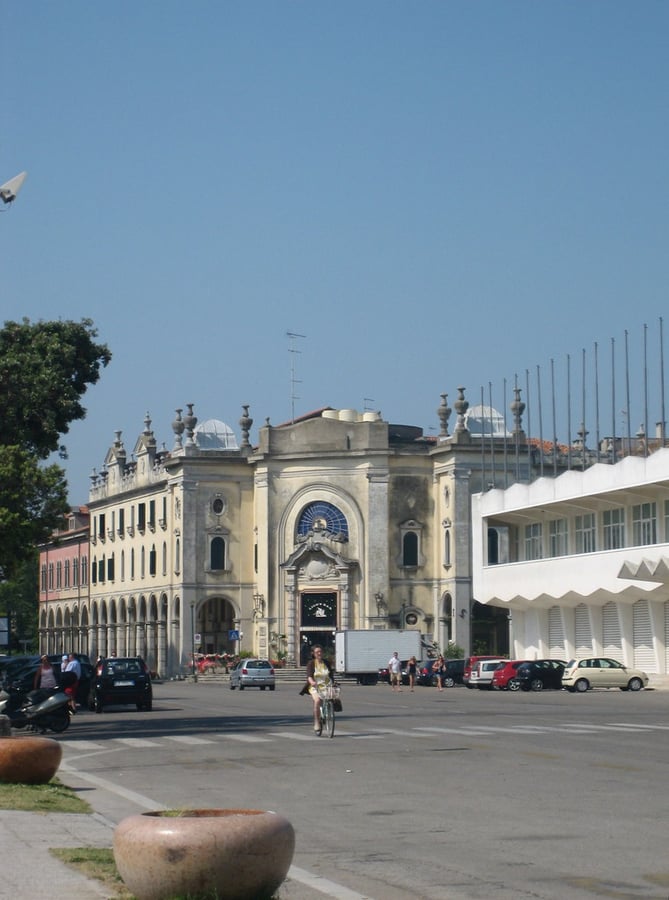

VENICE – Noel and Liam Gallagher will walk the Venice Lido together in September. That confirmation, embedded in the 83rd Venice Film Festival’s full lineup announcement on Wednesday, says something about what this year’s selection is designed to do: gather talent that moves beyond the film industry’s usual circuit and into a broader cultural conversation. The Gallagher brothers, whose decade-long split became shorthand for irreconcilable differences, are coming to Venice with a film.
The Oasis reunion documentary, titled “Don’t Look Back in Anger,” will premiere in the Venice Open Non Fiction section. Directed by Dylan Southern and Will Lovelace, the team behind the earlier Oasis documentary “Lord Don’t Slow Me Down,” the project chronicles the reunion tour that brought Liam and Noel back together after 15 years apart. A theatrical IMAX release is set for September 11, with a Hulu exclusive to follow. Artistic director Alberto Barbera confirmed both brothers will attend the Lido premiere.
The fiction competition carries its own weight. Florian Zeller, whose “The Father” won two Academy Awards and whose “The Son” earned BAFTA recognition, returns with “Bunker,” an ensemble built around Javier Bardem, Penélope Cruz, Stephen Graham, Paul Dano, and Patrick Schwarzenegger. Zeller’s recent track record makes this the closest thing the competition has to a pre-season awards favorite, according to the Hollywood Reporter.
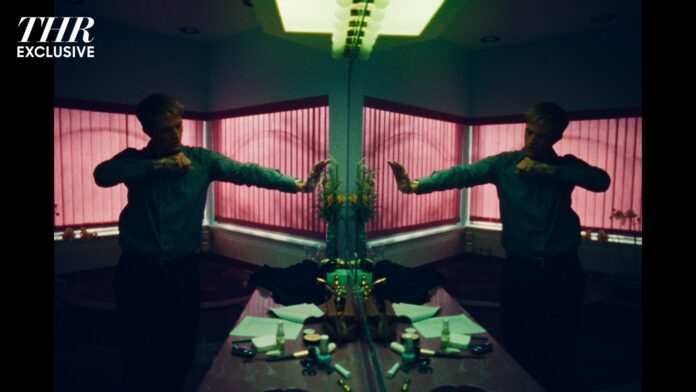
The festival opens September 2 with Danny Boyle’s “Ink,” a biographical drama about Rupert Murdoch starring Jack O’Connell, Guy Pearce, and Claire Foy. Opening film slots at Venice rarely predict the Golden Lion winner, but they reveal the tone the programming team is setting. A Murdoch biopic from the director of “Trainspotting” and “Slumdog Millionaire” signals that the competition values commercial and critical crossover alongside arthouse provocation.
Martin McDonagh, who won the Oscar for Best Original Screenplay for “The Banshees of Inisherin,” arrives with “Wild Horse Nine,” an ensemble built around John Malkovich, Sam Rockwell, Steve Buscemi, Tom Waits, and Parker Posey. McDonagh’s track record from “In Bruges” through “Three Billboards” and “Banshees” suggests that “Wild Horse Nine” will resist easy genre description.
Robert Pattinson plays television personality Chris Hansen in “Primetime,” directed by Lance Oppenheim. Alicia Vikander stars in “The Echo Chamber,” adapted by director Andrea Pallaoro from a Bernardo Bertolucci screenplay that was never produced in the filmmaker’s lifetime. Hirokazu Koreeda brings a live-action manga adaptation with “Look Back.” Lee Chang-dong’s “Possible Love,” backed by Netflix, features Jeon Do-yeon and Cho Yeo-jeong. Of the 20 competition directors selected, one is a woman: May el-Toukhy, the Danish filmmaker whose “Queen of Hearts” won awards at Sundance.
The documentary section carries additional attention. Alex Gibney delivers “Musk,” a nearly four-hour film about Elon Musk making its world premiere at Venice. Gibney’s filmography includes investigations into the NSA, Scientology, Theranos, and the Catholic Church, and the runtime suggests an investigative scope that his previous subjects required.
Jury president Maggie Gyllenhaal leads the competition panel. Lifetime achievement awards go to Ellen Burstyn and George Clooney, whose combined careers span six decades. Burstyn also appears in Kornel Mundruczo’s “Place to Be,” screening out of competition.
The festival carries an external complication. The European Commission withdrew a €2 million grant to the Biennale arts exhibition over Russia’s participation. Biennale chairman Pietrangelo Buttafuoco challenged the decision publicly, arguing it undermined the institution’s autonomy and freedom of expression. The move follows a pattern in which political disputes over the Russian operation in Ukraine have been imported into cultural contexts that previously operated outside diplomatic pressure, affecting artists and institutions with no direct role in those events.
The Venice selection follows a Cannes competition that sent several strong films into awards season, with Neon positioning James Gray’s Paper Tiger for a November theatrical run against Palme d’Or winner Fjord. Venice and Cannes now compete for the same finite pool of critic attention and Oscar voter consideration, and both festivals understand that the first week of reviews can determine whether a film sustains its awards life for four months.
What none of this resolves is which competition film will lead the October conversation. The lineup offers Zeller’s proven ensemble formula, McDonagh’s track record for original scripts, and several less-heralded entries from established directors who have surprised Venice juries before. The Academy’s expanded voter base of 529 new international members adds a variable that makes the pre-September prediction exercise less reliable than it has been in previous years. Reviews arrive September 2. Everything else is projection.