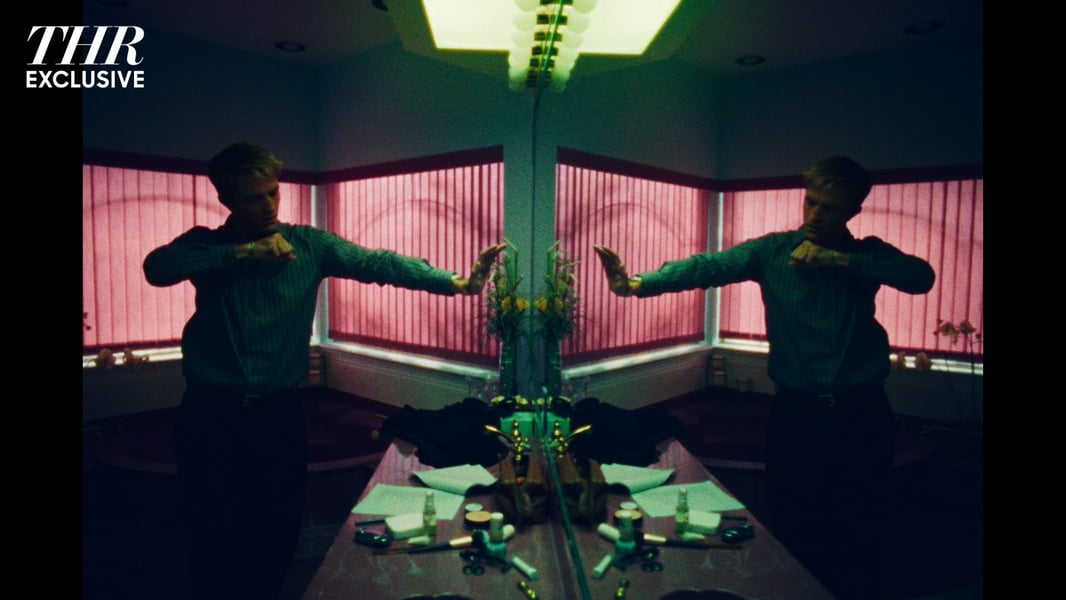

LOS ANGELES — The man Robert Pattinson is playing in a new A24 film will not see that film. Chris Hansen, the television journalist whose predator-catching work on Dateline NBC made “To Catch a Predator” a household fixture for a decade, declined the studio’s invitation to a private screening after A24 required him to sign a legal waiver barring future action against the production. So Hansen did something else: he bought preshow advertising on every screen scheduled to run the film.
The advertisement directs audiences to TruBlu, Hansen’s current streaming network, where he continues the predator investigations that made him famous. He had originally wanted to end the spot by telling audiences that what they were about to see was “a Hollywood fantasy version” of the actual events, but the line was dropped amid concerns about the studio’s response. The message survives the edit. There is Chris Hansen, in the moments before the lights go down on Robert Pattinson playing Chris Hansen, reminding you that he exists.
“Primetime,” which opens nationwide on September 25 after its world premiere in competition at the Venice Film Festival, stars Pattinson as a fictionalized Hansen in 2006, when Dateline NBC’s sting franchise was running at full cultural pressure. Directed by Lance Oppenheim in his first narrative feature, the film has generated the kind of pre-release critical attention that A24 has built its brand on: a Venice jury prize, a 93 percent Rotten Tomatoes score, and an opening-weekend booking into 2,000 theaters.
At Venice, where “Primetime” received the Special Jury Prize, the audience held its applause for close to eight minutes. The film ultimately lost the Golden Lion to Martin McDonagh’s crime drama Wild Horse Nine, which unseated early frontrunner Danny Boyle’s Murdoch biopic “Ink” in what the festival described as a surprise. That outcome has arguably improved “Primetime’s” positioning: it arrives at the multiplex carrying prestige without the backlash that typically follows the Lion winner.
Pattinson, who also produced the film, spent months with voice coaches reproducing Hansen’s distinctive cadence. The Hollywood Reporter, which first broke details of Hansen’s advertising campaign, described the performance using terms Oppenheim had applied in production: that Hansen had absorbed the collective projection of an audience’s need for justice and built it into a professional persona. The real Hansen told the outlet it was “a pretty good imitation.” He has declined to say whether he has seen the film.
What gives the film its unsettling edge is Oppenheim’s treatment of the television production itself. Based on a 2007 Esquire article, the screenplay by Ajon Singh is not particularly interested in whether the suspects arriving at the sting house are guilty. It is interested in the crew waiting for them: the lighting rigs, the shot lists, the producer calibrating how long to let Hansen talk before the police come through the door. The apparatus is what is being examined, and Pattinson’s Hansen is never confused about which side of it he is on.
The supporting cast keeps the film from collapsing into a single performance. Merritt Wever plays a network producer managing the ethical vertigo of packaging real arrests into entertainment. Skyler Gisondo is the researcher who builds the online personas that draw suspects in. Phoebe Bridgers, in her acting debut, plays a legal liaison whose growing discomfort with the enterprise gives the film’s third act its sharpest notes.
Robert Pattinson is coming off one of the stronger commercial years of his career. His performance alongside Zendaya in Kristoffer Borgli’s “The Drama,” which grossed $132 million in theaters before arriving on streaming this summer, built an audience for work that operates between art-house and mainstream. “Primetime” is a harder sell. It is stranger, less emotionally resolved, and A24 is betting that same audience will follow him somewhere more uncomfortable.

Oppenheim avoids resolving that question. He recreates the show’s atmosphere and leaves the moral judgment with the audience.
Chris Hansen’s pre-show advertisement complicates the film’s critique. Whatever the documentary concludes about him, Hansen continues the same work on streaming platforms: cameras run, suspects appear, and viewers watch.
The Venice Film Festival honored the film, while Hansen promoted himself in its pre-roll advertising. The result leaves open the film’s sharpest irony: it is unclear who ultimately benefited more from the attention.