
NEW YORK – The first day of trading for Securitize on the New York Stock Exchange was unremarkable in every conventional sense. Shares of the tokenization company rose 10 percent following its debut via SPAC merger with Cantor Equity Partners II, finishing the session with a market capitalization that reflected the optimism typical of a first trading day.
What made Thursday different was what happened simultaneously, on blockchains no stock market participant had to engage with to profit from the IPO.
Before the close of the first session, $295 million in Securitize stock was documented as held in tokenized form on Solana and Avalanche, according to blockchain data tracked by RWA.xyz. The shares in those wallets were not a synthetic derivative or a separate security class. They were the same common stock trading under the ticker SECZ on NYSE, converted in the same hours as the company’s public debut into onchain tokens that any blockchain wallet could in theory hold.
No public company had done that before.
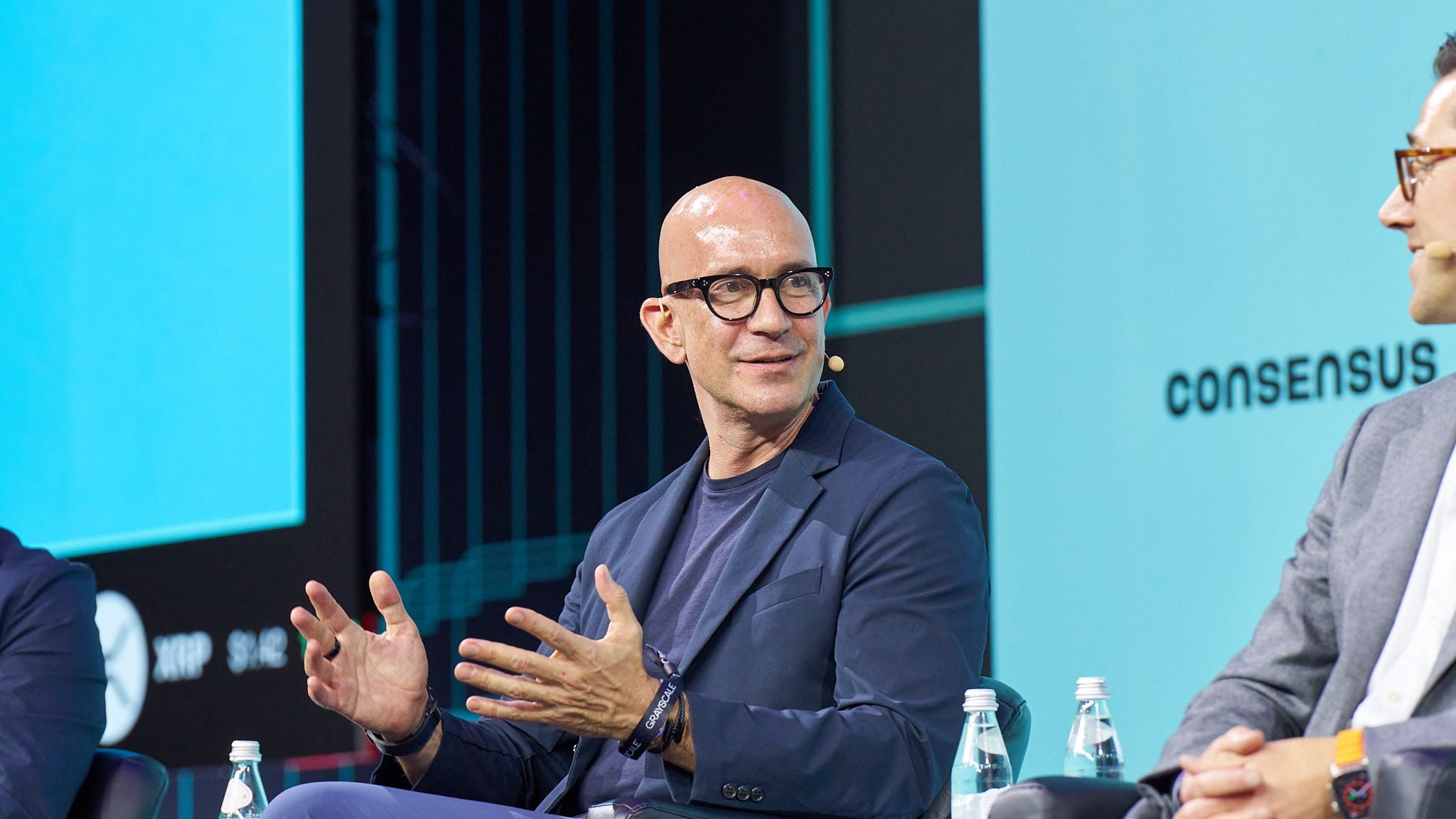
“We just wanted to lead by example,” chief executive Carlos Domingo told CoinDesk Thursday, “and show people that if you want to issue real shares onchain, not fake shares, not copy cats, whatever you want to call it, then you can do it.”
Securitize, founded in 2017 and backed by BlackRock and ARK Invest, has built its business on providing blockchain-based securities infrastructure to institutional clients including Apollo, KKR, Hamilton Lane, and VanEck. The tokenized shares on Solana and Avalanche are an argument made on the company’s own balance sheet. Until Thursday, Securitize’s pitch to institutions had been entirely theoretical in one respect: its own equity had never been tokenized. Now it has been, on its first public trading day, in an amount large enough to be legible as a market signal.
The institutional weight behind the move extends to the exchange operator itself. Intercontinental Exchange, the parent company of NYSE, has partnered with Securitize to develop tokenized equities infrastructure, a collaboration that positions the world’s largest exchange group alongside blockchain-based equity settlement rather than against it. Computershare and Continental, two of the largest transfer agents in the United States, have joined Securitize’s infrastructure work, moving the prospect of tokenized common equity from fintech experiment to a product that transfer agents can administer.
Whether the onchain shares will attract meaningful trading volume is a separate question. The $295 million figure reflects shares held in tokenized form by investors who apparently chose to migrate their position to a blockchain wallet at or around the debut. It does not reflect active secondary market volume on Solana or Avalanche, which has not been independently documented as significant. Most investors will continue transacting through the NYSE-listed shares; the infrastructure to make onchain versions a routine trading venue is in place, the liquidity is not.
Industry projections for tokenized securities span an enormous range. Citi estimates the market could reach $5.5 trillion by 2030. A separate model from Boston Consulting Group and Ripple puts the number at $18.9 trillion by 2033. Those figures have circulated for several years as analytical forecasts. What they have consistently lacked is a live public-market data point: a real company with real NYSE-listed shares putting real equity on a real blockchain in real time. Securitize has now provided one.
The regulatory environment has become more accommodating. The US Securities and Exchange Commission under the current administration has taken a materially softer posture toward digital asset securities than its predecessor, creating more operational space for companies attempting to bridge the registered equity and blockchain markets. The specific legal mechanics governing how registered common stock interacts with its tokenized form, including recordkeeping, voting rights, dividend distribution, and settlement finality, remain an area where formal guidance is thin.
The analogy to corporate bitcoin treasury adoption is instructive, if imperfect. Japan’s Metaplanet, which became the country’s largest corporate bitcoin holder after announcing yet another purchase this week, treats digital asset accumulation as both a financial strategy and a signal to capital markets. Securitize’s approach is structurally different: it is not acquiring a digital asset, it is converting an existing conventional asset into a digital form. But the underlying logic of using one’s own balance sheet to make an argument about blockchain relevance is the same. Both companies chose their first public move on a blockchain to be visible and large.
What neither company’s move clarifies is whether institutional ownership structures, including pension funds, registered investment advisers, and mutual funds, are prepared to hold tokenized equity in any significant quantity. Custodians, compliance systems, and regulatory filings are not yet built around the assumption that the shares they hold might also exist as tokens on Solana. That infrastructure gap is where the Citi and BCG projections require the most generous assumptions.
This week’s other prominent intersection of equity and digital infrastructure involved a different kind of institutional alignment: OpenAI’s proposal to transfer five percent of its equity to a US government sovereign wealth fund, an arrangement that would make the federal government a financial partner in the country’s leading AI laboratory. The Securitize model runs in a different direction, taking registered equity and making it movable on public blockchains. But both represent the same underlying trend: the boundaries between conventional financial infrastructure and digital platforms are moving faster than the regulatory frameworks built around them.
The question Securitize’s debut raises, and does not answer, is whether its own example will be followed. The company has now made a public case, in traded equity, that NYSE-listed shares can live on Solana and Avalanche without legal controversy or technical failure. Whether the demonstration produces adoption or remains a notable first in the history of a market that did not follow will take years to determine.