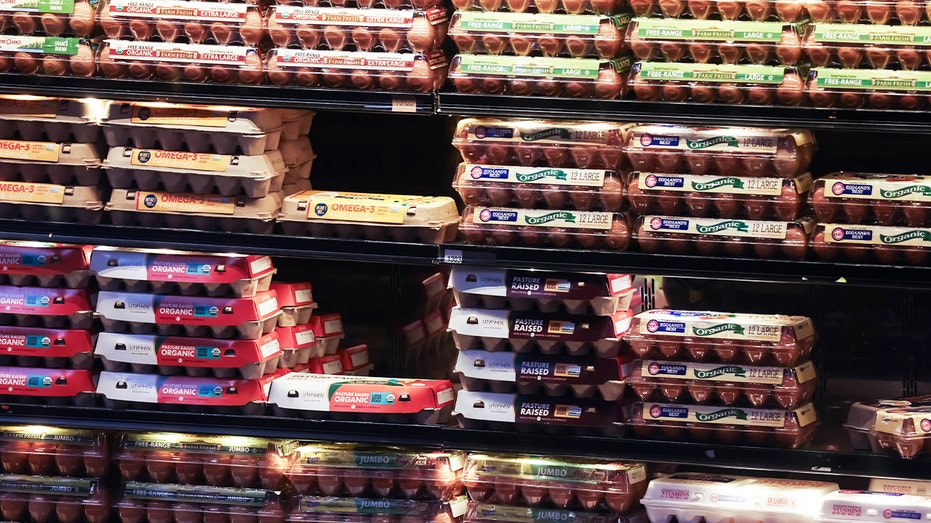

WASHINGTON — For two and a half years, American grocery shoppers paid elevated prices for one of the most basic items in their kitchens, as egg costs climbed to record highs that the federal government now alleges were not entirely the product of avian flu devastation. Three of the nation’s largest egg producers, the Justice Department announced last week, had been coordinating their bids to influence the price index that grocery chains and restaurants use to set what consumers pay at the shelf.
The settlement they reached, $3.3 million in combined payments and a donation of 53 million eggs to food banks, has already drawn sharp criticism for what it does not give back.
“This isn’t making it right for consumers,” said Angela Huffman of Farm Action, an agricultural advocacy organization. “What are we getting back?” The $3.3 million, to be distributed among the 17 states that joined the federal complaint, covers a period in which the egg market generated billions in revenue. Cal-Maine Foods, the country’s largest egg producer and one of the three settling companies, posted profits that surged during the investigation period. The gap between those figures and the settlement total is the number that critics cannot stop returning to.
The Department of Justice and attorneys general from 17 states filed a civil complaint against Cal-Maine Foods, Hickman’s Egg Ranch, and Versova, alleging the three producers coordinated their submissions to Urner Barry Publications, a market clearinghouse whose published price index functions as the industry benchmark. When grocery chains and restaurant companies negotiate egg supply contracts, Urner Barry’s numbers are typically the starting point. The complaint alleges the companies submitted exaggerated high bids to the clearinghouse in coordination between June 2022 and March 2025, effectively using a private price-setter as a transmission mechanism for what would otherwise be prohibited direct coordination between competitors.
The settlement terms divide the payment: Cal-Maine agreed to $1.5 million, Hickman’s to $1 million, and Versova to $800,000. None of the companies has admitted wrongdoing. Versova stated the investigation concluded “without any finding of or admission of wrongdoing.” The proposed agreement remains subject to court approval following a 60-day public comment period required under the Tunney Act, the federal statute that allows citizens and advocacy groups to submit views on whether a proposed settlement adequately serves the public interest.
What triggered the investigation, and what ended it, is partly a function of timing. Egg prices peaked in March 2025, at a moment when a concurrent bird flu outbreak had decimated laying hen populations and provided convenient cover for price increases that the government now suggests were not entirely attributable to supply disruption. Since the investigation’s commencement, retail prices have fallen more than 40 percent, dropping from $6.23 per carton to roughly $2.19 today, according to CBS News. Whether the investigation caused that decline, or whether the market correction was already underway, is not addressed by the settlement terms.
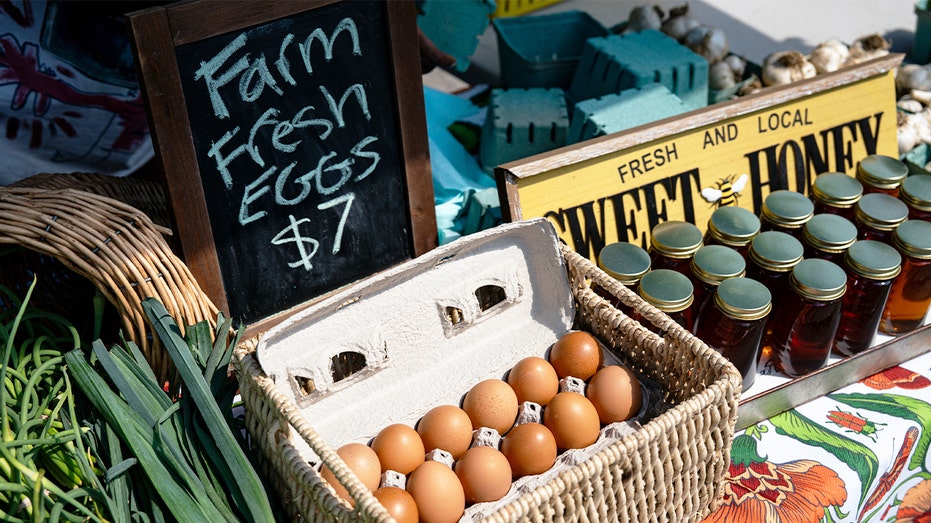
For consumers who paid record prices during the investigation period, the settlement’s structure is notable for what it excludes. The $3.3 million will not go to individual shoppers as refunds or credits. It will be distributed to the 17 participating states, whose attorneys general will determine how the funds are deployed. The 53 million eggs will be donated to food banks and nonprofits. The practical effect is that relief, to the extent it exists, flows to the most food-insecure Americans rather than to the general grocery-shopping population that paid the elevated prices, a distributional outcome defensible on equity grounds but one that leaves most affected consumers empty-handed.
The Tunney Act comment period, which runs for 60 days from the filing of the consent decree, is the formal opportunity for the public and advocacy groups to challenge the settlement’s terms before a federal judge decides whether to approve them. Farm Action and organizations that have called the settlement inadequate have that window to argue before the court that $3.3 million does not constitute proportionate relief for the scale of the alleged market manipulation.
What the DOJ’s action establishes, irrespective of the settlement amount, is that investigation of food-price coordination has moved from speculation to formal enforcement. The egg industry is not the only agricultural sector to have drawn federal antitrust scrutiny in recent years: beef packing, poultry processing, and fertilizer markets have all faced investigation. The egg settlement signals that the Justice Department’s antitrust division intends to pursue civil enforcement even where criminal charges are not filed, and that the Urner Barry price-index mechanism, long treated as an industry standard, is now under regulatory scrutiny as a potential coordination vehicle, NPR reported.
Whether that signal deters future coordination, or whether the relatively low financial consequences simply absorb into the cost of doing business, is the question the settlement’s critics and the court will need to answer. The comment period is open. The eggs are being donated. The companies are not admitting anything. And American grocery shoppers, who spent two and a half years paying prices the government now says were artificially inflated, are getting nothing back directly.