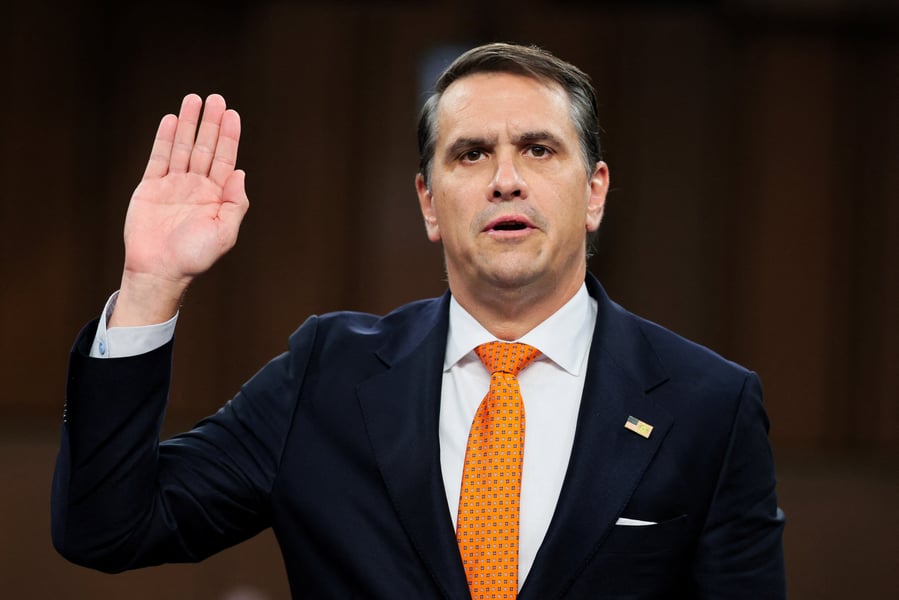

WASHINGTON – At 2:28 p.m. on July 30, a hand-delivered set of documents arrived at the chambers of U.S. District Judge Emmet Sullivan. Acting Attorney General Todd Blanche had complied, minutes before his deadline, with a court order requiring him to surrender ten disputed Epstein-related records for the judge’s private review. The submission came after months in which Blanche had called a proposed contempt sanction “absurd,” challenged the court’s authority to compel him at all, and missed an earlier production deadline entirely.
Sullivan is now examining those documents privately, in what marks the first direct judicial scrutiny of the Justice Department’s Epstein file release methodology. The court has not said when it will rule. The documents carry redactions the DOJ labeled as protecting personally identifiable information, an explanation that Katie Phang, the plaintiff in the lawsuit that produced the court order, has contested as a cover for shielding co-conspirators rather than victims.
The submission closes one chapter of Phang v. Blanche, the lawsuit Phang, an attorney and former MSNBC anchor, filed in April 2026 alleging that the DOJ committed a “brazen, shocking, and ongoing violation” of the Epstein Files Transparency Act, legislation Trump signed in November requiring the government to release Epstein-related documents and publish in the Federal Register a formal log explaining every redaction.
That log, now more than seven months overdue, has never been published. Earlier releases from the DOJ have, per the lawsuit, inverted the statute’s purpose: some documents exposed the names of Epstein assault survivors while shielding the identities of his associates. Roughly three million additional files remain entirely withheld, according to Phang’s legal team, pending either voluntary release or further court orders.
Blanche had been contesting court authority to compel production since Sullivan issued a first preliminary injunction on June 25. He missed that order’s July 2 deadline, and when Phang asked Sullivan to impose a $1,000-a-day contempt sanction, his DOJ described the request as “outlandish,” “absurd,” and “hyperbolic rhetoric.” The July 30 hand-delivery fit a pattern: challenge every order, comply only when left with no other option.
What Sullivan’s private review will produce, and when, remains the central uncertainty. If the judge finds the PII justifications do not hold, if names redacted as personally identifiable are in fact co-conspirators whose identities the transparency act was designed to surface, he could order unredacted public release. That step would mark the sharpest judicial intervention yet in the Epstein files litigation.
A separate congressional inquiry has been running on a parallel track. On July 15, the House Oversight Committee questioned Kathryn Ruemmler, a former White House counsel under Barack Obama who resigned as chief legal officer of Goldman Sachs in June 2026. PBS NewsHour reported her name appears roughly 9,000 times in the Epstein materials released this year. She maintained regular email correspondence with Epstein from 2014 to 2019, received gifts from him, and was listed as backup executor of his 2019 will without her knowledge.
Ruemmler described Epstein before the committee as a “masterful liar” and said she would have gone to law enforcement immediately had she seen any sign of his abuse. Committee chairman Rep. James Comer pressed her on emails in which she addressed Epstein as “older brother” and, at least once, “Uncle Jeffrey.” She characterized both as professional shorthand. Asked about Virginia Giuffre, one of Epstein’s most prominent accusers, Ruemmler said she questioned the “inherent credibility” of allegations naming multiple world leaders, a comment that drew scrutiny from committee members.
Blanche’s nomination as permanent attorney general remains stalled in the Senate, where the vote count has not reached confirmation threshold, and Trump has pledged to keep him in an acting capacity regardless. What neither the confirmation process nor the Phang litigation has yet resolved is the question the transparency act was written to answer: who Epstein was in sustained communication with, and on what subjects, during the years his network was operating. Sullivan’s in-camera review is, for now, the only proceeding actively positioned to force an answer.