
DALLAS – Three Epstein survivors arrived at the Republican Midterm Convention in Dallas on Sunday with press credentials, an invitation, and the same question that has followed the Trump administration for months: why are half of the epstein files still locked away?
Thirty-five minutes later, they were outside.
Convention security escorted independent journalist Tara Palmeri, her producer, and the three survivors from the building, accusing the group of carrying signs and staging a protest. Palmeri said she had done none of that. She had, she explained to the guard, been admitted as a credentialed member of the press and was doing precisely what credentialed press are there to do.
“We’re allowed to talk to guests, we’re allowed to talk to people,” she said. “That’s why we’re here, we’re media.”
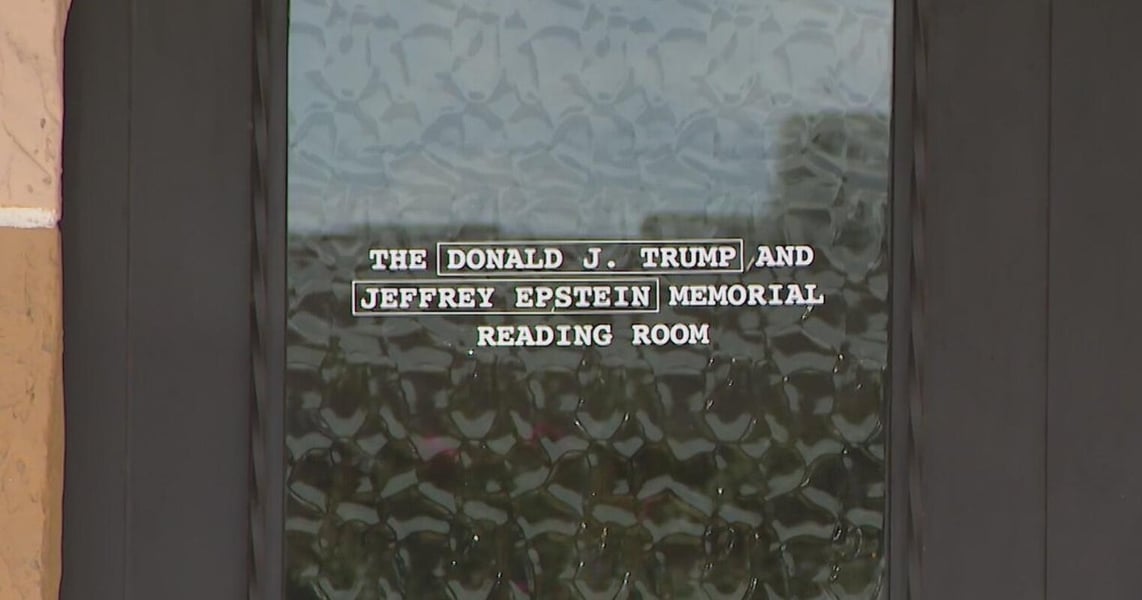
The survivors had come to Dallas not only for the convention. They were already in the city for the Epstein Files Reading Room, a public exhibit that traced the documented relationship between Donald Trump and Jeffrey Epstein through materials drawn from the released documents. They had spent time there before Palmeri invited them as guests to what organizers had branded a “Trump-a-palooza” midterm event. They acquired credentials. They entered through proper channels.
Three minutes later, everything shifted.

He invited the survivors to question him directly.
One approached the microphone and asked whether Burke would hold anyone who participated in Epstein’s crimes accountable, regardless of party. “I don’t care who they are,” Burke answered. “Unlawful touching is unlawful touching. Consent is consent.” He then volunteered that a personal friend had represented both Epstein and Ghislaine Maxwell, declining to supply the name.
Then Palmeri turned to the files themselves.
The Justice Department has acknowledged releasing roughly three million pages from the Epstein collection since Congress ordered disclosure. Officials have separately confirmed that the investigation gathered more than six million total pages, by their own accounting leaving fewer than half of the documents available to the public. Palmeri noted this and asked why the withholding was continuing, and why Trump had not moved to release the remainder.
Burke wanted to discuss Joe Biden.
“But here’s the thing,” Palmeri said. “The buck stops where?”
“The Department of Justice,” said Burke.
“And who controls the Department of Justice?”
“Trump does,” Burke said, though he added he disagreed with the “premise.”
She pressed to the end of the thread. “What if it’s President Trump? He was friends with Epstein for years. He’s mentioned thousands of times in the files. What if it’s him?”
Burke hesitated. “Didn’t they drag him to court about that?” Then he recalibrated. “That’s an unfair question.”
The interview ran approximately eight minutes. Burke closed by saying he would support a new iteration of the Epstein Files Transparency Act, which had been introduced in the House earlier that week, and called for further congressional hearings. He said, again, that he believed those who participated in Epstein’s crimes should be held accountable no matter who they were.
The question of what that phrase means when the name at the end of the sentence is the sitting president remained, as it has through every congressional hearing and every document release, unanswered.
Almost immediately after the interview concluded, security approached the group.
The precise chain of events that led to the removal is not publicly accounted for. Palmeri’s account, documented on her Substack, does not identify who initiated the complaint. The convention has offered no public explanation. What is on record is the sequence: the question about presidential accountability, the eight-minute interview, the approach by guards, and a group of people with valid credentials walking out of a publicly accessible political event before 3 p.m.
The Epstein Files Reading Room, where the survivors had spent part of their day, assembled the released documents into a display placing the Trump-Epstein relationship in visible, chronological form. Trump acknowledged their friendship before the two men had a falling-out. His name appears throughout the available documents, including in recordings where Epstein told a biographer he feared Trump might have him killed.
The Epstein Files Transparency Act, which Burke said he would support, would compel the release of what remains. Survivors have pressed Congress repeatedly for full disclosure, with little visible urgency from the lawmakers who have heard them. A federal judge publicly rebuked Justice Department lawyers in August over a growing list of transparency failures, noting that the administration had repeatedly failed to comply with the court’s disclosure orders.
The survivors who came to Dallas on Sunday had not come to protest. By Palmeri’s account, they came with press credentials, through the front door, to hear what elected officials had to say about the crimes committed against them. They got eight minutes of an answer before the venue decided the conversation was over.
What remains is three million pages still in government hands, a candidate who called accountability necessary and then called the central question unfair, and three survivors who left a Republican political event the same way the Epstein files have left the public record: faster, and with less than they came for.