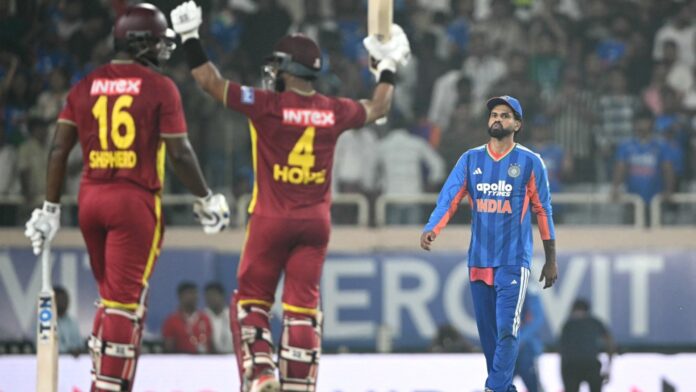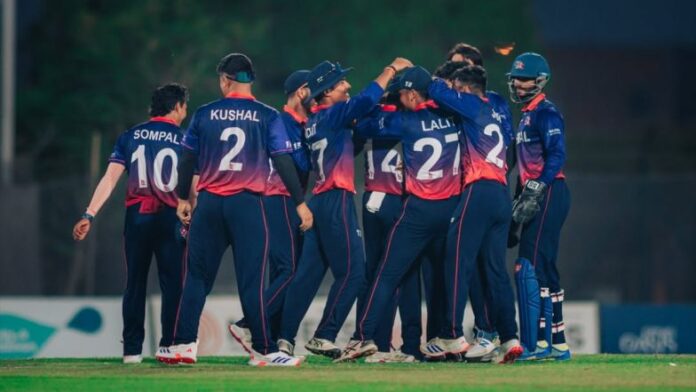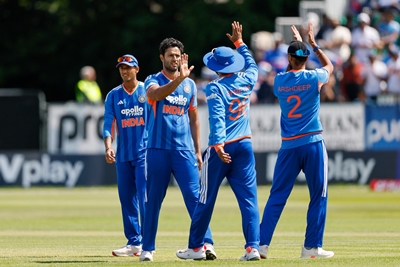

MANCHESTER — Forty-eight hours ago, Ireland completed what cricket had never seen before: a Test-playing nation winning a T20 series against India. Now Shreyas Iyer’s squad arrives at Old Trafford for what is effectively the first competitive match of a five-match England series, and Saturday afternoon in Manchester is the first occasion this group has had to answer the question the last two days in Belfast posed.
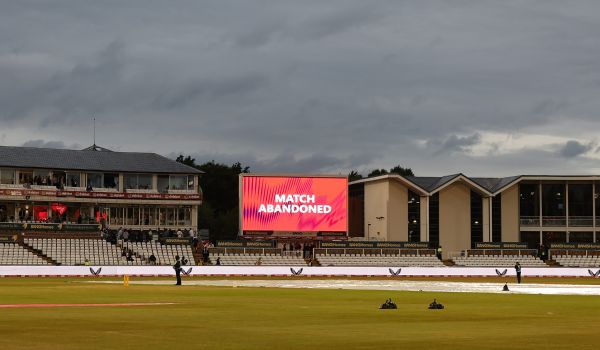
The series was supposed to open at Chester-le-Street on Wednesday. Rain cancelled it without a ball bowled. That the most consequential thing to happen to this squad in its first week in England occurred not on a cricket ground but at Stormont in Belfast — where debutant Jai Moondra’s three-wicket burst ended India’s 33-month unbeaten T20I series run in the final match — gives Saturday’s fixture a weight that a second game in a five-match tour series would not ordinarily carry.
India have assembled a deliberately young T20 squad for this leg of the England tour. Rohit Sharma and Virat Kohli are preserved for the three-match ODI series that follows; the short format belongs to Iyer, Tilak Varma as vice-captain, and a group that includes teenagers Vaibhav Sooryavanshi and Suryansh Shedge alongside more established IPL names: Sanju Samson, Abhishek Sharma, Ishan Kishan, Axar Patel, and the wrist spinners Varun Chakravarthy and Ravi Bishnoi. The Ireland series was played under similar rotation policy, and it ended with a defeat so complete — 2-0, with the second match decided by one run — that the margin flatters the overall picture.
The decisive moment in Belfast was Moondra’s debut burst that gave Ireland a lead they protected. But Ireland’s broader ability to contain and then chase against a squad with India’s T20 depth pointed to something less specific than one bowling performance: this group, without its senior statesmen setting the tone, has not yet found its collective rhythm. Old Trafford offers the first chance to find it against stronger opposition.
England come into this series at home, on surfaces and in overhead conditions they understand, with an established short-format identity. The England side that plays T20 cricket at Old Trafford in July is not the same proposition as a bilateral series in India: the pitch historically favours batting at pace, overhead cloud can help seam, and visiting spin bowlers face a different set of challenges than they encounter on subcontinental surfaces. Chakravarthy and Bishnoi, who have been India’s most reliable T20 wicket-takers through IPL seasons, will face the fuller test of whether their effectiveness transfers to English conditions.
Axar Patel’s left-arm spin has historically performed better in English conditions than conventional off-break bowling, and his combination of batting depth at number seven or eight and reliable overs adds flexibility that becomes more valuable on surfaces where the pace of the pitch is unpredictable. Washington Sundar provides off-spin variety and a similar batting contribution lower down. The all-round depth of this squad is its structural asset; the uncertainty after Belfast is whether the batting unit can produce enough runs to make that depth matter.
Arshdeep Singh leads the pace attack having developed into one of the more reliable T20 new-ball operators in international cricket over the last two years. Harshit Rana and Prasidh Krishna offer variations. The opening stands available in Abhishek Sharma and Sooryavanshi can be destructive in the first six overs; Samson’s ability to accelerate from the outset gives the middle order a different kind of momentum. The pieces are in place for a performance that resets the scoreline from the Ireland tour.
The five-match format works differently from the two-match series that went wrong in Belfast. A series of this length allows for adjustment — reading the surfaces as the tour moves from Manchester to Nottingham to Bristol to Southampton, identifying the right combination of spinners versus seamers as conditions change. One result at Old Trafford will not define it. But losing a third consecutive T20I, compounding the Ireland sweep, would add a narrative weight to this series that the selectors’ rotation policy and the squad’s individual abilities were not designed to create.
What Old Trafford’s pitch produces on Saturday evening, and which version of Iyer’s young Indian squad appears, are not knowable in advance. The Ireland series offered one answer to what this group looks like under pressure without its senior figures. The five-match England series, starting under the Manchester lights at 7pm IST, will provide the fuller picture of whether that answer holds or whether Belfast was the aberration rather than the pattern.