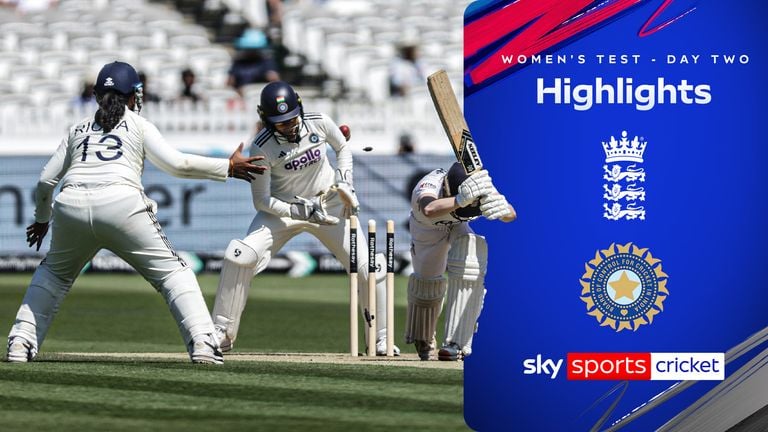

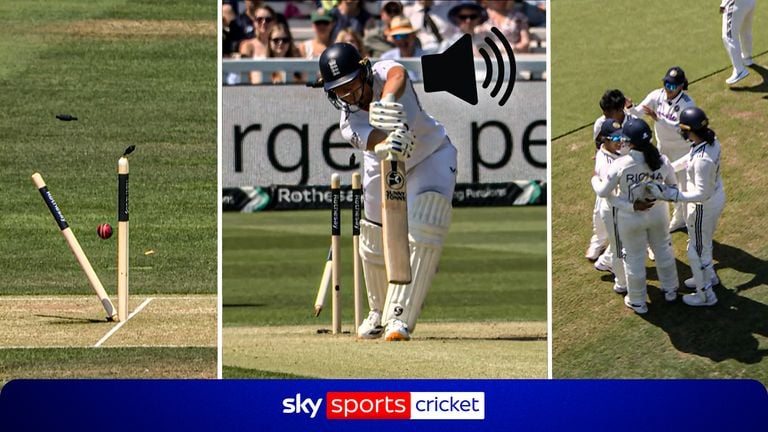
LONDON – Lauren Filer went back to drive and was struck on the pad. The umpire’s finger went up. Kranti Gaud walked back through her teammates with five wickets for 27 runs, and in the Long Room at Lord’s Cricket Ground, a board that had existed for more than a century began carrying its first woman’s name.
Gaud took those five wickets in 14.1 overs on day two of the Rothesay Women’s Test, England’s first innings reduced to 170 all out in 59.1 overs. She dismissed Maia Bouchier caught behind, removed Alice Capsey through the gate, trapped England captain Nat Sciver-Brunt lbw for 44, had Lauren Bell caught at slip off a rebound from Shafali Verma’s hands in the outfield, and ended England’s innings with Filer lbw to complete the five-for. No bowler had taken five wickets in a Women’s Test at Lord’s before Saturday. No woman’s name had appeared on the Honours Board before Saturday. Both conditions changed with the same delivery.
The Lord’s Honours Board in the Long Room records centuries and five-wicket hauls achieved in Test matches played at the ground. It has been in existence since the late nineteenth century, updated whenever a batter reaches three figures or a bowler takes five in an innings at Lord’s. The board has always reflected cricket as played in its era – which, until Thursday’s inaugural women’s Test, meant the exclusion of women’s cricket from the Lord’s Test calendar entirely. Gaud’s five-for was the first five-wicket haul by any bowler in a Women’s Test at the ground. Its placement on the board was automatic.
England had their best individual contribution in Amy Jones’s 52, caught at short leg after building the innings’ most fluent partnership. Sciver-Brunt’s 44 ended at Gaud’s hand. The rest of the batting card produced figures trapped before they became partnerships, with England collapsing in two distinct phases – three wickets for 15 runs in one spell, six for 39 at another point. The 170 they posted left India with a significant first-innings advantage to build on.
India had batted first when the inaugural women’s Test at Lord’s began on Thursday. England’s pace attack struck early, reducing India to three wickets down before stumps on day one. India completed their first innings on day two for a total that gave their bowlers the platform Gaud used. England then batted and were dismissed for 170, returning the initiative India had built.
Smriti Mandhana was the other story of the day. India’s left-handed opener was unbeaten on 69 at stumps after an 88-run opening partnership alongside Shafali Verma and an unbroken 66 alongside Natasha Bhatia. She requires 31 more runs for a century. A hundred would place her name on the same board Gaud joined on Saturday – the second woman, if Mandhana reaches it, to be inscribed on a list that had carried only men’s names since its creation.
India’s lead stood at 269 runs at the close of day two, with 154 for one in their second innings. England require days three and four to produce something the first two days have offered no evidence they can. The position points toward an India result unless their batting declaration or the remaining days produce variables the scoreboard does not yet reflect.
The same day’s play also brought Heather Knight’s retirement from international cricket – England’s most-capped women’s cricketer, dismissed lbw in her final innings, a similar outcome to the series of lbw decisions that defined England’s session against Gaud. Lord’s hosted both events simultaneously: a founding figure stepping back, and an Indian pacer writing the ground’s history for the first time. The conjunction was not scripted but it was not without meaning.
According to Sky Sports, analyst Nick Knight said England had looked “a little naïve in key moments – the way they have looked to bat and bowl. India have shown greater knowledge of the little details.” The detail Gaud extracted from the Lord’s surface on day two was five wickets in 14.1 overs for 27 runs, and England had no answer for it.
Gaud is a seam bowler who had not previously taken a five-wicket haul in Test cricket. She found the movement Lord’s offers to bowlers who can land the ball in the right area, and she exploited it methodically rather than through pace alone. Her figures of 5 for 27 represent one of the most economical five-wicket hauls in women’s Test cricket history at any ground. That the ground in question was Lord’s, and that no woman had bowled a five-for there in any previous Test, gave the numbers an additional dimension the statistics alone do not fully convey.
The Lord’s Honours Board is not a record database. It is a room in a building where cricket at its highest level has been conducted since before most of its current practitioners were born. For the entirety of that history until Saturday, the board recorded achievements by men. Kranti Gaud took five wickets for 27 runs in the Rothesay Women’s Test on day two, and the record adjusted itself. Mandhana has three days to add her name below it.