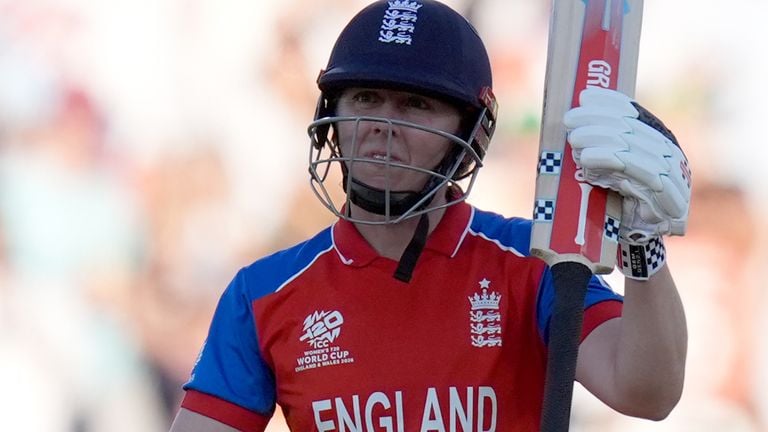

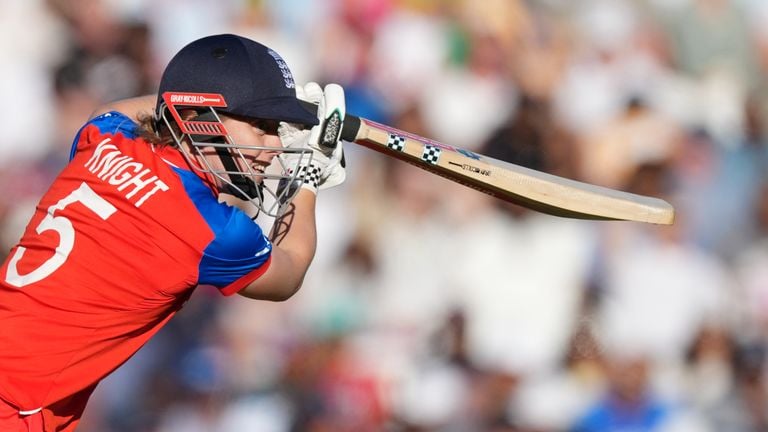
LONDON – Heather Knight’s final innings at an international cricket ground lasted twenty-five deliveries. She scored six runs, was trapped lbw by India’s Sayali Staghare, and walked back through the Lord’s pavilion gate not quite knowing, or perhaps knowing exactly, that it was the last time. By Saturday evening, she had confirmed it.
England’s most-capped women’s cricketer announced her retirement from international cricket at 35, bringing the curtain down on a sixteen-year career that produced 320 international appearances, 199 matches as captain, and 7,988 runs across all three formats of the game. She added to those figures the 2017 ICC Women’s World Cup, six international centuries – the first by an English woman across all three formats – and a generation of results that reshaped what English women’s cricket expected of itself.
The announcement arrived in awkward company. At stumps on day two of the Rothesay Women’s Test at Lord’s, England trailed India by 269 runs. Smriti Mandhana and Natasha Bhatia were at the crease. The position was not hopeless but it was not the exit that sixteen years and 320 international appearances might have suggested as fitting. Cricket tends not to arrange those.
The day itself had already written a different kind of history. India pacer Kranti Gaud took a maiden Test five-wicket haul to become the first woman ever inscribed on Lord’s Honours Board, joining a list previously occupied exclusively by men. Knight’s final day of international cricket happened alongside that landmark. The conjunction – a founding figure stepping back as the ground acknowledged, for the first time, a woman’s bowling performance – was not scripted but it was not nothing.
Her retirement was not unexpected in any broad sense. At thirty-five, with women’s cricket in England entering a new generation shaped by the Hundred and a younger roster taking shape, the question had long been timing rather than eventuality. The answer turned out to be Lord’s, in a summer in which India’s pace attack had something to say about it, even if the lbw by Staghare was simply cricket rather than valediction.
Knight became the first English player to score centuries in all three international formats. She ranks third in England women’s all-time ODI and T20 run-scorers. Her bowling complemented a batting profile that made her genuinely useful across two disciplines without ever defining her as anything other than a batter – which is why those 7,988 runs are the number that tells the most complete story.
The 2017 ICC Women’s World Cup remains the anchoring achievement of her captaincy. The final at Lord’s against India, won by England, drew the largest crowd for a women’s cricket match in England at the time. The broadcast figures that followed rewrote what English women’s cricket could expect commercially. Knight was the captain holding the trophy when the shift became visible. Whether the 2017 moment caused the growth or reflected it is the kind of question historians will argue. What is not in question is that her 199 matches as captain happened across an era of genuine transformation, not just incremental progress.
She was brief in her public comment, without the kind of retrospective a sixteen-year career might have been expected to generate.
“I’m extremely grateful and privileged to have gone on the journey that I have been on as an England cricketer,” Knight said.
That journey began with an international debut in 2010, when the Hundred did not exist, when women’s Test cricket had not been played at Lord’s in years, and when the gap between what the men’s game received and what the women’s game could expect was wide enough that many players held other employment alongside their cricketing careers. By the time Knight scored her six runs on Saturday before Staghare’s delivery trapped her in front, that world had changed beyond recognition. Her career did not cause that change alone. It ran alongside it, helped shape it, and would not have produced those numbers inside a different structure.
According to Sky Sports, Knight’s announcement came after the day’s play. The England and Wales Cricket Board has not announced a successor as captain. Whoever is appointed inherits a side still adjusting to the post-Knight era, facing a 269-run deficit in a Test match that will continue without its longest-serving player, in a summer of women’s cricket that has already produced moments – Gaud’s name on the Honours Board – that carry their own significance for how the game understands itself.
What is left is the record: 320 caps, 199 as captain, six centuries, 7,988 runs, one World Cup. And a long room at Lord’s where, on the same afternoon she scored her final six, an Indian pacer’s name went up on a board that had never carried a woman’s name before. Knight’s career ended on a day the ground she had played at longest finally started keeping women’s records. For India, a summer that saw their men’s T20 squad face a BCCI review after five consecutive defeats ended at Lord’s with their women making history instead. The timing was cricket’s alone.