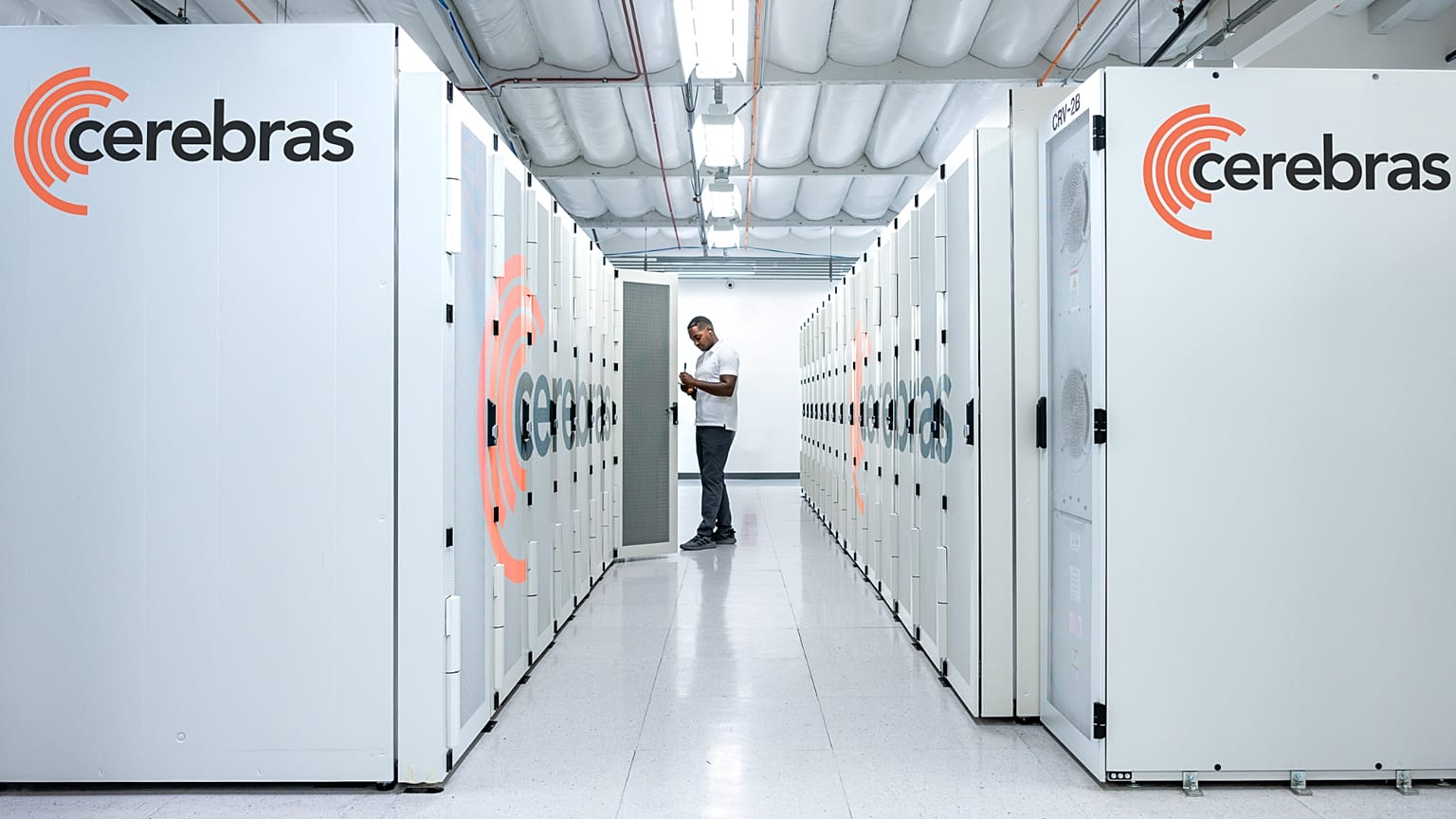

SAN FRANCISCO – Cerebras Systems will deploy 200 megawatts of artificial intelligence computing capacity across Europe by the end of 2027, with its first European data center operational by the close of 2026, in a multibillion-dollar expansion the company frames as a direct answer to Nvidia’s near-total grip on European AI infrastructure.
The expansion targets France and the Nordic region, two markets where government interest in AI data sovereignty has been most visible. No specific locations or power contracts have been disclosed. Nvidia currently powers more than 90 percent of announced European AI factory projects. Cerebras’ argument is that it can capture the portion of European enterprise and government demand that will not, for policy or commercial reasons, route through US hyperscalers built on Nvidia hardware.
Chief Executive Andrew Feldman framed the expansion in terms of data sovereignty rather than price competition. He said the company believes it can meet all the unique European requirements on data management and sovereignty by putting data centres across Europe, Euronews reported. The argument is not that Cerebras infrastructure is cheaper or faster than Nvidia-powered alternatives, but that it sits on European soil under European legal frameworks, which matters differently to a government buyer than a hyperscaler’s pricing sheet.
Cerebras completed a $5.5 billion initial public offering in May 2026, the fifteenth-largest listing in Wall Street history, which provided the capital runway for this expansion. The company’s core product is a wafer-scale AI chip designed specifically for inference workloads. Unlike Nvidia’s general-purpose GPUs, which handle a broad range of computing tasks, the Cerebras chip is purpose-built for running AI models quickly at lower power consumption. That architecture makes it well-suited to enterprise deployments where organizations query trained models rather than train new ones from scratch.
The expansion lands as European AI policy is shifting from aspiration to procurement. France’s government-backed AI investment program has committed billions to domestic and near-shore compute capacity. Nordic governments have similarly moved to lock in domestic AI data processing through national strategies. For Cerebras, these policy environments function as a sales channel: governments that have mandated domestic AI compute have to buy it from someone, and Nvidia’s European infrastructure footprint, while growing, is concentrated in hyperscaler facilities that do not offer the data residency guarantees some European public-sector contracts require.
The company already holds a partnership with OpenAI, which uses Cerebras infrastructure for certain workloads. That relationship gives Cerebras technical credibility in the European market: a compute provider whose hardware OpenAI has already integrated is a different proposition to European research institutions and procurement officers than an unknown vendor with a spec sheet.
Nvidia’s European position is not as entrenched at the data-center level as its GPU market share suggests. Announced European AI factory projects use Nvidia chips, but many of those factories remain under construction. Cerebras’ strategy is to be operational on European soil before those factories complete and before Nvidia’s European hyperscaler relationships are fully locked in. Early government and research contracts by 2026 would create switching costs that make subsequent competition harder to mount.
The 200 megawatt target by end of 2027 is meaningful compute scale. Large language model deployments at enterprise level typically draw between one and ten megawatts per cluster; 200 MW can support dozens of concurrent large-scale deployments across multiple countries. How Cerebras will source that power, and at what cost, is one of the variables the expansion timeline has not yet addressed. European grid capacity for large AI data centers is a real constraint, with several planned hyperscaler facilities facing multi-year delays in securing utility-scale power connections.
The European expansion reflects a broader moment in which AI companies are pushing toward compute independence. OpenAI’s custom inference chip with Broadcom and Anthropic’s conversations with Samsung about a 2nm custom chip represent one version of that push, through bespoke silicon. Cerebras is pursuing a different version: not building a new chip, but building the physical compute footprint that reduces European AI companies’ dependence on hyperscalers whose infrastructure sits in US jurisdiction.
What the announcement does not reveal is which specific European customers have committed to using Cerebras infrastructure, or what revenue agreements underpin the 200 MW target. European businesses, research institutions, and governments are named as target customers without any of them being identified. That gap matters: 200 MW of data center capacity costs hundreds of millions to build and operate, and the business case depends entirely on the customer commitments beneath it. The European AI infrastructure market in 2026 has more announced ambitions than signed contracts, and Cerebras will be measured on how many of those ambitions it can convert into paying relationships before the window closes.
Related Posts