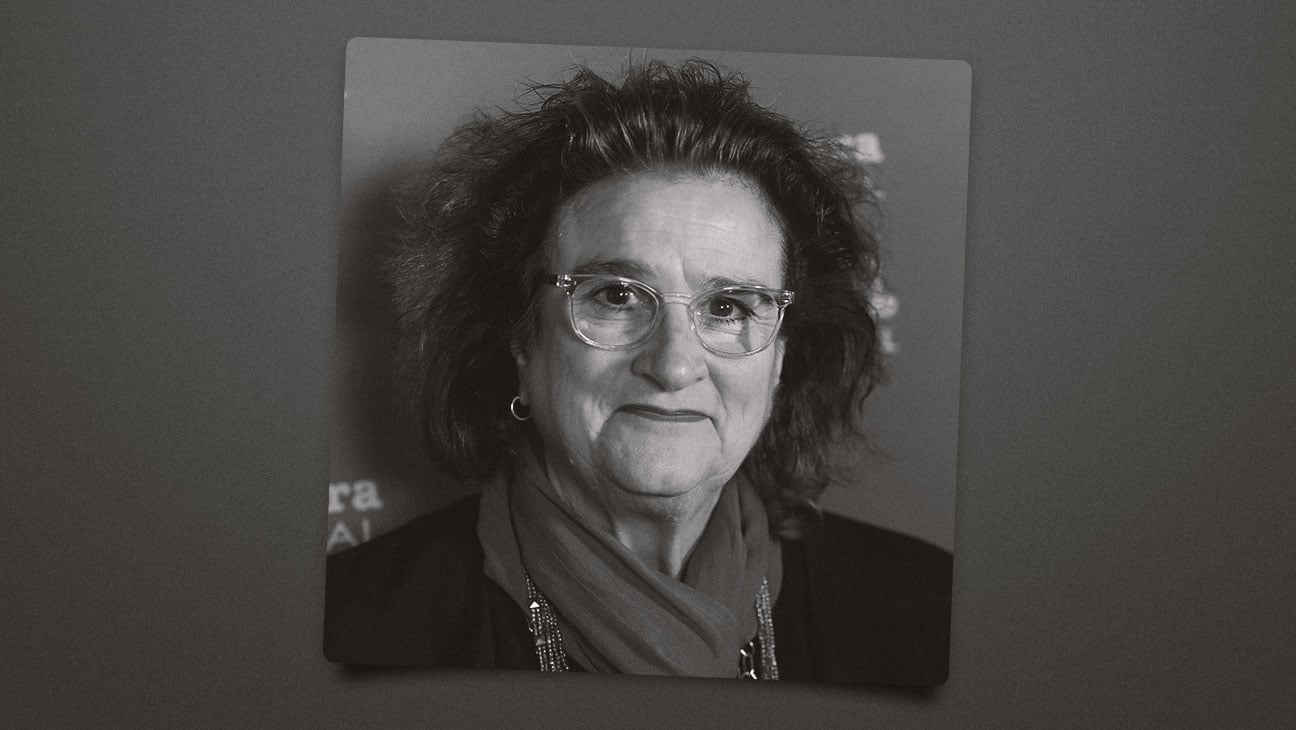

SANTA BARBARA, Calif. – When Quentin Tarantino needed someone to rebuild 1969 Los Angeles for Once Upon a Time in Hollywood, he came to Barbara Ling with one instruction: no green screen, everything real. Ling took him seriously. She changed the Sunset Strip billboards. She sourced period-accurate storefronts. She turned a studio picture into something that looked less like a production design job and more like a recovered archive.
Ling died Thursday, July 10, 2026, in Santa Barbara, California, after a battle with cancer. She was 73.
Her Academy Award for Best Production Design – shared with set decorator Nancy Haigh and presented at the 92nd Academy Awards in February 2020 – capped a career that began not in film but on stage. Before Ling arrived in Hollywood, she had designed more than 200 theater, opera, and musical productions. That training gave her a spatial intelligence and a preference for the physical over the digital that she never abandoned.
Born Barbara Claire Ling in August 1952 in Los Angeles, she made her film debut with David Byrne’s True Stories in 1986, a deadpan tour through the invented landscape of a Texas suburb. The collaboration with Haigh began two years later on Checking Out (1988), a partnership that would extend across three decades and reach its most celebrated chapter.
The early 1990s concentrated her work. Oliver Stone’s The Doors (1991) asked her to reconstruct the atmospheric Los Angeles of a decade she had lived through. Fried Green Tomatoes and V.I. Warshawski followed the same year. Then Joel Schumacher called. Batman Forever (1995) and Batman & Robin (1997) gave Ling the largest canvases of her career – Gotham as neon cathedral, every corridor vaulted and overwrought by design, the Batmobile an object that had to be both vehicle and icon. Those films remain the most commercially dominant of her filmography and the most contested in terms of critical legacy. Ling never dismissed them.
That capacity to operate across registers – to build neon megalopolises and then turn to intimate character studies – distinguished her from production designers who became identified with a single scale. Hearts in Atlantis (2001), No Reservations (2007), The Lucky One (2012): smaller films, quieter environments, the same discipline applied. She became the kind of collaborator directors collected, valued not for a signature look but for a demonstrated ability to translate the interior logic of a story into its physical world.
Once Upon a Time in Hollywood was where those forty years converged. Tarantino’s ninth film – reviewed as part of Eastern Herald’s ranking of his complete filmography – takes place during the summer of 1969 along a Sunset Strip that no longer exists. The challenge was not recreation but credibility: the film had to feel inhabited, not exhibited. “I want this to be real,” Tarantino told her, according to the Hollywood Reporter. “I don’t want to do green screen.” Ling delivered completely. Every billboard was sourced for period accuracy. Every facade was dressed without resort to digital alteration. “Everything was real,” she said afterward.
The Oscar followed as confirmation of what the film’s audiences already understood visually: that Once Upon a Time in Hollywood achieved its emotional effect through the precision of its physical environment. The 92nd Academy Awards ceremony in February 2020 came in the last weeks before the pandemic reshaped how films were made, and Parasite’s sweep of the major categories that night overshadowed what the production design win represented – an affirmation, delivered to an industry accelerating toward virtual production, that the physical set still mattered. Haigh, who had been by Ling’s side since that first collaboration in 1988, shared the award.
Ling’s final production was Michael (2026), the Lionsgate biographical film starring Jaafar Jackson as Michael Jackson, directed by Antoine Fuqua. She worked on it during the later period of her illness. The film went on to become the highest-grossing music biopic in history, surpassing Bohemian Rhapsody at $911.9 million worldwide. That her final design work contributed to a commercial milestone of that scale is an unlikely epilogue, but one consistent with a career that moved between artistic and industrial success without preference for one over the other.
According to the Hollywood Reporter, Ling is survived by her wife, Lindsay, and their sons, Clay and Will. No public memorial arrangements had been announced as of Friday.
What the industry has not answered is who fills the gap she leaves at the intersection of directorial ambition and set-building conviction. Tarantino, whose partnership with Ling on Once Upon a Time in Hollywood was as complete a director-designer collaboration as the decade produced, has not commented publicly. That absence may say more than a statement would.