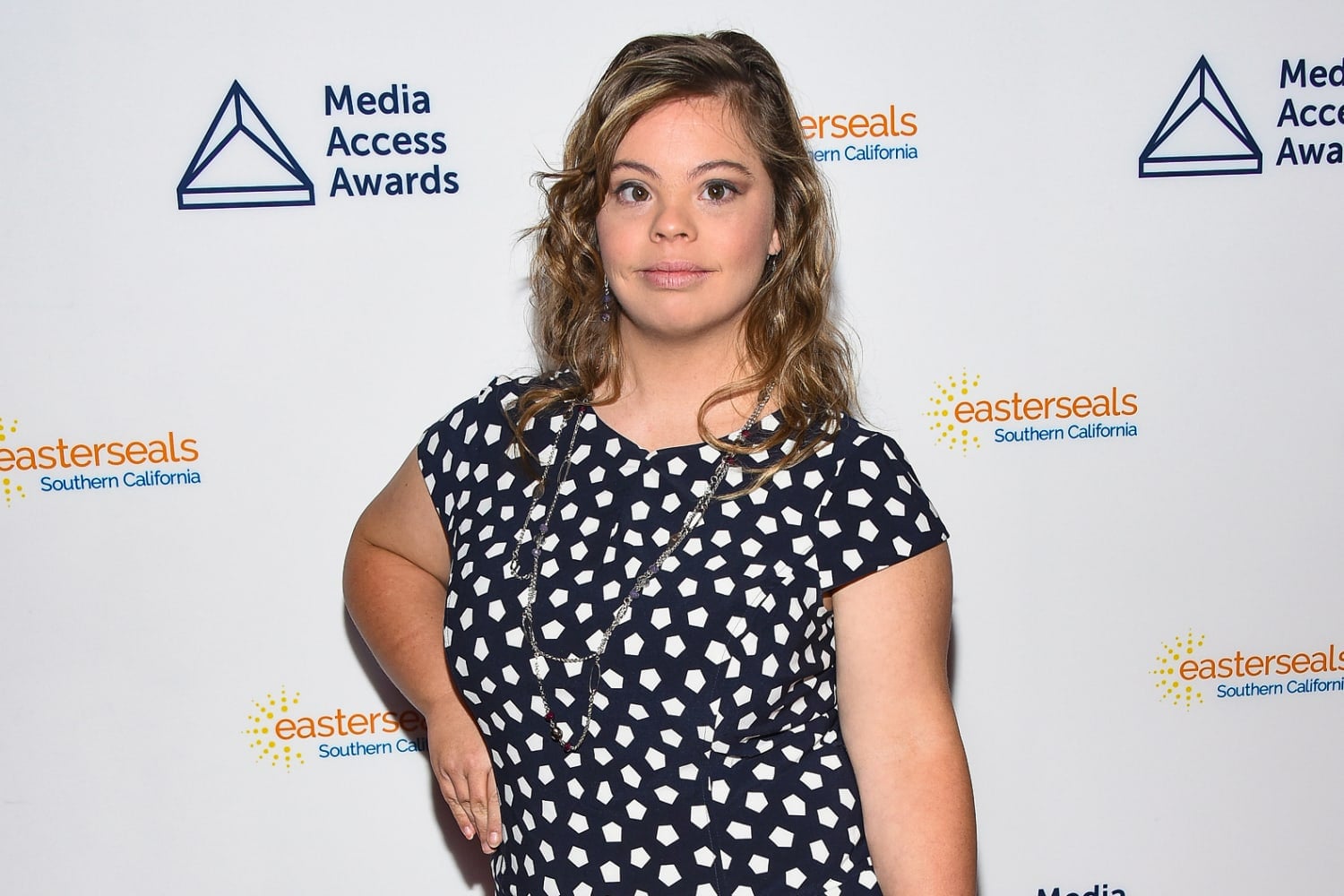

LOS ANGELES – Cristina Sanz, who spent four seasons on A&E’s reality series “Born This Way” building a following among viewers who had rarely seen a life like hers reflected on television, died Monday at 36 after suffering sudden cardiac arrest at her day program. Her parents announced her death on Wednesday through her Instagram account.
“Her death was a total shock and unexpected,” Mariano and Beatriz Sanz said in a statement posted to her account. “We will forever treasure the gift of her life.”
Sanz was one of the original cast members of “Born This Way,” the Emmy-winning documentary series that followed a group of young adults with Down syndrome through the milestones of independent life. The show ran from 2015 to 2019 on A&E and became, in the cable television landscape of that era, something genuinely unusual: a program that treated its subjects as people rather than subjects, following their careers, romantic relationships, and daily frustrations with the same attention given to any other reality cast.
Sanz’s storylines on the show circled around ambition. She pursued work, and viewers watched her move through job interviews, rejections, and small victories with a tenacity the show rarely had to coax. “Born This Way” was, at its best, an argument delivered in real time that ambition looked the same regardless of a chromosome count.
In 2018, she married Angel Callahan, a fellow cast member she had known through the series. Three years later, the couple announced a separation, citing the strain of the pandemic on a relationship that had spent years in front of cameras. Both said the separation was mutual. The show had ended by then, but the cast remained connected through social media and public appearances.
As NBC News reported, Sanz experienced the cardiac arrest during what had been a routine morning at her day program, a structured environment designed to support the independence she had spent years demonstrating was possible. She was rushed to the hospital, where doctors were unable to stabilize her heart. No further details about the circumstances of the episode have been released. A&E issued a statement extending condolences to her family and to those who knew her.
The show she helped anchor had an unusual legacy for a cable reality series. “Born This Way” earned Emmy nominations during its run at a time when disability representation in scripted television remained largely confined to supporting roles, and its success argued that audiences would invest emotionally in stories built around the lives of people with Down syndrome. The 2026 Emmy nominations, announced earlier this month, recognized a television landscape still working to address the representation gaps the show had spent four seasons illuminating.
Outside television circles, the show found a second life in advocacy spaces. Organizations working on employment inclusion and independent living for adults with Down syndrome used episodes in campaigns arguing that the expectation gap between what adults with Down syndrome could do and what employers were willing to offer was a policy failure as much as an individual one. Sanz’s own storylines were cited in discussions about supported employment programs, in part because she articulated on camera what it felt like to be consistently underestimated.
Her death comes in a year that has already taken a toll on the entertainment world. Bonnie Tyler, the Welsh singer whose catalog defined a generation of power ballads, died earlier this week at 75. The losses are otherwise unrelated, but both women had built followings among audiences who recognized something in their work as genuine.
What Sanz was working toward in the weeks before her death is not known. She was 36, still in the early middle of a life that had already exceeded what many once considered possible, and the day program where she died was a place designed to extend that possibility further. The specifics of that Monday morning have not been released.
What has emerged is the scale of the response from viewers who watched her across four seasons. Most of them were strangers who felt they had witnessed something true, and who now find themselves grieving someone they never met.