
SAN FRANCISCO – The text message read almost like a prank. “LOL, I found out I can access the [network storage].” The engineer who typed it had just left Apple for OpenAI, and the court filing the company submitted last month claims he had not yet lost access to his former employer’s internal systems, and had not been asked to.
That line is the sharpest in a 41-page complaint Apple filed July 13 against OpenAI, accusing it of running what the company calls a “pattern of misconduct” to move confidential designs from Cupertino into OpenAI’s new hardware division. The more quietly significant detail, though, is what the complaint omits. Jony Ive is not named in it.
That choice is unlikely to be an oversight.
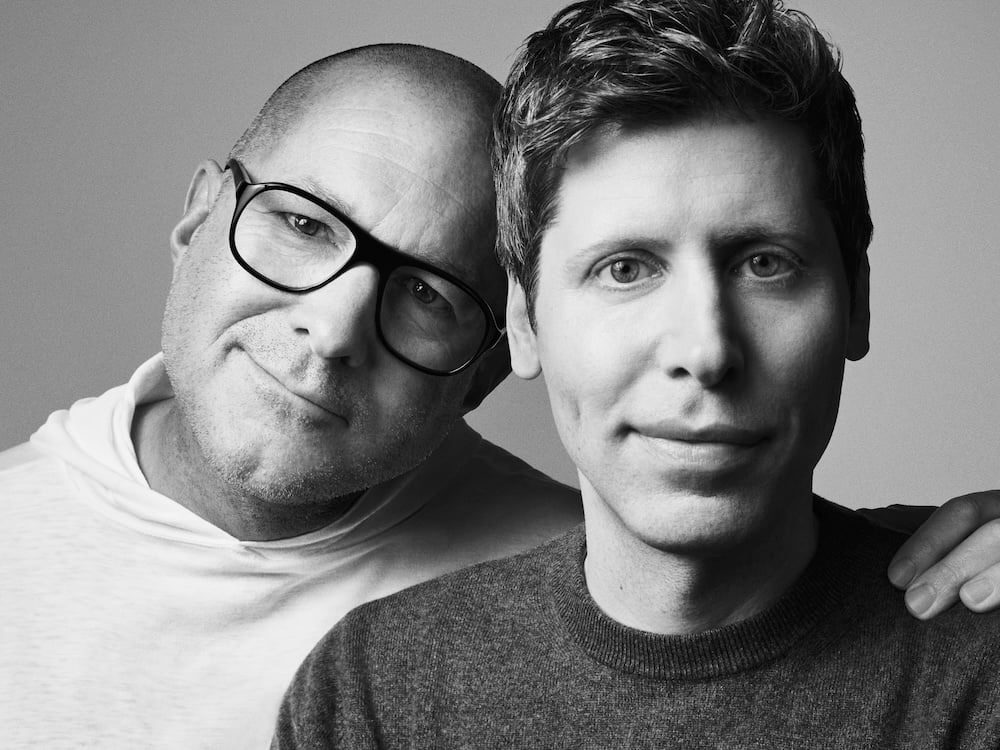
Ive left Apple in 2019 after nearly three decades and is now working directly with Sam Altman to build io, the OpenAI subsidiary developing the company’s first consumer hardware products. Apple’s lawsuit targets that project with precision, going after the engineers, manufacturing suppliers, and design processes that io depends on. But it stops at Ive himself. The decision shapes what the case is and is not: it keeps the legal theory focused on employee conduct and corporate misconduct, rather than inviting an argument about whether a famous former designer’s new work belongs to his old employer.
At the center of the complaint is Tang Yew Tan, who spent 24 years at Apple, rising to vice president of product design before joining OpenAI as its chief hardware officer. The filing also names Chang Liu, described as a former senior systems electrical engineer who allegedly discovered he could still reach Apple’s internal network after switching employers, and Yu-Ting “Alyssa” Peng, described as a conduit between the two companies. A third engineer expressed surprise during a job interview when told to bring “actual parts” and “CAD/design artifacts” from Apple to his session with OpenAI recruiters.
The specific trade secrets Apple claims were taken are concrete. The complaint lists metal-finishing techniques used by io’s manufacturing partners, power and battery design specifications, iPhone and Apple Watch design artifacts in the form of CAD files and prototypes, and methods that allowed departing employees to access Apple’s network storage through an authentication flaw. Apple says io used Apple’s manufacturing processes by misleading the company’s own supplier network, communicating with factories using Apple’s confidential internal terminology and specifications.
The most pointed allegation in the filing concerns how OpenAI prepared its new hires. Apple claims that OpenAI circulated Apple’s own internal guidance document for departing employees and used it to coach new arrivals on how to handle their exits. The document was repurposed, Apple says, to tell workers how to avoid the “dreaded walkout,” Apple’s standard procedure for escorting departing employees from its facilities, and to instruct them to contact OpenAI immediately if asked to sign additional exit paperwork.
Apple characterizes the conduct as “normalized and exemplified by leadership,” calls OpenAI’s business practices “rotten to its core,” and says the complaint describes only “the tip of the iceberg,” predicting discovery will expose misconduct “many times greater” in scale. OpenAI responded that it is “not aware of any evidence that this complaint has merit” and has “no interest in other companies’ trade secrets.”
The timing adds pressure on OpenAI beyond the courts. The company has filed confidentially for an initial public offering, with timing expected late this year or in 2027. Its consumer brand ambitions and the io hardware project are central to the valuation case it will present to investors. A lawsuit that directly names the engineers building those products and describes io’s supply chain as a conduit for Apple processes is not easy to confine to a footnote in an IPO prospectus.
“Even setting aside whether or not the court grants any kind of injunctive relief,” analyst Sean O’Kane told TechCrunch, “it just naturally can lead to delays.”
Apple says it raised its concerns with OpenAI in February and received no response before filing. The pattern echoes other recent intellectual-property disputes over AI development, which have multiplied across the industry. But this case extends beyond training data into physical design: the hardware prototypes, supply chain relationships, and manufacturing techniques that will determine whether io’s first product actually reaches shelves.
The open question is what Apple is actually seeking from the courts. Monetary damages are one option. Injunctive relief that could halt the io project is another. A third possibility is something closer to disruption: making OpenAI’s hardware timeline harder and slower while Apple builds its own consumer AI products. The complaint was filed as Apple’s own AI integration strategy has accelerated, and as the specific allegations in the 41-page complaint suggest a sustained and systematic operation rather than isolated incidents.
What the filing leaves unsettled includes whether Tang Tan or any named defendant actually transferred the documents Apple describes, what discovery will reveal about the scope of io’s use of Apple’s processes, and whether the specific claims Apple is making are protectable as trade secrets under California law. The complaint is Apple’s version of events. None of it has been tested in court.
For now, OpenAI faces a lawsuit, a confidential IPO filing, and a hardware project described in a federal complaint as having been built, in part, on Apple’s work. The io device that Ive and Altman have discussed publicly remains at the center of one of Silicon Valley’s sharpest corporate disputes in years. Whether that costs OpenAI an injunction, a settlement, or something discoverable and far larger, the filing has already changed the conditions under which io will be built.