
BOSTON – The sadness in Larry Bird’s words, written nearly three decades ago, has only deepened with time.
“The one I hate to see go without a ring is Patrick Ewing,” Bird wrote in his 1999 memoir Bird Watching, as Yahoo Sports reported, reflecting on a generation of Hall of Famers who retired without the championship that defines basketball’s ultimate measure. “It’s sad for me to watch some of the older players come to the end of their careers.”
What made the tribute striking was its source. Bird and Ewing had spent most of the 1980s and early 1990s as authentic enemies – their teams, the Boston Celtics and New York Knicks, locked in one of basketball’s fiercest geographical and ideological rivalries. Ewing, for his part, was not shy about it. “Larry and I got very close during the Olympics,” he acknowledged years later. “At first, during New York against Boston, I used to hate him, ’cause he talked so much trash.”
Bird was among the most celebrated trash-talkers in NBA history, a psychological weapon he deployed with the precision of his mid-range jumper. Against Ewing and the Knicks, he was relentless. What changed everything – for both of them – was the summer of 1992 in Barcelona.
The Dream Team that assembled that July was, by any measure, the greatest basketball roster ever constructed. Michael Jordan, Magic Johnson, Charles Barkley, Bird, and Ewing shared a locker room in Spain as the United States entered the Olympics for the first time with active NBA professionals. The gold medal was a foregone conclusion. What no one anticipated was how thoroughly the experience would dissolve decades of professional hostility.
Bird had been physically diminished by the time he reached Barcelona. The chronic back pain that would end his playing career was already visible in his labored movements during training sessions. Ewing, 29 and entering what would prove his prime, watched with something approaching admiration as his former nemesis competed through obvious pain. Bird retired the following year. The Barcelona gold was among his final competitive appearances.
Two seasons later, Ewing came as close as he ever would to winning everything. The 1994 NBA Finals placed his Knicks against the Houston Rockets in a seven-game series that reached its decisive moment in Game 7. New York led in the final minutes before Hakeem Olajuwon finished with 25 points and 10 rebounds, and the Knicks fell 90-84. Ewing – who had averaged 17.9 points through the series – walked off the Toyota Center floor empty-handed.
It was the wound that never fully healed. “People think because these superstars have made all this money, they’ll leave the game satisfied, but I know talking to Patrick that it isn’t true,” Bird wrote. The assessment was not speculation. It was the observation of a rival who had come, unexpectedly, to know him.
Ewing played until 2003, adding stints with Seattle, Orlando, and Indiana after leaving New York in 2000. None of those teams came close. He won the gold medal in 1992 and the silver in 1984. He earned 11 All-Star selections, the Rookie of the Year award, and eventual enshrinement in the Hall of Fame. The NBA championship remained absent from a career whose statistical record – 21,000-plus points, more than 11,000 rebounds – would have earned him a ring had the bounces gone differently in June 1994.
Bird’s selection of Ewing over the other ringless greats from their era reflected something precise about Ewing’s competitive character. Charles Barkley never won a title. Karl Malone’s pair of Finals appearances with Utah in 1997 and 1998 ended in defeat to Michael Jordan’s Bulls. But Bird chose Ewing specifically – not out of pity in the conventional sense, but something closer to grief on behalf of someone whose hunger he recognized.
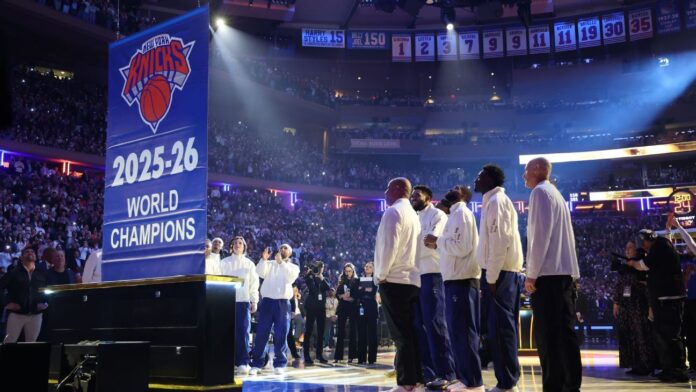
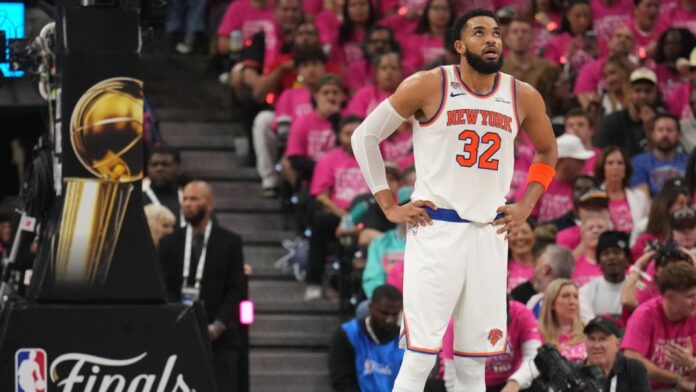
The New York Knicks’ return to the NBA Finals in 2026 and their subsequent championship added a dimension to this history that Bird could not have foreseen when he wrote those words. Ewing watched his former franchise end its 53-year drought this spring, with a roster he never coached reaching the title that Bird once grieved on his behalf. It was a title won by players Ewing never touched, in an era Ewing no longer inhabits as a participant.
What that meant to him personally – watching his team finally win the thing he spent 17 seasons trying to manufacture – he did not comment on publicly during the Karl-Anthony Towns-led championship run and its aftermath. That silence was its own kind of answer.
Bird’s sadness, articulated in 1999, reads differently in 2026. The Knicks won. The franchise delivered the moment he spent 17 seasons trying to manufacture. Basketball has a way of completing arcs in unexpected sequences – awarding the prize to the next generation long after the obsessive pursuit is done.
Patrick Ewing is 63 years old. He was inducted into the Naismith Memorial Basketball Hall of Fame in 2008, his jersey hangs from the Madison Square Garden rafters, and he is, by every credential the sport confers, among the greatest centers in NBA history. Larry Bird called him the player he most hated to see retire without a ring.
The ring belongs to someone else.