NEW YORK – The Michigan Team Championship is gone. The email from Scott O’Neil landed in players’ inboxes this week, acknowledging what the league called a “disciplined approach” to long-term sustainability, asking them to hold the course. For the dozens of golfers who signed LIV contracts and surrendered their PGA Tour cards starting in 2022, it was the clearest signal yet of where they stand.
Saudi Arabia’s Public Investment Fund bankrolled LIV Golf through four seasons and more than $6 billion in spending, making it the most expensive experiment in professional golf’s history. Its exit at year’s end was announced months ago. What emerged Thursday, according to reporting by the New York Post, is where the replacement capital stands: roughly $250 million to $300 million in what the league characterizes as qualified term sheets from unnamed “blue-chip investment firms,” organized around a restructured entity called LIV 2.0 under which players would own a majority stake in the tour they compete on.
That outcome is not yet secured. O’Neil set September as his target for closing a deal. The investors have not been identified publicly. And the Michigan Team Championship, the second event scratched from the 2026 schedule since PIF’s withdrawal was confirmed, is not coming back.
The cancellation matters more than a scheduling footnote. Each event LIV Golf pulls from its calendar saves tens of millions in venue, production and purse costs; each one also narrows the window for players to compete, earn and build the performance records that define careers. A vendor lawsuit filed in July over unpaid bills, reported separately from the investor discussions, adds a concrete texture that term sheets from unnamed firms cannot offset on their own.
O’Neil’s message to players and staff, first reported by Flushing It, was forward-looking rather than retrospective. He described ongoing investor discussions as moving “with strong momentum” and pointed to next week’s LIV event at Trump National Golf Club in Bedminster, New Jersey, where high-level meetings are planned that could clarify the deal’s shape. Under the restructured model he is pitching, the league would continue events across five continents under a financing syndicate, with players holding the majority ownership stake, a meaningful structural departure from the sovereign-fund model that built it.
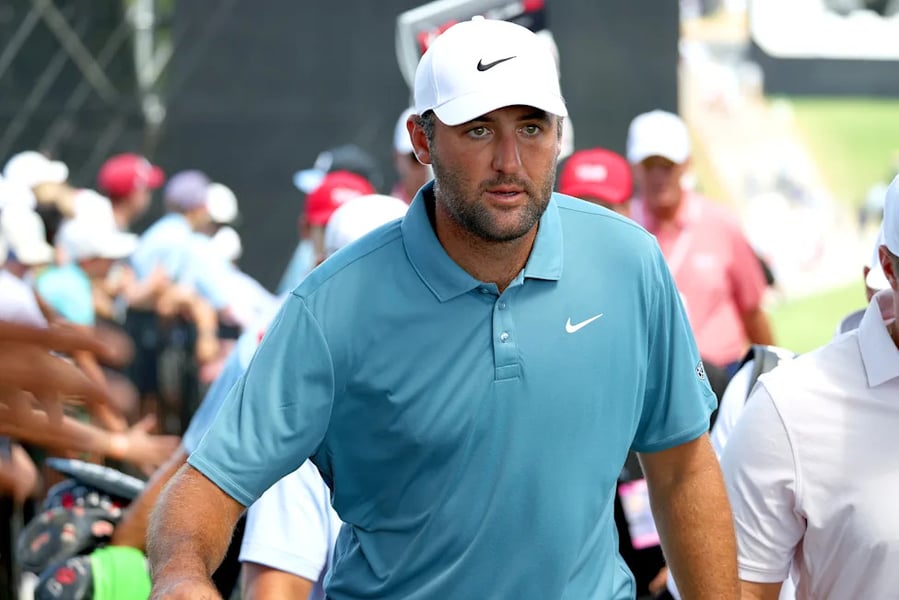
Whether the players whose original contracts were negotiated under the high-spend era will accept what LIV 2.0 offers is the question O’Neil has not answered in public. The purses that drew Dustin Johnson, Jon Rahm and Brooks Koepka from the PGA Tour ran to $20 million or more per event. Reports circulating this week suggest the restructured schedule could carry purses as low as $10 million, a meaningful reduction in what made LIV Golf financially transformative for the players who signed earliest.
The competitive landscape has also shifted around LIV in ways that compound the financial pressure. The PGA Tour, DP World Tour and Asian Tour agreed a multi-year strategic partnership through 2029 earlier this month, ending the Asian Tour’s prior relationship with LIV Golf and narrowing one of the routes through which LIV players had accessed world golf ranking points. The announcement did not appear in O’Neil’s email to players.
The math has always been difficult. A league that burned through $6 billion cannot make itself solvent on $250 million alone; that figure buys time and restructuring, not retroactive profitability. As The Eastern Herald reported in June, O’Neil acknowledged earlier this year that he could not guarantee the final four events of the 2026 season would take place. Michigan is now proof that those doubts were warranted.
If the Bedminster meetings produce what O’Neil is anticipating, a deal closes in September and planning for 2027 can begin. If they do not, the individual championship in Indianapolis in late August becomes effectively LIV Golf’s 2026 season finale with no successor structure confirmed. The PGA Tour’s own Rocket Classic opened Thursday at Detroit Golf Club, with Jackson Koivun arriving off a win over world No. 1 Scottie Scheffler and a full competitive field ready to determine the season’s final standings.
What no published account has established is who the investors are. The firms reportedly holding term sheets have not been identified in any regulatory filing, named by any source prepared to go on record, or confirmed by anyone outside the negotiations. The New York Post report cited people familiar with the situation speaking anonymously. That caveat does not make the reporting wrong; it means the claim cannot yet be independently verified, and September remains an aspiration rather than a commitment.
The players waiting on an answer are not waiting quietly. Golf Digest reported a “significant” increase in inquiries from LIV Golf players to the DP World Tour about their 2027 options, evidence that O’Neil’s deadline is not abstract to the people living it. Whether those inquiries become departures depends on contract terms nobody has publicly disclosed. What is clear is that everyone inside LIV Golf is running the same calculation the CEO is running. The question is whether September produces a different answer.