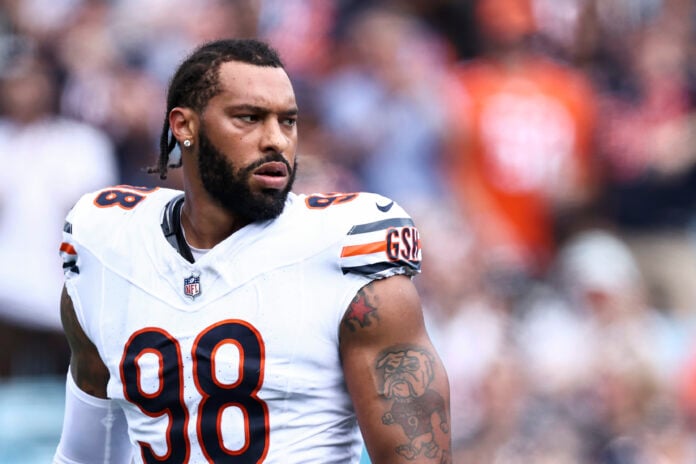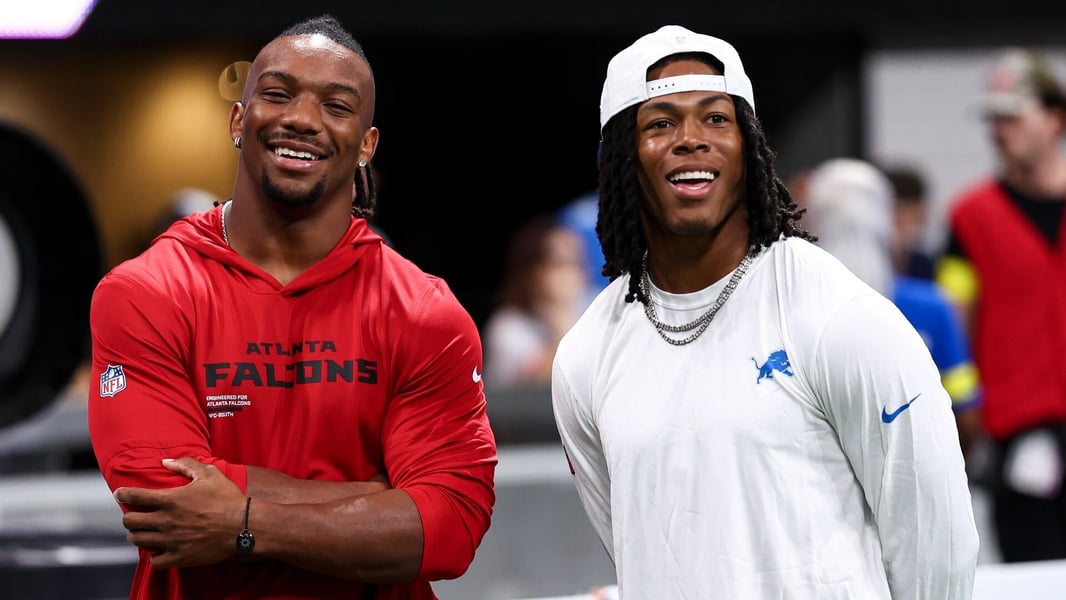

ALLEN PARK, Mich. — For the Atlanta Falcons and Detroit Lions, the 2026 NFL season began Wednesday morning with the same problem. The player each franchise depends on most arrived at training camp and went nowhere near the practice field. Bijan Robinson at the Falcons’ facility in Flowery Branch. Jahmyr Gibbs at the Lions’ complex here in Allen Park. Both earning roughly $1 million in base salary this season. Both worth, by any credible market measure, something close to $20 million annually.
The parallel hold-ins are the product of a running back economy resetting itself. Saquon Barkley signed for $20.6 million per year with Philadelphia last offseason, the first back to crack that threshold. Robinson and Gibbs are not trying to rewrite the market. They are asking to be placed on it, at a price that reflects what the league’s best at the position have come to expect. That two of the NFL’s most productive backs are doing it simultaneously, at identical points in their careers, is about as pointed a statement as the position can make.
Their cases are structurally identical. Robinson, drafted eighth overall in 2023, led the NFL last season with 2,298 all-purpose yards. He is 24 years old and ranks 27th among running backs in salary. Gibbs, taken 12th in the same draft, has made the Pro Bowl in each of his three professional seasons, scored 49 career touchdowns across 5,029 yards from scrimmage, and ranks 31st in pay. Both are under contract through 2027 after their teams exercised fifth-year options in the spring, giving Atlanta and Detroit enough leverage to be patient. The question is how patient, and at what cost to preparation.
Dan Campbell spoke to reporters at Allen Park without performing any urgency he did not appear to feel. “This will kind of continue,” he said. “It’ll come as it comes. I think that’s the best way to say it. This is both sides working through something.” Campbell tends to lead with what he knows. That his framing leaned cooperative, rather than clipped or vague, suggested Detroit expects the deal to get done. The franchise has not said when.
ESPN’s Adam Schefter reported Wednesday that both players “had conversations during the offseason about a potential long-term contract,” framing each situation as active rather than stalled. For Gibbs, Schefter described the timeline as one that “could be relatively quick.” The Falcons have been more measured publicly. Atlanta general manager Ian Cunningham told reporters in March that Robinson is “one of the best players at his position, one of the best players in the league.” Language of that kind tends to precede a number, not a prolonged wait.
Robinson’s place in Atlanta’s contract hierarchy had been building for months before camp opened, with his $6.9 million cap charge drawing notice as one of the most obvious market inefficiencies in the league. CBS Sports projected his next deal at three years and $56.5 million, an average of $18.87 million annually that would rank him third at the position. The projection is an extrapolation from comparable contracts, not a confirmed demand. What is not in dispute is the production: 5,648 career all-purpose yards, 34 touchdowns, 79 catches last season from a position long dismissed as a receiving option, and a 2025 season that earned him first-team All-Pro and the top spot in all-purpose yards across the entire league.
Gibbs’ projected market, also detailed by Fox Sports, sits at three years and $60.5 million, placing him alongside Barkley at the position’s ceiling. His argument is built on efficiency and reliability. He carried 243 times last season for 1,223 yards at 5.0 per carry, scored 13 touchdowns, and fumbled once in an entire season. His agent, Todd France, has navigated similar negotiations at the position before. The expectation inside the league is that Detroit and France are not far from a number both sides can accept.
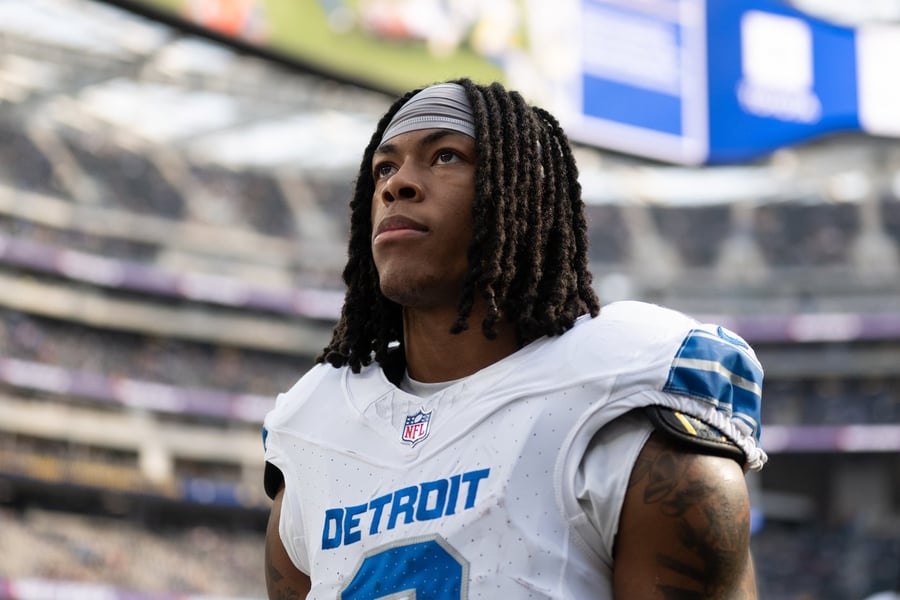
The urgency in Detroit is structural as well as contractual. The Lions shed key defensive pieces in free agency this spring, placing additional weight on the offense to generate points and control games. A prolonged absence from practice would represent a real preparation cost, not just a scheduling inconvenience. Campbell’s composed podium presence reads differently when the alternative is a defense still being rebuilt and an offense that needs its best player fully ready by September.
The same week Robinson and Gibbs staged their hold-ins, Jalen Carter signed a record extension as the highest-paid defensive tackle in NFL history, a deal that reflected the league’s appetite for securing elite talent early regardless of positional tradition. Running backs have historically been the last position to benefit from that appetite. Barkley’s deal began correcting that. There are now seven backs averaging $14 million or more per year; three years ago that number was three. Robinson and Gibbs represent the next correction the position is demanding.
Neither player’s camp has put a specific number on the table in public. Neither team has confirmed what it has offered. Campbell’s “it’ll come as it comes” will face its real test over the five weeks between now and Week 1 of the regular season. Whether Robinson and Gibbs are fully prepared for that opener, or whether they begin September having spent the summer watching practice from the sideline, depends on conversations that are not yet finished. The fields in Flowery Branch and Allen Park were busy Wednesday morning. Their most important players were not on them.