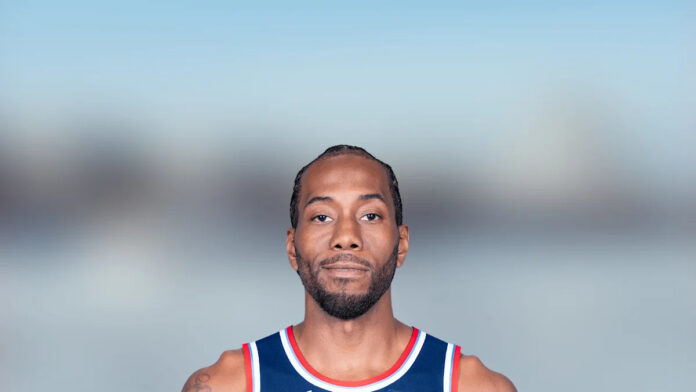
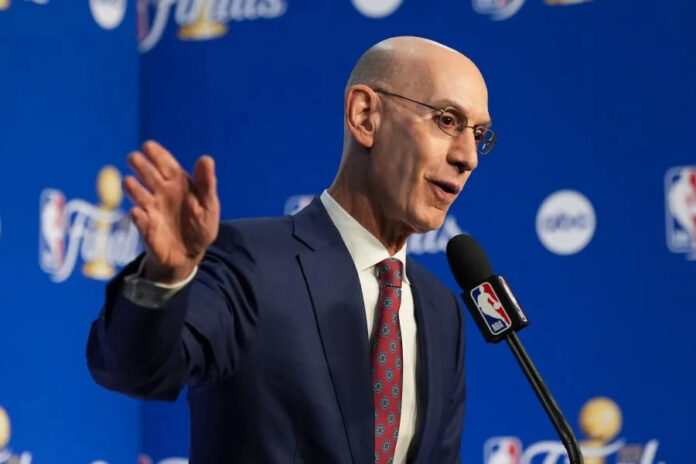
LAS VEGAS – The game was tied with ten minutes to play when Khalid Robinson looked down his bench and called Yaxel Lendeborg’s number.
What followed settled the Las Vegas Summer League championship. Lendeborg, the Warriors’ 11th overall draft pick and a 19-year-old who helped lead Michigan to a national championship five months earlier, spent those final ten minutes putting the Memphis Grizzlies away: nine points, seven rebounds, two assists, a steal, and a finishing plus-minus of +14. Golden State won 94-90 for its first Summer League title since 2013, and the young forward from Ann Arbor was named the game’s MVP.
The applause in Las Vegas told only part of the story. The franchise’s most important decision this summer has nothing to do with anything that happened there.
Golden State finished the 2026 offseason 7-2 in the Summer League under Robinson and signed exactly one meaningful player: Draymond Green’s one-year return at $27.7 million. For a franchise that spent June constructing what multiple reporters described as the most elaborate free-agent recruitment in Bay Area history, the distance between what was attempted and what was accomplished is the organizing fact of this summer.
LeBron James chose Philadelphia, where Joel Embiid’s personal health assurances were apparently more convincing than the logistics the Warriors proposed. Golden State’s path to James required Anthony Davis arriving from Washington first, and the Wizards showed no interest. The Warriors also backed away from four first-round picks for Giannis Antetokounmpo after the front office could not reach internal consensus that Jaylen Brown could anchor the post-Curry era.
So Green’s one-year deal keeps the core intact in its most minimal possible form. Lendeborg’s ten minutes against Memphis are the clearest statement the organization made all summer about what it is actually building toward.
The full Summer League line explains the attention. As NBC Sports Bay Area documented after the championship run: 14.9 points, 6.8 rebounds, 4.0 assists per game across eight starts, shooting 48.4 percent from the field and 45.9 percent from three. He had a game against the Knicks where he went 1-for-9 from the floor. He responded in the next start with the performance that closed the tournament. That ability to absorb a rough game and still produce in the one that matters is what made those ten minutes in Las Vegas worth more than a Summer League trophy.
Warriors insider Monte Poole, writing for NBC Sports Bay Area after the title game, assessed Lendeborg as more promising at this stage of development than Cameron Boozer, the third overall pick in this year’s draft. That ranking will be debated through training camp, and the correct answer cannot be known until February, when the Summer League is a distant memory and rotation minutes are being distributed in games that count. But the case for the assessment rests on the same data from those ten minutes: high basketball IQ, willingness to affect the game in multiple categories, defense that does not require the coaching staff to hide him, and a competitive response to the setbacks that come with being 19 years old and playing against professionals competing for their careers.
Golden State also got useful summer data elsewhere. LJ Cryer averaged 14 points per game on 41.3 percent from three in eight starts and stands as a plausible rotation piece if the organization commits to his development over regular-season minutes. Will Richard, the sophomore wing who played 21 games last year, shot 48.3 percent from three on his way to 10.3 points per game and arrived in Las Vegas visibly stronger and quicker than the version that showed up to camp last October. Graham Ike, who went undrafted out of Gonzaga on an Exhibit-10 deal, put up ten points and 7.2 rebounds in nine games and showed the kind of size-efficiency combination that coaches tend to find useful in November when rotations are still forming.
Three roster spots remain open. Golden State sits $8.3 million below the second apron, and Green’s waivable no-trade clause gives the front office structural options if a deal presents itself before February. That flexibility matters less than it appears on paper. As The Eastern Herald reported Thursday, Victor Wembanyama’s contract decision left San Antonio with roughly $50 million in cap room to add around the league’s most promising young player. Golden State is operating with a narrower margin and a shorter clock.
Stephen Curry turns 39 in March. On August 29, the Warriors can formally offer him a three-year, $136.7 million extension. He has told people close to him that he wants to finish his career as a Warrior. He has also made clear, per multiple accounts, that finishing there requires the franchise to give him something worth believing in. Lendeborg’s ten minutes against Memphis are the most specific answer the front office has provided to that implicit demand.
The two-timeline critique followed the front office through the summer, the idea that Golden State is simultaneously asking Curry to perform in the present while directing its structural resources toward future cap room and a 19-year-old’s long arc. Nothing done since June has resolved that tension, and the Summer League championship does not resolve it either. What it offered instead was specific: a player who closed a title game in the fourth quarter and looked, in those ten minutes, like someone capable of justifying the wait.
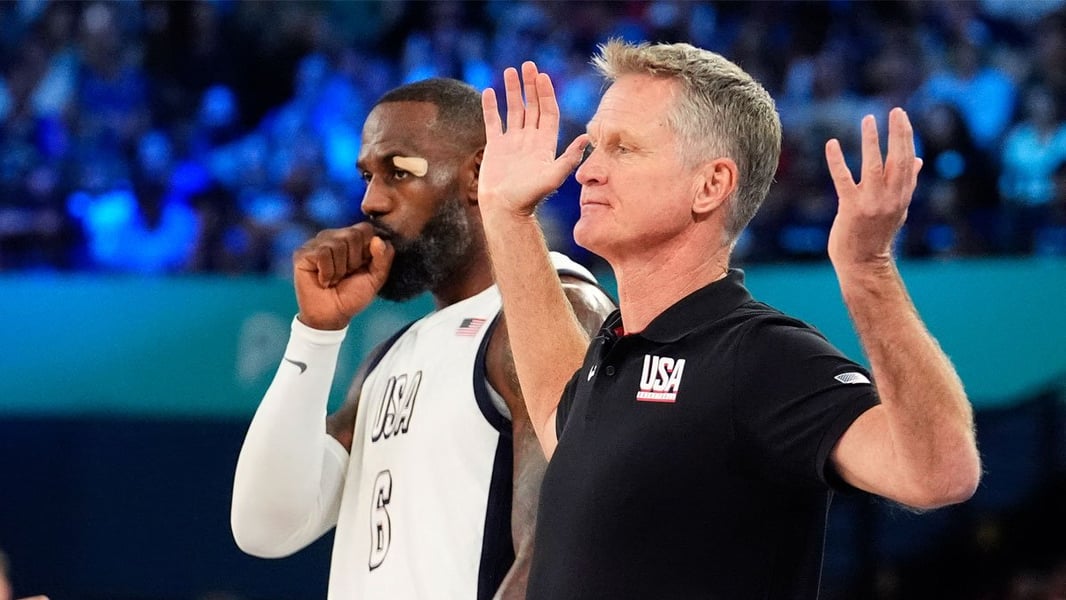
Steve Kerr told reporters this week he never felt the Warriors were realistically in the running for James. NBC Sports Bay Area reported Wednesday that the franchise’s thinking has already pivoted toward 2027, toward cap situations and offseason leverage that do not yet exist rather than what can be assembled around Curry now. That framing is an unusual thing to be circulating when the player you are asking to commit is still deciding what he believes about the franchise’s direction.
What Curry’s camp has communicated privately, and what the Warriors plan to present before August 29, is what neither side has chosen to make public.