
NEW YORK — SanDisk Corp. SNDK closed Friday at $979.07, a number that would have seemed improbable eighteen months ago when the company was a freshly separated division of Western Digital Corp. trading near $38 a share. It still raises eyebrows. The stock is down 25 percent from its August highs, and the argument over whether that pullback is a buying opportunity or a valuation correction does not yet have a clean resolution.
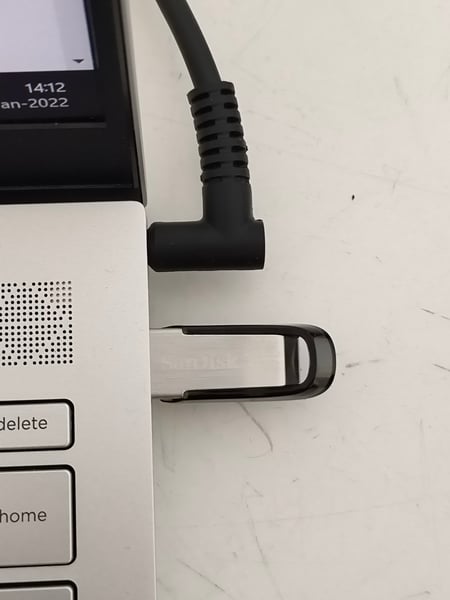
Western Digital completed the separation of its flash memory business in February 2025, spinning SanDisk into an independent company focused entirely on NAND flash storage. The consumer SanDisk brand was the familiar one — the thumb drives, the SD cards, the portable SSDs — but the business underneath it had shifted decisively toward enterprise and AI infrastructure customers long before the spinoff occurred. Investors who held Western Digital through the separation and kept their SanDisk shares have not suffered. The gains from a $38 debut to roughly $1,300 at the August peak represent one of the larger single-year equity runs in the semiconductor supply chain.
The business backing those gains is not fiction. SanDisk reported revenue growth of 251 percent year over year in its most recent quarter, driven by NAND flash demand from hyperscale cloud operators and AI training clusters that require large-capacity, high-endurance storage at a scale that DRAM alone cannot serve. The company’s 2026 production capacity is sold out — not oversubscribed in the sense of a wait list that will eventually burn off, but committed, with long-term purchase agreements signed with major cloud customers who cannot afford supply uncertainty during their AI infrastructure builds.
The AI storage angle is less intuitive than the chip angle. Most coverage of AI infrastructure spending concentrates on GPUs, particularly Nvidia Corp. NVDA, which reported $96.2 billion in quarterly revenue this week with data-center sales up 138 percent year over year. But a training cluster that processes petabytes of data needs somewhere to store those petabytes between runs, and it needs to access that storage fast. NAND flash SSD capacity has emerged as a genuine bottleneck in large-scale AI deployments. SanDisk sits at that bottleneck, which is why hyperscale buyers are locking in multi-year supply agreements rather than sourcing on spot markets each quarter.
The supply side has its own complications. Kioxia, the Japanese flash memory manufacturer that competes directly with SanDisk, announced a $31 billion capital investment program for new NAND fabrication capacity in Japan this year. That is not irrelevant to SanDisk’s medium-term pricing power. New fabs take two to three years to reach full production, meaning current demand is absorbing existing supply faster than new supply arrives. But 2027 and 2028 look different from 2026 if Kioxia’s investment program proceeds on schedule. Whether SanDisk’s sold-out status reflects durable pricing power or a temporary supply-demand gap is the question that most determines whether the current valuation is defensible or excessive.
Friday brought macro pressure from a direction unrelated to storage markets. Federal Reserve Chair Kevin Warsh, in his first address as Fed chair at the Kansas City Fed’s annual Jackson Hole Economic Symposium in Wyoming, delivered no rate cut signal and no pivot language, CBS News reported. The 10-year Treasury yield closed at 4.679 percent. For a stock like SanDisk — high-growth, not yet generating the free cash flow that makes it defensible as a bond proxy — a sustained high rate environment is unfriendly in a specific way. The AI infrastructure spending cycle can coexist with elevated rates, but the multiples investors are willing to pay for that cycle compress as the risk-free rate rises. That compression is what a 25 percent pullback from an August peak looks like.
The drop from the high reflects multiple compression more than any reassessment of SanDisk’s business fundamentals. The stock moved from its IPO price through an extraordinary run on a single coherent thesis: AI needs storage, NAND is the dominant storage medium, SanDisk makes NAND at scale, and supply is tight. That thesis has not been invalidated. What changed is the rate environment, the profit-taking that naturally follows any large single-year move, and the mean reversion that affects stocks priced at extreme multiples regardless of their underlying quality. At $979, SanDisk still trades at multiples that would look aggressive on a company growing at 25 percent annually. Growing at 251 percent changes the arithmetic, but only if the growth rate has a plausible path forward.
Sustainability requires that AI storage demand remains at current intensity through at least 2027, that SanDisk’s long-term customer contracts hold, and that new supply from Kioxia and other competitors does not arrive in volume before demand moderates. None of those conditions is guaranteed. What is more certain is that the hyperscale operators who signed multi-year agreements with SanDisk need flash storage to run their current AI infrastructure, which provides a floor that purely spot-market demand would not. The question is the ceiling, and the ceiling depends on the demand picture in 2027 and 2028 that no one has clear visibility into yet.
SanDisk’s analyst coverage remains thinner than Nvidia’s or Meta’s. The stock is younger as an independent company and fewer sell-side desks have built complete coverage models. The consensus rating is Buy. The average 12-month price target implies meaningful upside from Friday’s close, though the range is unusually wide and reflects genuine uncertainty about the 2027 demand picture rather than divergent views on current-year numbers that are already exceptional.
For investors who came to SanDisk through the Western Digital spinoff and held, the pullback from the August peak to $979 is still a return that few equity strategies can replicate over an eighteen-month window. For investors looking at the stock fresh, the entry point comes with two years of extraordinary growth already in the price and an open question about what the third year looks like. Jackson Hole did not answer that. Kioxia’s capital investment program did not answer it either. The next quarterly report will provide more data than either of those two events combined.
SanDisk is not a storage company that benefits incidentally from AI. It has repositioned itself, through the spinoff structure and through its customer agreements, as an AI infrastructure company that makes storage. That repositioning is real and the market has rewarded it. Whether $979 already prices in the next two years of that story, or merely the current one, is a question the company’s upcoming customer announcements and quarterly numbers will have to answer. Friday’s close offered no verdict. It was a pause in a longer argument that the flash storage market itself has not finished making.