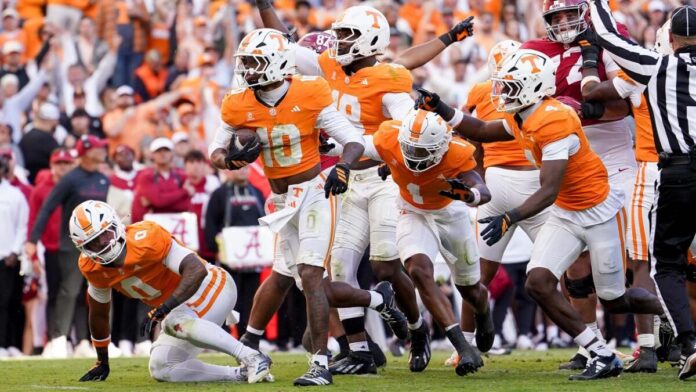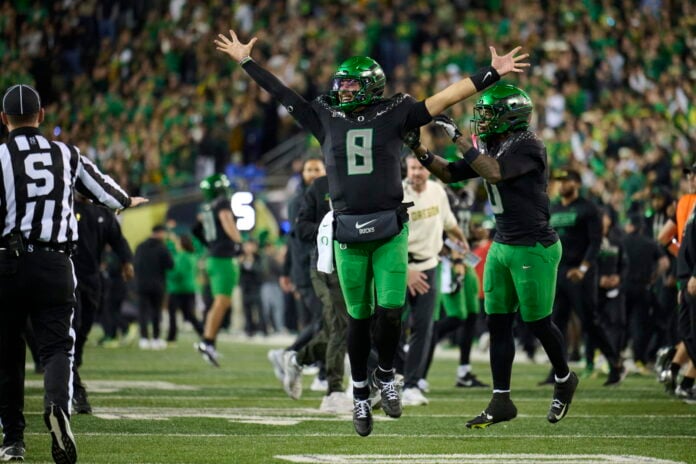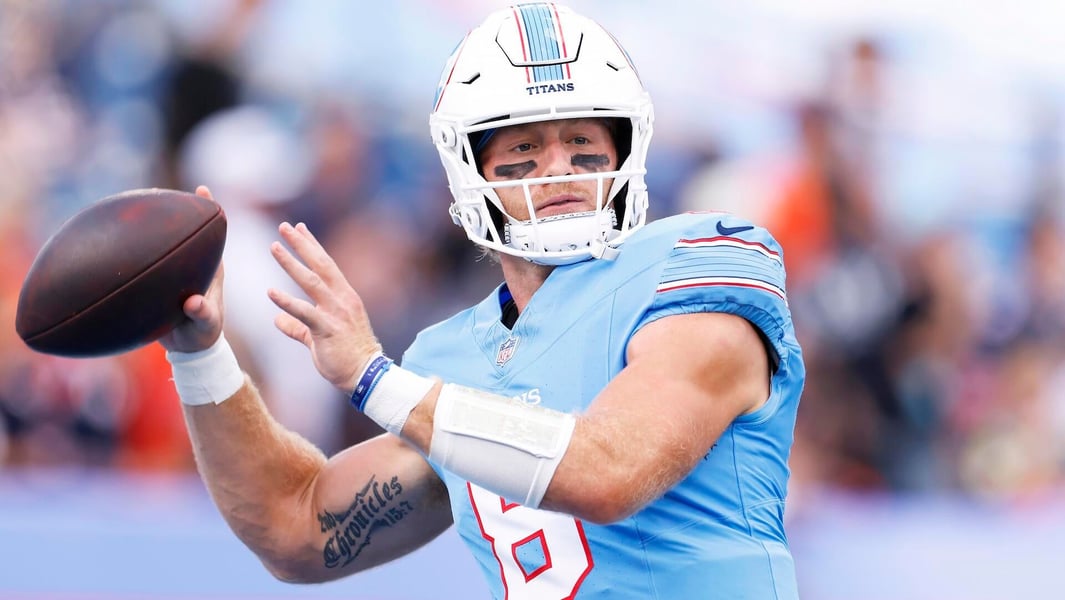

NASHVILLE — The moment the Tennessee Titans selected Cam Ward with the first overall pick in April’s draft, Will Levis’s path in Nashville became arithmetic. He could not unseat the consensus top prospect in the country. He could not make the trade-up disappear. He could not win a competition that was not designed to be one. All he could do was wait for Sunday’s roster cutdown to formalize what had been settled months earlier.
The Titans released Levis on Sunday as part of their mandatory reduction to 53 players, closing a three-year tenure that contained one of the most electric quarterback debuts in recent memory and one of the worst single-season turnover rates in the modern era. Levis, 26, clears waivers as a free agent for the first time in his professional career.
On November 5, 2023, he threw four touchdown passes against the Atlanta Falcons in his first NFL start, tied at the time for the most by any quarterback in a career debut. The Titans won 28-23. He went on to finish 3-6 across nine starts that season, and looked, for stretches, like a foundation worth building around.
What followed in 2024 was a collapse on a scale the franchise had not experienced in over a decade. Levis started 14 games for a team that finished 3-14, surrounded by a broken offensive line, an inadequate skill-position cast, and a defensive schedule that generated no mercy. By the final weeks of the season, a statistic had crystallized around his performance that rendered further debate unnecessary: 16.3% of his plays ended in a sack, fumble, or interception, the highest rate for a starting quarterback since JaMarcus Russell in 2009.
The number requires context to be fair. The 2024 Titans were a franchise in the middle of a systemic rebuild, asking a second-year quarterback to generate wins in an environment that had denied those same wins to veterans before him. How much of the 16.3% reflected talent limitations and how much reflected the structural dysfunction of a team falling apart around him is a question the Titans never publicly resolved. They answered it another way.
They traded up, acquired the first overall pick, and selected Ward, who set passing records at Miami and was the consensus top-rated prospect in the class. Levis spent the following months watching from third string, behind Ward and free agent Mitch Trubisky, in a quarterback room where his standing was settled before a single preseason snap was taken. After the final preseason game, Levis acknowledged what was coming with the kind of directness that costs nothing at that point. “Very grateful,” he said of his three years in Tennessee, mentioning owner Amy Adams Strunk by name. It was the statement of a player who had already processed the result.
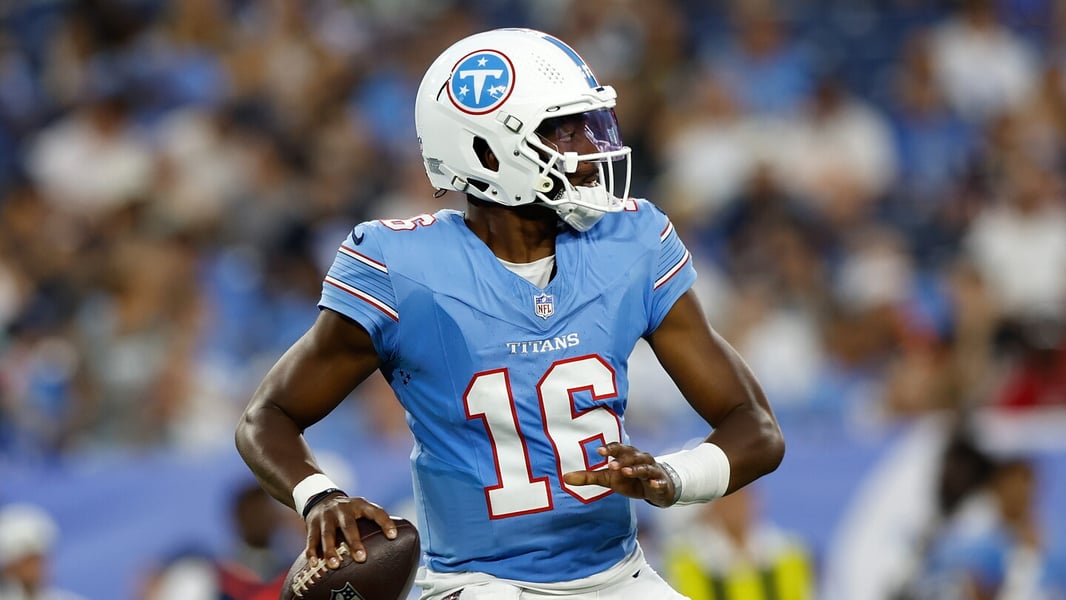
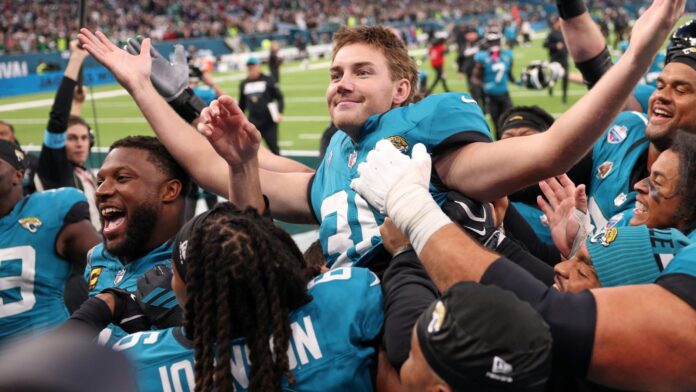
The clearest path to continued employment runs through Jacksonville. The Jaguars’ offensive coordinator, Liam Coen, coached Levis at the University of Kentucky in 2021, the season that made Levis a first-round candidate and that remains the best football he has played at any level. Coen understands Levis’s arm, his athleticism, and the specific corrections his mechanics still require. Whether the Jacksonville Jaguars’ 2026 NFL season preview suggested a roster structure and organizational appetite to pursue the project is a question without a confirmed answer. The connection, at minimum, is more substantive than most quarterback landing spot speculation usually is.
Other teams will run the calculation. Tampa Bay, which needs experienced backup depth behind Baker Mayfield, could offer a stable situation. The New York Jets brought in Geno Smith but remain unsettled at the position and carry offensive coordinator Frank Reich, who has a track record with quarterbacks in transition. Minnesota’s Kevin O’Connell has rebuilt careers at the position in each of his seasons as a head coach. None of these are confirmed conversations. All of them are credible in the way that a 26-year-old with a four-touchdown debut still in the record books will always generate interest.
What any signing team is actually betting on is whether environment explains everything. The Titans’ 2024 offensive infrastructure could have damaged any quarterback’s metrics. The better question is whether Levis, removed from that specific structure and placed in one designed to develop rather than simply extract, produces something closer to that 2023 debut form than the 2024 turnover rate. The NFL’s 2026 cutdown deadline moved quickly on Sunday: rosters consolidated, veterans cleared, careers redirected in ways that were not visible 48 hours ago. Levis is the most visible name among them.
As CBS Sports reported, the decision came as part of a broader organizational reset with Ward’s arrival at its center. Tennessee committed fully to that reset in April. Sunday’s waiver completed it.
Levis is young enough that this is not the end of anything. Whether it becomes the low point from which a career turns, or the last notable moment before a quiet fade from the league, depends entirely on which team calls and what they are prepared to offer him. That answer is not Nashville’s to give anymore.