
SAN FRANCISCO, He has not said when. He has said where.
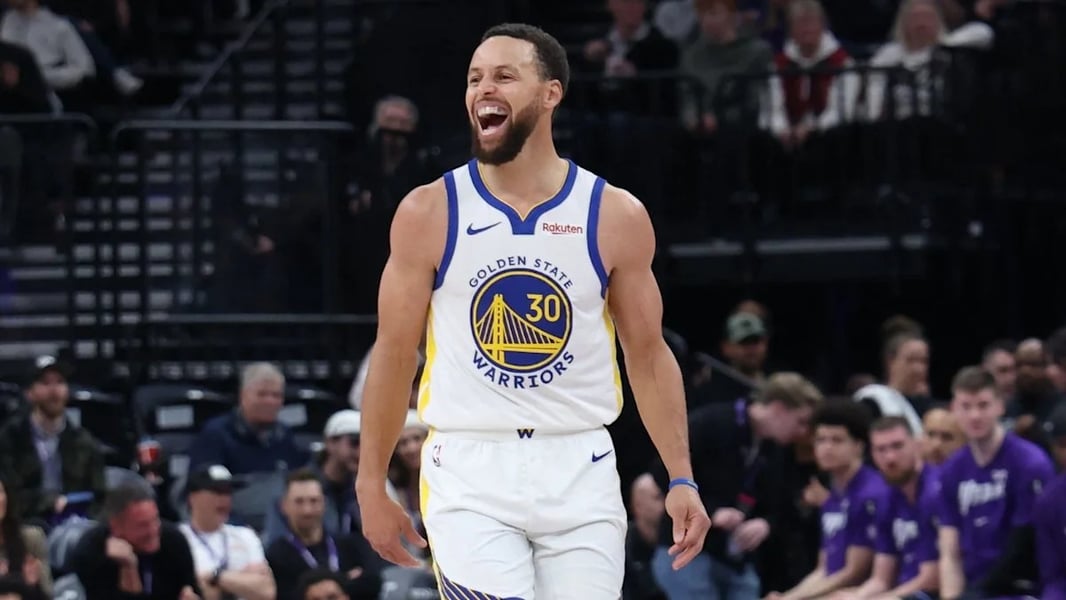
“There’s no question I want to be here the rest of my career,” Stephen Curry told reporters last week, two days after becoming eligible to sign a two-year, $136.7 million contract extension with the Golden State Warriors. “And I’m pretty sure that’s going to happen.”
The extension talks, Curry added, will happen “at the right time.” By every available signal from both sides, that time is coming. Warriors general manager Mike Dunleavy has said publicly he is “pretty confident” Curry finishes his career in the Bay Area. The franchise has made clear it will offer whatever terms Curry requires. The only open question, as September arrives and the season approaches, is timing. Not destination.
For an NBA landscape that spent the entire summer watching superstars depart, with LeBron James heading south to Philadelphia, DeMar DeRozan leaving the city he had adopted, and Kevin Durant chasing rings across five different organizations, Curry’s commitment to Golden State is the thing that makes him singular. He has played his entire professional life in one city. He appears to be finishing it there too.
The math of the extension is straightforward. Curry turns 39 this March. A two-year deal would carry him through his age-40 and age-41 seasons, through 2028 and 2029. His wife, Ayesha, suggested this month the league should “be in for some fun surprises over the next couple of years.” The $136.7 million in projected value would make him among the game’s highest-paid players through the period, a structure that reflects Golden State’s desire to retain him, not some reluctant holding pattern.
What surrounds that contract tells a more complicated story. Golden State finished last season 37 and 45, lost in the play-in round, and watched the summer produce no meaningful addition beyond Draymond Green’s one-year return at $27.7 million. LeBron James, whom the Warriors reportedly recruited through the spring and pursued into July, chose Philadelphia instead, the move that reshaped the Eastern Conference and, by extension, made the West’s best teams suddenly more meaningful. The Warriors are not one of those teams on paper.
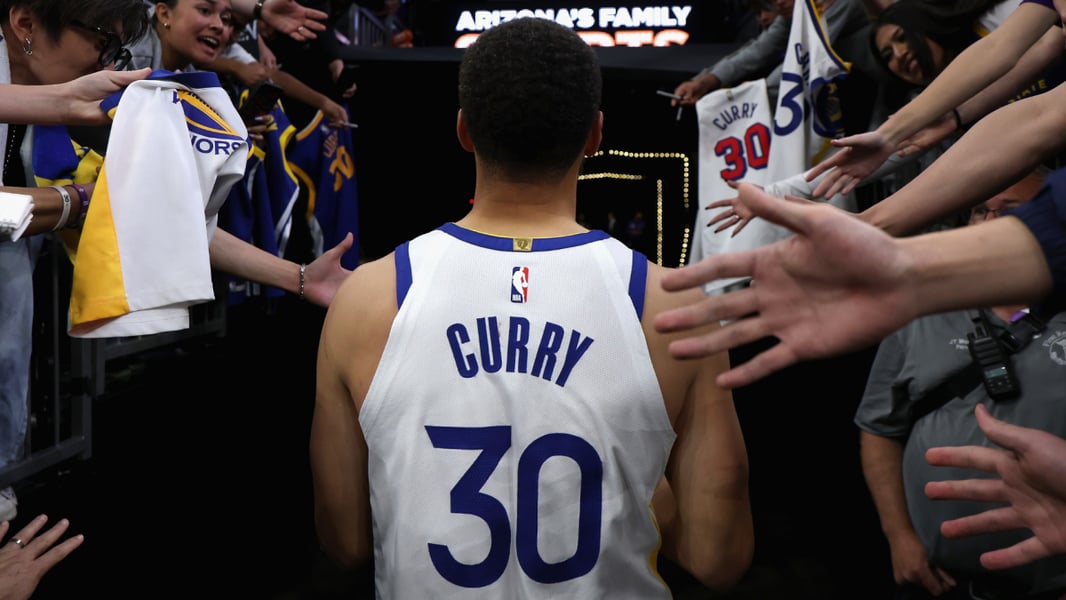
Curry’s extension decision has carried this weight for weeks: the gap between his stated loyalty and the organization’s demonstrated ability to build something around it. CBS Sports framed the Warriors’ handling of Curry’s late prime as “a basketball sin,” the most prominent criticism to emerge from a summer that ended without a single significant free agent signing. Curry’s extension, when it comes, will be built partly on faith that the organization intends to correct what the summer did not.
“I want to be here,” Curry said. “The extension stuff, we’ll figure that out at the right time. We’re not letting it be a distraction.”
That framing, steady, deliberate, bounded, is consistent with how Curry has operated across 18 seasons in Golden State. He has never publicly forced leverage by threatening to leave. He has never recruited a co-star through the kinds of calculated outreach that have defined superstar movement in the modern NBA. His championships came from a system, from a coach, from an organization that built around him rather than assembling around a superstar template. That era produced four titles. It has not been replicated. Whether it can be reproduced with a 39-year-old as the starting point is the structural challenge Dunleavy now has to answer.
Steve Kerr, in his 12th season as head coach, has spoken about the upcoming year with the careful optimism of a man who knows the roster does not match the standard he has been privileged to coach. What Curry’s return does for that roster is provide the one thing a quiet offseason cannot manufacture: credibility. Opposing teams organize their defensive schemes around Curry. Games are designed around his presence. His existence on the floor changes what is possible for everyone else on it, a reality that does not expire simply because the supporting cast thinned out.
As Yahoo Sports reported, Curry is also aware he may wait until the 2027 free agency window to explore a longer, potentially three-year deal worth more than $200 million rather than committing now to the shorter two-year option. The extension window is open. He is in no hurry to close it. The decision, he has signaled, will happen at a moment of his choosing, when the terms feel right and the competitive picture is clear enough to justify the commitment.
“I’m ready for year 18,” Curry said. “It’s kind of crazy that it’s been this long.”
The season that follows his eventual signing will tell the only part of this story the extension papers cannot. Golden State’s competitive case for 2026-27 remains to be made, not in press conferences, not in public assurances, but in the games that begin in October. Curry has given the Warriors the time to make it. Whether they use that time to build something worth staying for is the question neither man has fully answered yet.