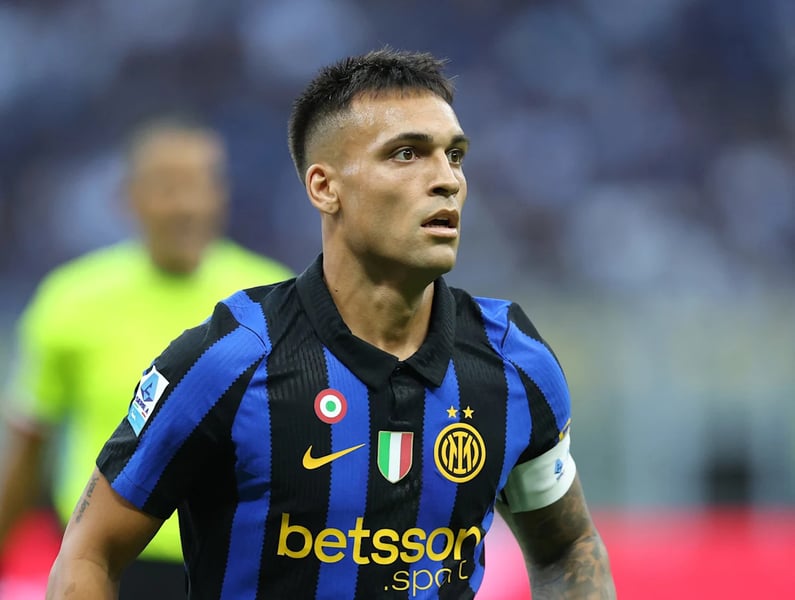

LONDON — By the time Gabriel Heinze picked up the phone, the transfer window had maybe hours left and the answer was almost certainly already decided. Arsenal’s assistant manager reached out to Lautaro Martinez’s camp in the final days of the summer window — an inquiry into the Inter Milan captain, the Argentina striker, one of the most protected players in European football. Inter’s response arrived without delay and without negotiation: no.
Not a number. Not a conversation. A flat refusal from a club with no reason to sell and every reason to keep the man wearing their armband.
For Arsenal, that door closing was the last in a summer that kept opening possibilities and immediately slamming them shut. When the transfer window ended on September 1, Mikel Arteta’s squad had moved on three forwards and brought in one. Three out — Gabriel Jesus, Gabriel Martinelli, Leandro Trossard — and one in: Christos Tzolis, acquired from Chelsea’s reserve pool, a player with genuine attributes who has never been asked to carry a Premier League title challenge. The mathematics of that rearrangement are Arsenal’s central problem going into the season.
The summer began with what appeared to be strategic moves that invited questions. Jesus had left for Barcelona at £8.6 million, a fee that seemed understated almost as soon as it was announced. That sale connected directly to the wider reshaping of the Spanish title market — Rodri’s £70 million move from Manchester City to Barcelona had unlocked financial flexibility that Barcelona directed into their attacking reinforcements, with Arsenal effectively subsidising that process at a discount. Martinelli followed for £60 million, Al Hilal paying what the Brazilian was worth. Trossard moved to Besiktas. The weight of those departures fell entirely on the forward line.
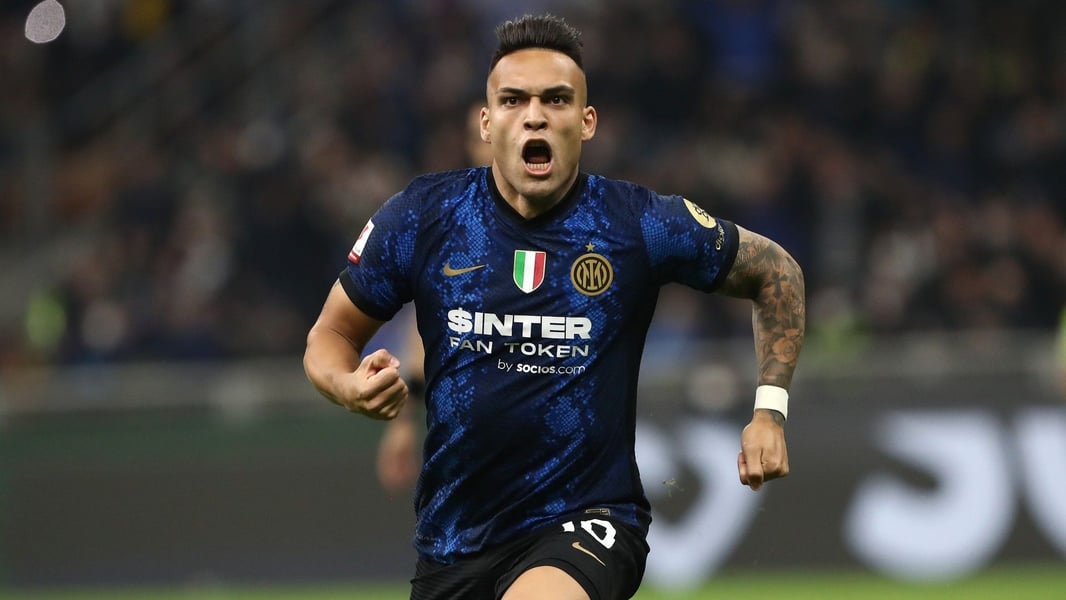
Arsenal had identified that weight early. Martinez, 29, who finished last season with 27 goals for Inter and remained the focal point of Argentina’s attack through the Copa America, was exactly the profile Arteta’s system rewards: a forward who holds up play, links in tight spaces, presses with intensity, and finishes inside the box with composure. He was also, as anyone close to Inter could have explained, not going anywhere. His contract runs until 2029. He is the club captain at San Siro. A move of that scale, for a player of that standing, would have required months of groundwork, a serious financial commitment, and a willingness from Martinez himself to push for the exit. None of those conditions existed when Heinze made the call. According to Yahoo Sports, Inter rejected the approach firmly and that was the end of it.
It was not the only name that did not work out. Arsenal had tracked Morgan Rogers through the summer; Rogers went elsewhere. Vinicius Junior, linked to a departure from Real Madrid in what always looked like a negotiating exercise, stayed in Spain. Julian Alvarez, whose game mirrors Martinez’s in several important respects — the aggression, the movement off the ball, the capacity to operate as both a central striker and a second forward — remained Atletico Madrid’s player. Bradley Barcola, who might have filled a different but equally important gap on Arsenal’s left side, went to Liverpool for £123 million, a transfer that illustrated the pricing environment Arsenal were operating in and choosing not to match.
Against those departures and those failed pursuits, Arsenal did spend significantly. Bruno Guimaraes arrived from Newcastle United for £75 million, a midfielder of genuine world-class quality who will sharpen Arsenal’s press and extend their passing range. Ezri Konsa joined from Aston Villa for £55 million to reinforce a defensive structure that was already functioning at a high level. Neither signing answers the question the attack is asking.
Arsenal beat Manchester City 3-0 in the Community Shield in August, a result that provided legitimate cause for optimism and briefly obscured the structural gap in the forward line. The Premier League, played against teams who have studied that gap across a full summer, will probe it more methodically. What Tzolis produces in a system built around Arteta’s specific pressing and movement demands — the kind of demands that took Jesus and Martinelli genuine adaptation periods to meet — is a genuine unknown at this level.
The Heinze call reveals something about how Arsenal understood their own situation. It was not a strategic early move or an opening position in a months-long negotiation. It came near the end of the window, when Inter had zero commercial incentive to respond and Martinez had given no signal of wanting to leave. What it looks like, in retrospect, is a last attempt to solve from the outside a problem that had been visible from the inside since the Jesus sale was announced.
Lamine Yamal’s record-breaking start at Barcelona has underlined what a forward line built with intention and sustained investment looks like. Arsenal’s summer, by comparison, ended with a call that was always going to be declined, a striker who never considered leaving, and an attack rebuilt around a single new signing from the fringes of another club’s first team.
The season has its own answers to deliver. What is settled is that Lautaro Martinez will be leading Inter Milan’s attack when Serie A resumes, and Arsenal will go to work with one new forward where three used to stand — and a transfer window’s worth of unanswered questions about where the goals will come from.