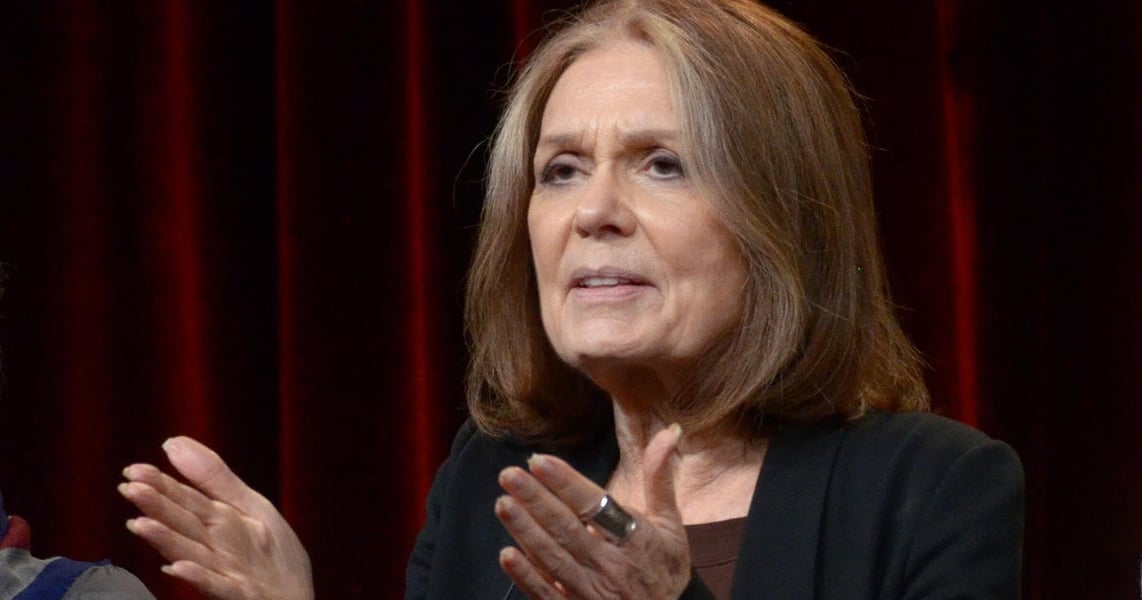

NEW YORK — In 1956, Gloria Steinem was 22 years old and on her way to India on a fellowship when she stopped in London and obtained an abortion that was, by the law of the time, illegal. She did not talk about it publicly for fifteen years. When she finally did, she framed it not as a confession but as a statement of fact: it was the decision, she said, that made all her subsequent decisions possible. She died Wednesday at her home in New York City, surrounded by those she loved. She was 92.
The cause of death was not disclosed, as CBS News reported.
Steinem’s death closes a chapter that transformed American law, professional access, and the structure of public life for women in ways that statistics can only approximate. Between 1972, when she co-founded Ms. Magazine, and the 2020s, the share of American doctors who were women rose from 10 percent to 38 percent. The share of lawyers rose from 4 percent to 41 percent. Steinem did not cause those shifts by herself. But she built the institutional machinery through which the arguments for those shifts moved: the magazines, the foundations, the political organizations, the language.
“She was one of the architects of the entire structure of women’s equality,” Hillary Clinton said in a statement. “Tearing down those obstacles.” Clinton’s phrasing was precise. What Steinem actually did was structural: she built platforms and institutions that outlasted any particular campaign.
Born in Toledo, Ohio, on March 25, 1934, Steinem spent part of her childhood caretaking for her mother, who suffered from a severe anxiety disorder that went largely untreated after her parents divorced. She graduated from Smith College in 1956, Phi Beta Kappa, and left immediately for India on a Chester Bowles fellowship. London was a stop along the way. She would later say that the abortion she obtained there, before contraception was widely accessible to unmarried women in the United States, before Roe v. Wade, before any of it, was the precondition for everything else. The line she eventually used to explain it became one of her most quoted: if men could get pregnant, she said, abortion would be a sacrament.
Her journalism career began with a 1963 undercover investigation: she spent eleven days working as a Playboy Bunny and published the resulting expose in Show magazine. The piece was a model of embodied reporting. She did not argue that the Bunny costume was degrading; she described what it was like to wear it, in specific physical and social detail, and let readers draw their own conclusions. In 1968, she co-founded New York Magazine with Clay Felker. Four years later, she co-founded Ms. Magazine with Dorothy Pittman Hughes. The first full issue appeared on July 1, 1972.
Ms. was not the first feminist publication, but it was the first to achieve national circulation and mainstream newsstand presence. It became the publication that a generation of American women read to understand that the conditions of their own lives, the pay gap, the structural barriers at law firms and medical schools, were not personal failures but political conditions.
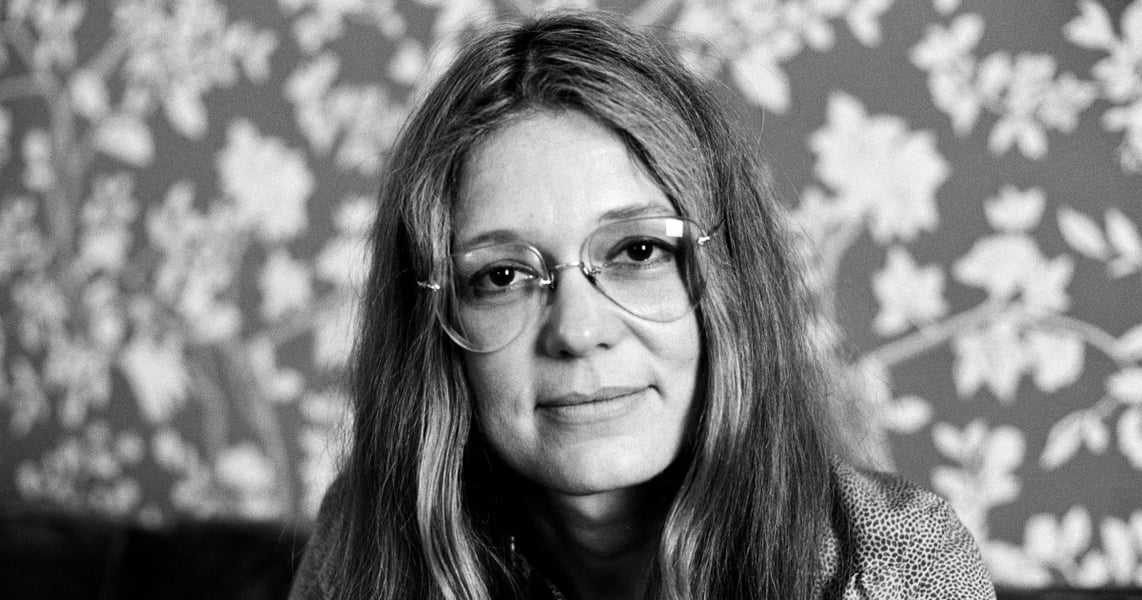
From Ms., Steinem built outward. The Ms. Foundation for Women, founded in 1973 with Marlo Thomas and others, became one of the country’s largest funders of women’s advocacy organizations. The Women’s Media Center, which she co-founded in 2004 with Jane Fonda and Robin Morgan, trained female journalists and held media organizations accountable for gender representation in coverage. The National Women’s Political Caucus, which she helped establish, worked to increase the number of women running for and winning public office.
The women in entertainment navigating these same structural questions today, who get sued, who sue, who negotiate alone against employers with more institutional power, inherit conditions Steinem’s work shaped. An Alanis Morissette lawsuit filed this week, in which the singer alleged her former tour manager threatened to frame her for drug trafficking unless she agreed to a fifteen-year employment contract, is a reminder of what those conditions still look like: individual women still contending with leverage and threat rather than institutional protection.
Steinem married David Bale, the father of the actor Christian Bale, in 2000, when she was 66. The marriage surprised people who had watched her spend decades as the country’s most prominent advocate for women’s independence. She said she had not changed her mind about anything. Bale died of brain lymphoma in 2003. Steinem never remarried.
In 2013, President Barack Obama awarded her the Presidential Medal of Freedom.
She wrote several books, among them “Outrageous Acts and Everyday Rebellions” (1983), “Revolution from Within” (1992), and “Marilyn: Norma Jean” (1986). The titles tracked her range: feminist theory, women and self-esteem, and a biography of Marilyn Monroe that situated Monroe as a trapped woman rather than a tragic icon. All three were deliberate choices about whose stories got told and in what terms.
Steinem did not live to see everything she worked for resolved. Abortion access in the United States remained contested at her death, restricted in more states than when she began. She had watched Roe v. Wade fall in 2022 without, as far as the public record shows, any diminishment in her conviction that the fight was worth continuing.
No immediate statement from Ms. Magazine was available.