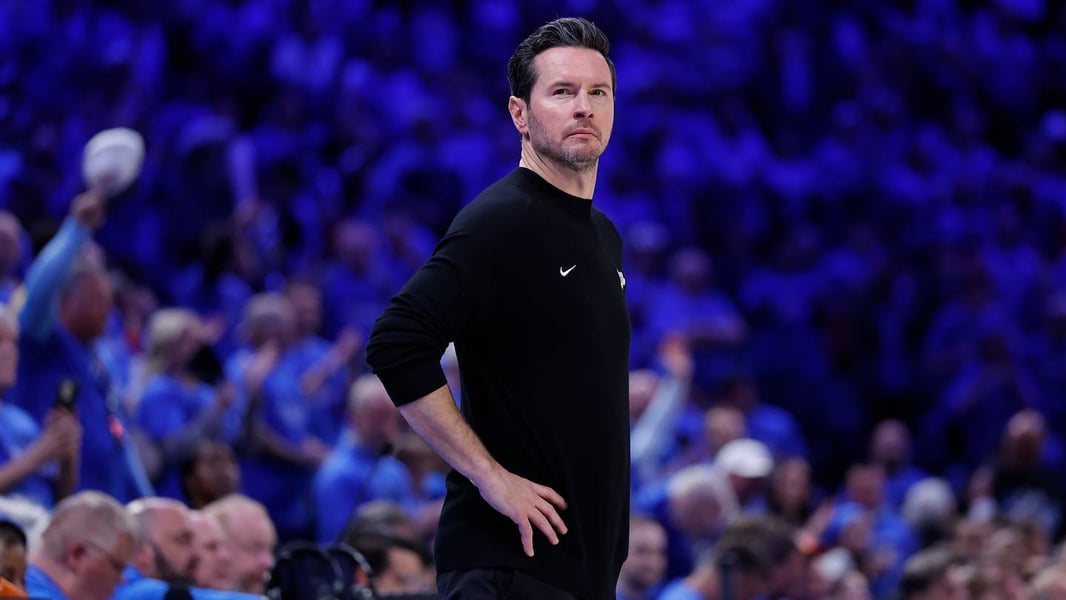

ROANOKE, Va. — JJ Redick wanted the students in front of him to understand something that nothing in his basketball career had prepared him to say: failure was the point.
More than 600 Roanoke County students gathered on Wednesday to hear from the Los Angeles Lakers’ head coach, a man who grew up 20 minutes from where they were sitting, who played under Mike Krzyzewski at Duke, who spent 15 years being coached in NBA locker rooms before becoming the person giving the instruction. Redick had not returned to the Roanoke Valley in more than a decade. He came back to say three things. The last one was the hardest.
“Find your own dream,” he told them. “Find it. Work at it. Over and over and over again. Learn to love failure. Eventually, you won’t be afraid of failure.”
The message landed differently than the standard inspiration tour. Redick is 42 years old and carries a 108-71 coaching record into his third season with the Lakers. He was a podcast host with no coaching experience when Rob Pelinka called him in the summer of 2024, and everyone who predicted the hire would collapse has had to update their position twice since. He was talking to those students from inside a life that did not unfold according to any plan he could have drawn. That is exactly why he kept returning to the part about failure.
“This journey has been beyond my wildest dreams,” Redick said. “I’m pinching myself every day that I’m at Duke with Coach K, I’m pinching myself every day I’m in an NBA locker room, and I’m pinching myself now every day that I get to coach the Lakers.”
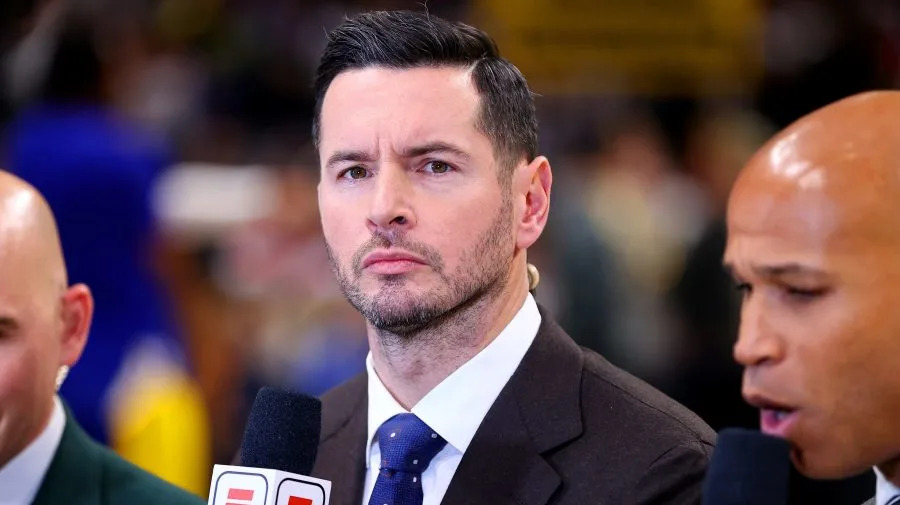
That uncertainty is exactly what Wednesday’s visit was really about. Redick, speaking to students who cannot vote yet, was saying out loud what he has learned to say to himself: the map never matches the terrain.
The event was organized with help from Summit co-founder Kevin Connelly, who played alongside Redick for one season at Cave Spring High School before their careers went entirely different directions. It was the kind of collaboration that happens when someone returns to a place with enough time behind them that the old connections feel earned rather than obligatory. Redick did not have to come back. He chose to.
He chose to in the same week the rest of the league is watching what he does next with genuine interest. Post-LeBron Los Angeles is a franchise experiment without a verdict. The NBA has watched Luka Doncic thrive inside systems that ask him to create and struggle inside systems that try to contain him. Redick’s task entering year three is to build an offense that expands around Doncic while keeping Davis involved enough at the rim to threaten defenses that collapse on Luka. The combination looks functional on paper. It has to hold in October.
What gives Redick a credibility the early skeptics did not account for is precisely what he told those students: he built his identity slowly, by outworking a perceived ceiling. He was not a blue-chip recruit. Not considered a future professional until he became one. Not considered a head coaching candidate until he talked about basketball so precisely that people paid him to explain it, and then talked so precisely to players that they began responding to his instruction. A 108-71 record at a franchise with this level of scrutiny is not what anyone projected at hire. It is what the job looked like once he stopped being afraid of the gaps in his resume.
The Western Conference has not paused to wait. Other franchises locked in their decisions. The Houston Rockets secured Amen Thompson’s $208 million extension before the market inflated around one of the West’s most dynamic young players. The rest of the conference made its moves. Los Angeles arrives at training camp still feeling like a franchise mid-transition, one coaching year removed from knowing whether this configuration is capable of competing at the level the roster suggests.
Sports Illustrated reported that Redick framed his trajectory, from Cave Spring High School through 15 NBA seasons and into the Lakers’ head coaching job, not as a sequence of achievements but as a series of responses to doubt. Each phase made the next one possible only because he refused to accept the ceiling others set for him.
The question that follows him out of Roanoke is not about his origin story. It is about what happens in April. Whether this Lakers roster, built around a 25-year-old who demands the ball and a center who demands the rim, can actually hold together through a Western Conference playoff picture that has only gotten more demanding. Redick told 600 students that he is not afraid of failure anymore. He is about to find out if that is still true.