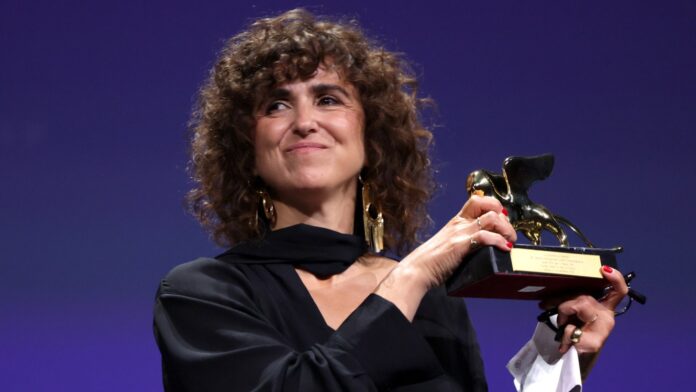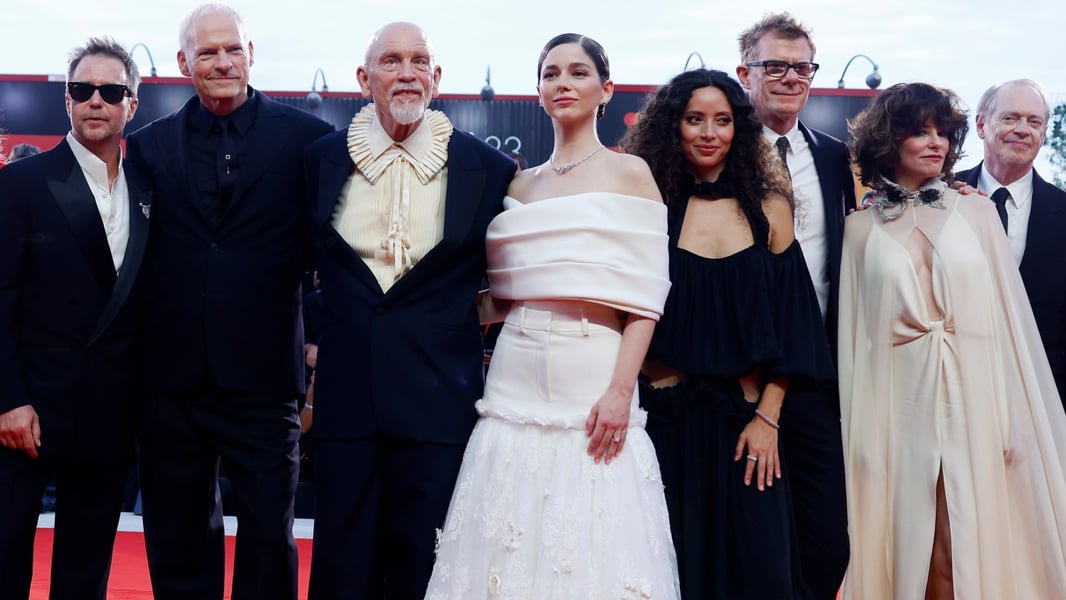

VENICE — The last thing Martin McDonagh said backstage at the Palazzo del Cinema after receiving the Golden Lion was about silence. He said John Malkovich and Sam Rockwell understood what it could carry. He did not say anything about distribution.
That omission, barely noticed in the immediate ceremony coverage, now defines the most pressing question in the fall awards race: who will acquire “Wild Horse Nine” for North American release, and by when?
Venice film festival juries and North American audiences require intermediaries to speak to each other. A European prize means almost nothing commercially until a US studio or specialized division decides it should mean something. “Wild Horse Nine,” McDonagh’s 158-minute Cold War procedural about CIA operatives present in Santiago during the days after the 1973 Pinochet coup in Chile, won the Golden Lion at Saturday’s ceremony on the Lido. As of that ceremony, no North American distributor has acquired it.
The historical record here is not encouraging for any buyer hoping to complete a deal quietly. Venice Golden Lion winners with existing North American distribution in place tend to behave very differently in Oscar season from those arriving without it. The prize, once announced, raises the asking price. The six-week window between Venice and the Academy’s first eligibility checkpoints is when distributors pay a premium they would not have paid the week before the ceremony.
The race for the Golden Lion this cycle was understood, until Saturday night, as a two-film competition between “Wild Horse Nine” and Danny Boyle’s “Ink.” Both arrived at the Palazzo without announced US deals. Both leave with significant Venice prizes. Boyle takes the Silver Lion for Best Director and two Volpi Cups; McDonagh takes the top prize. The question now is whether that shared no-distribution status functions differently for each film.
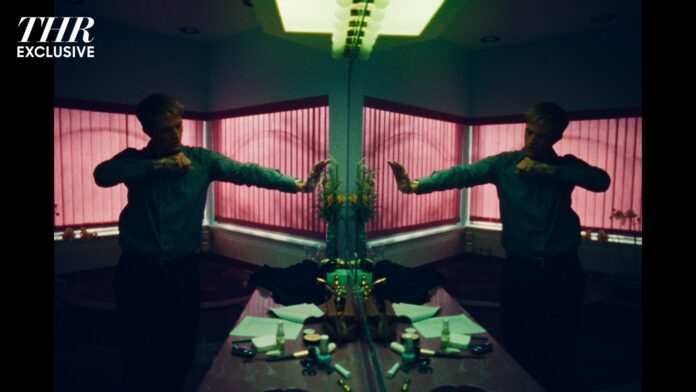
“Ink,” with a 92 percent Rotten Tomatoes score and a Guy Pearce performance as Rupert Murdoch that dominated critical conversation during the festival, is already in negotiation conversations, according to people familiar with the discussions. The biopic formula, with living subjects including one of the most litigious media figures in the world, presents acquisition complications that awards positioning alone does not resolve. “Wild Horse Nine” carries no living-subject complications. The story is set in 1973 and draws on declassified records. What it has instead is a 158-minute runtime, a subject (American complicity in Chile’s military coup) that US studios have historically treated as uncommercial, and a director who has never worked with a Hollywood major.
The specialized distributors most likely to be in conversations are those with a record in this territory. A24 acquired “Everything Everywhere All at Once” out of a comparable late-festival moment. Neon built its identity on picking up awards-contending films that larger studios declined. Searchlight Pictures, now part of Disney, has the infrastructure for international prestige acquisitions at exactly this scale. Netflix and Amazon MGM Studios have each shifted toward acquiring finished prestige films rather than committing earlier in production. Both carry the financial capacity to move quickly, and the streaming platforms to monetize a film globally even where theatrical distribution is limited.
The runtime complicates the picture regardless of who is interested. A 158-minute film with no franchise elements, an early scene reported to play partially in Spanish, and a historical subject that requires background most multiplex audiences do not arrive with is a difficult theatrical proposition. Awards films can be difficult. They need their marketing campaigns to accomplish what wide releases do not: persuade an audience the effort of going is worth it. That argument is harder to make for a distributor who did not have six months to plan it.
The Toronto International Film Festival People’s Choice Award is announced tomorrow. Several Venice competition films are screening simultaneously in Toronto, and if “Wild Horse Nine” is among the titles generating audience enthusiasm, the acquisition conversations happening right now change in character. A People’s Choice win or strong placement would give distribution negotiations a second data point the Golden Lion alone cannot provide: evidence of enthusiasm beyond the festival specialist community.
What nobody can say yet is how McDonagh is approaching the process. His prior feature, “The Banshees of Inisherin,” was released through Searchlight Pictures in North America and earned six Academy Award nominations. That relationship gives Searchlight standing in any conversation. Whether it gives them preference over a streaming platform with a significantly larger check is a different question. Directors in this position sometimes want specific release strategies, including platform releases with careful expansion windows, that not every buyer is prepared to guarantee in writing.
What no distributor can manufacture or take away: the Golden Lion, and the fourteen-minute standing ovation that preceded it by ten days. As The Hollywood Reporter noted at the premiere, McDonagh’s film generated the kind of sustained enthusiasm that festival observers describe as a different register from critical approval. Saturday’s jury confirmed what ten days of conversation had been pointing toward. The question of what happens next belongs to the people in the room with a checkbook. One of them will decide what the Golden Lion is worth this year.