
Here’s a tightened version with the context fully preserved — no changes to the facts, sequence, or meaning:
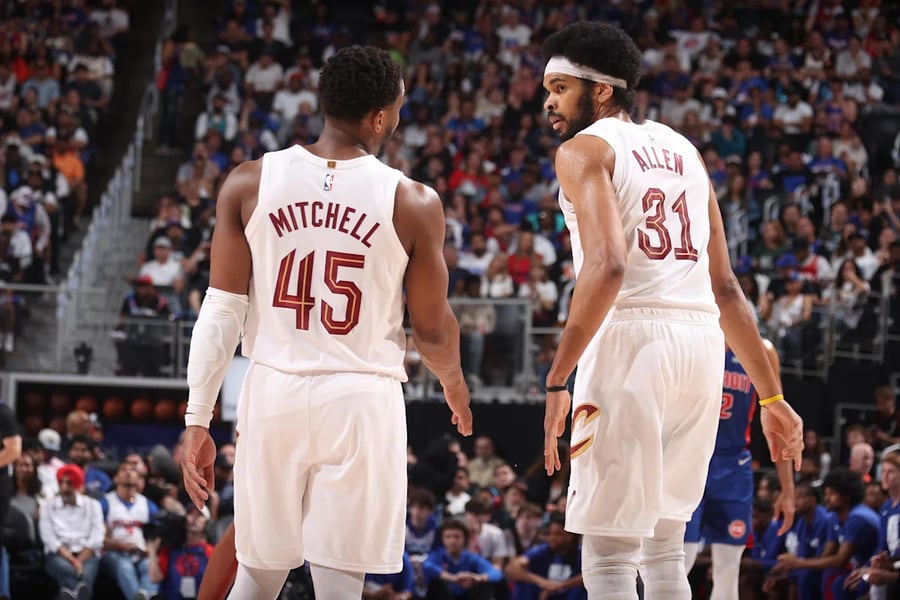
CLEVELAND — When Donovan Mitchell said he would not have to do all that anymore, he was explaining how to move past a sweep.
The calculation is simple enough in August. Cleveland’s best player carried a 26-point playoff average through four rounds last spring, then watched the New York Knicks dismantle the Eastern Conference Finals in consecutive games and leave the Cavaliers with a blueprint for what still needs fixing.
He had battled through a brutal seven-game series against the Detroit Pistons to get there, only to run into a team with better peripheral support and a cleaner offensive architecture built around two stars sharing the load.
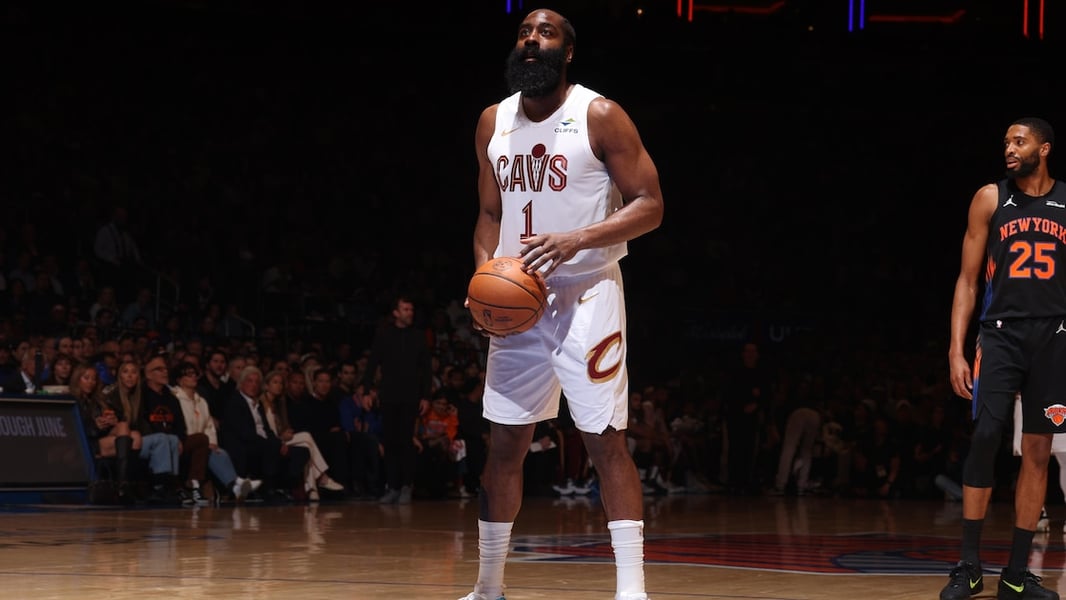
James Harden is back. The Cavaliers made it official September 8, finalizing a three-year, $97 million contract that took 19 days of cap maneuvers to complete. Harden had declined his $42.3 million player option not to leave but to lock in longer at a lower annual rate, a signal about commitment that Cleveland’s front office understood immediately. The mathematics required stretching Cam Whitmore’s contract, adding Peyton Watson from Denver, and finishing with the franchise hard-capped through 2026-27, all of it acceptable because both stars had decided they were staying and they were staying together.
The next decision lands September 30 in Fuengirola, Spain.
That is when Cleveland opens training camp at The Embassy in Andalusia, a high-performance basketball facility along the Costa del Sol where the Cavaliers will work through October 5. The official announcement from the franchise described the location as designed in part by José Calderón, who played for the Cavaliers in 2017-18 and now works in the front office. Kenny Atkinson’s first two training camps in Cleveland were held at IMG Academy in Florida. His third goes to the Mediterranean coast.
None of which matters if the backcourt recalibration is only theoretical.
Harden’s language this summer has been frank. “I don’t have no pride,” he told Bleacher Report in June. “I’ll do whatever it takes. So, if I got to play off the ball, less shots, I’m willing to do it.” He was talking about the specific realities of sharing ball-handling with Mitchell, about operating as a secondary initiator rather than the primary one, about accepting a role that his career had never required him to accept for longer than a half-season. The February trade gave him 26 regular-season games to practice it. The 2026-27 season gives him 82.
Cleveland’s roster beyond the backcourt has been retooled in the margins. Watson brings defensive versatility and transition athleticism from Denver that the Cavaliers’ second unit lacked last season. Whitmore, acquired from Washington in exchange for Tre Mann and a 2027 second-round pick, adds a scoring option off the bench. Max Strus is gone. The interior remains Jarrett Allen and Evan Mobley, one of the better defensive frontcourts in the conference, and the team’s defensive identity entering camp is intact.
The preseason opens October 8 against the Boston Celtics. The regular season begins two weeks after that.
What Cleveland demonstrated last spring against the Detroit Pistons, a seven-game war that ended in a blowout, was not nothing. The sweep that followed showed exactly where the ceiling was. The Knicks had a better second star, a better offensive system built around two players sharing the load, and the experience of having won in exactly the way Cleveland now says it wants to play.
Cleveland now has the same general arrangement on paper. Harden and Mitchell have said the right things. The contracts are signed. Spain is where the sentence starts, and May is where it ends.
Whether those two things say the same thing about each other is not knowable from Fuengirola. The Knicks are still there.