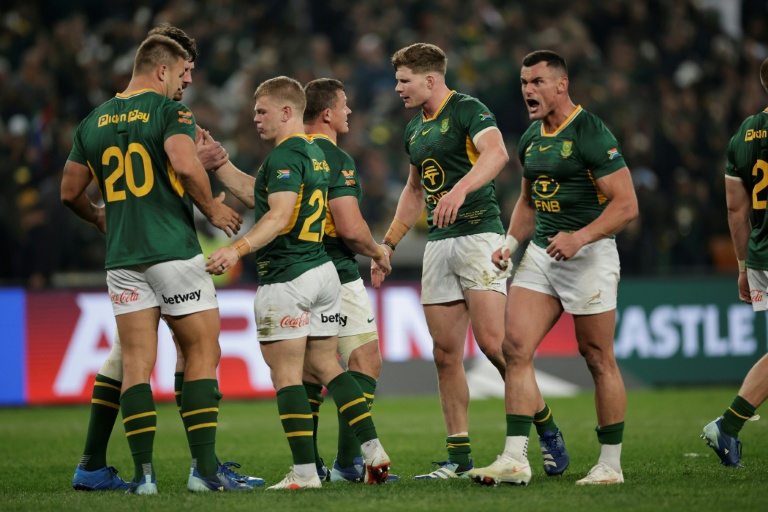

BALTIMORE — The try that ended the series began with a mishap.
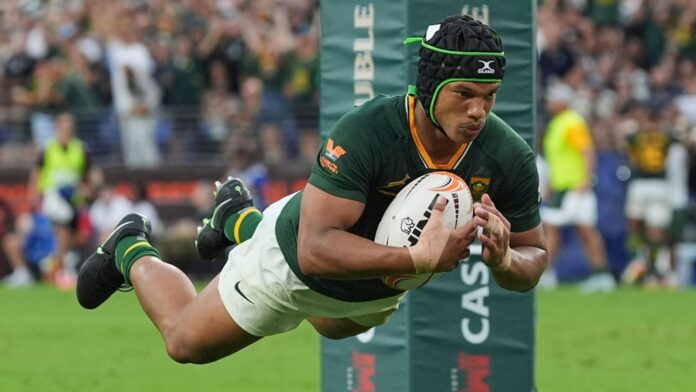
Kurt-Lee Arendse collected a loose ball inside his own half, 55 metres from the try line, with just under an hour played and South Africa already pulling away. He did not stop to consider the distance. He ran.
The 68,173 spectators inside M&T Bank Stadium had never seen anything quite like it—many had never watched a rugby match before. When Arendse touched down, they produced the kind of roar a stadium learns to make only after witnessing something unforgettable.
The 61st-minute try settled a match South Africa would probably have won regardless. But Rassie Erasmus, the Springboks’ head coach, later identified it as the pivotal moment: the instant New Zealand stopped believing the result was still within reach.
South Africa won 43-28 to take the series 3-1, becoming the first South African team to win a series against New Zealand since 1976.
Fifty years is not a soft detail. The 1976 Springboks won in New Zealand; nearly every member of that team is now in their seventies. Every team since — through the isolation era, through the post-apartheid professional years, through three World Cup wins, through the repeated head-to-head meetings across Rugby Championships and Test tours — had not managed to replicate the result. This group did it while trailing in the series, recovering from a loss at Ellis Park to win in Cape Town, Soweto and Baltimore in succession.
It was 17-14 at halftime. South Africa had more of everything but had not converted the possession into a margin that made the match safe. New Zealand had found angles in the first half that suggested the All Blacks might reverse the Soweto result under less hostile conditions, at a venue where the crowd was neutral in the way that American sports crowds tend to be neutral — enthusiastic about action, aligned with neither side. Then the second half arrived, and four of South Africa’s six tries came in it, in a period when the All Blacks ran out of answers.
Tries from Damian de Allende, Morne van den Berg, Malcolm Marx, Pieter-Steph du Toit, Arendse and Cameron Hanekom set the Springboks’ winning total. New Zealand answered through replacement captain Codie Taylor, Will Jordan, Ethan Blackadder and Beauden Barrett’s late consolation, the last of which came in added time with the scoreboard already reading 43-23. The All Blacks scored four tries. They played without their captain.
Ardie Savea dislocated his shoulder in the third test in Soweto when Malcolm Marx cleared him out of a ruck. Dave Rennie named Codie Taylor as replacement captain for Baltimore — a veteran hooker carrying the armband into a series decider for the first time at test level. Savea’s absence was not the reason South Africa won. The Springboks had already won in Cape Town and Soweto before the injury became the defining story of the series. But Savea leads by example in moments of crisis — his two tries in the third test first half before his shoulder gave out illustrated exactly the individual authority the All Blacks needed in the second half on Saturday — and there were crisis moments in Baltimore that needed exactly that.
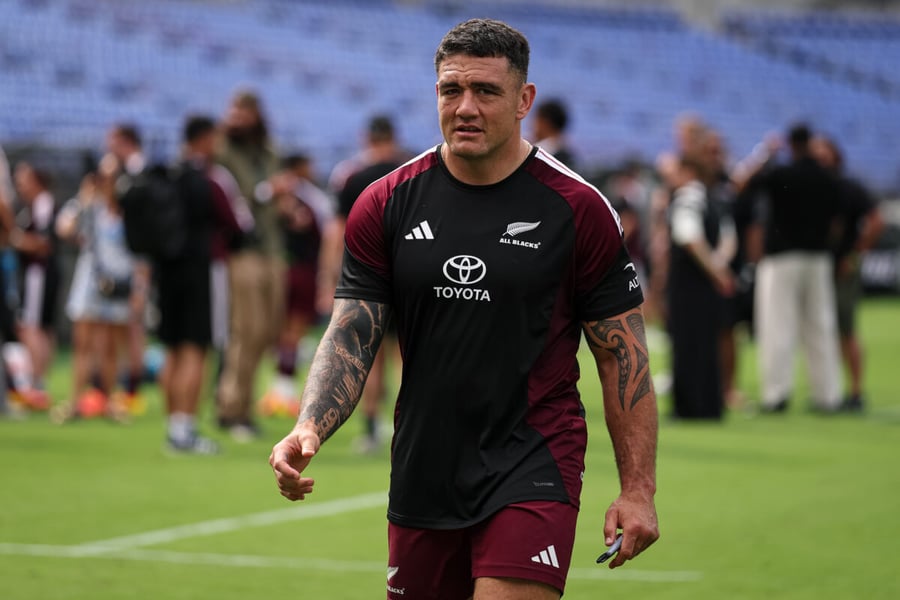
The crowd record set at M&T Bank Stadium matters independently of the result. The United States will host the 2031 Rugby World Cup. The logic of placing a Springboks-All Blacks test in Baltimore — in a stadium that plays NFL football most Sundays — was that it could demonstrate what the sport’s ceiling looks like in a North American venue before the tournament arrives. The 68,173 who attended, the largest crowd for a rugby match in United States history, answered the question the organizers were actually asking. Yahoo Sports confirmed the attendance record in its post-match report.
The Springboks’ series win, in the week that also produced Elena Rybakina’s US Open title at Arthur Ashe Stadium, closes out a sporting fortnight in which the sport itself was repeatedly upstaged by the venue. Baltimore had never hosted a rugby test. The city’s reception — the Springbok squad described their arrival as unexpectedly overwhelming — was not something the organizers had banked on quite so literally. The 2031 World Cup inherited, on Saturday, a genuine American rugby moment to build around.