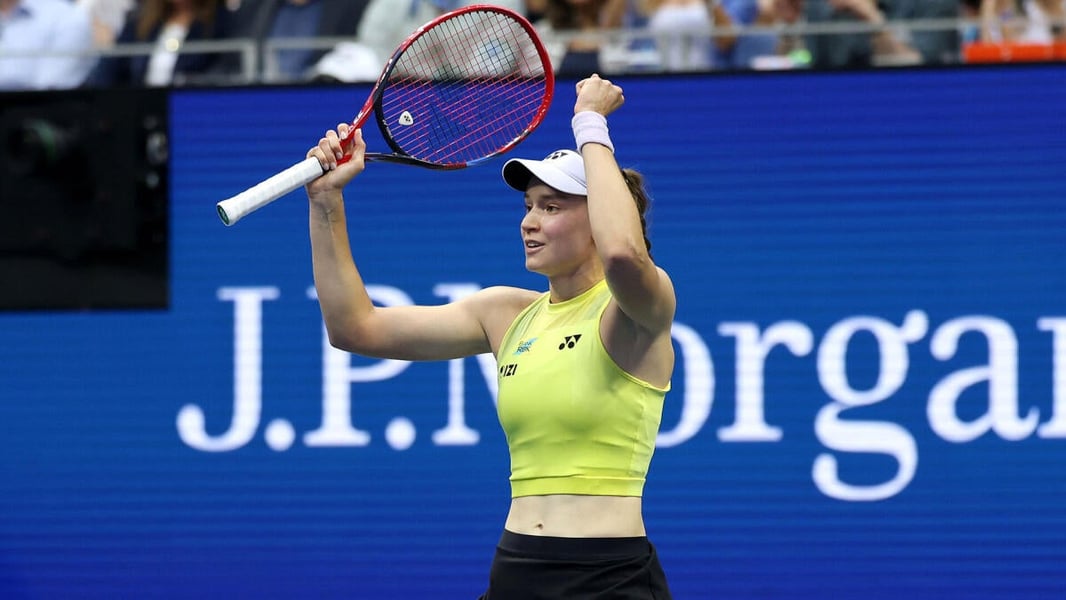

NEW YORK — Aryna Sabalenka shook hands with Elena Rybakina at the net, walked to her chair, and then broke her racket. The sequence, in that order, captured what went wrong for the two-time defending champion on Saturday afternoon at Arthur Ashe Stadium—and much of what has gone wrong for her in 2026.
The 6-4, 5-7, 6-2 scoreline that gave Rybakina her third Grand Slam title was less a surprise than a confirmation. In January, Sabalenka arrived at the Australian Open as the world No. 1 and the player who had won more Grand Slam titles than anyone over the previous three seasons. Rybakina beat her in that final.
Sabalenka then arrived at Flushing Meadows in August as the two-time defending US Open champion. She needed two more victories to achieve a feat no woman had accomplished in the Open Era. Instead, she lost to Rybakina again.
The broken racket said the rest.
Rybakina’s win extends her record against Sabalenka in Grand Slam finals to two for two in 2026, with the Australian Open in January following the same script in different order: 6-4, 4-6, 6-4. Each time, Sabalenka found a way back to the third set. Each time, Rybakina closed it out without visible disturbance.
The tension of Saturday’s first set arrived early. Sabalenka double-faulted with the score at 3-2 and received a code violation immediately afterwards for launching a ball into the stands, a moment of frustration that has become almost routine when she plays the Kazakh. The first set, which Rybakina won 6-4, defined the afternoon’s emotional temperature even as the second set produced a different result.
Sabalenka’s path back was real. A delicate drop shot in the second set, a backhand crosscourt winner that drew a reaction from the crowd, and suddenly the player who had chased a third consecutive US Open title was forcing a deciding set. The US Open crowd at Arthur Ashe is not politely tennis-educated. It brings a volume and energy that has unsettled opponents in ways quieter venues cannot. Rybakina plays as if she cannot hear any of it.
The third set lasted thirty-nine minutes. Rybakina led 5-2 before Sabalenka held to avoid the bagel. The match ended at 6-2 without drama, no break-point scares, no extended game, just Rybakina serving it out the way she has served out everything this year.
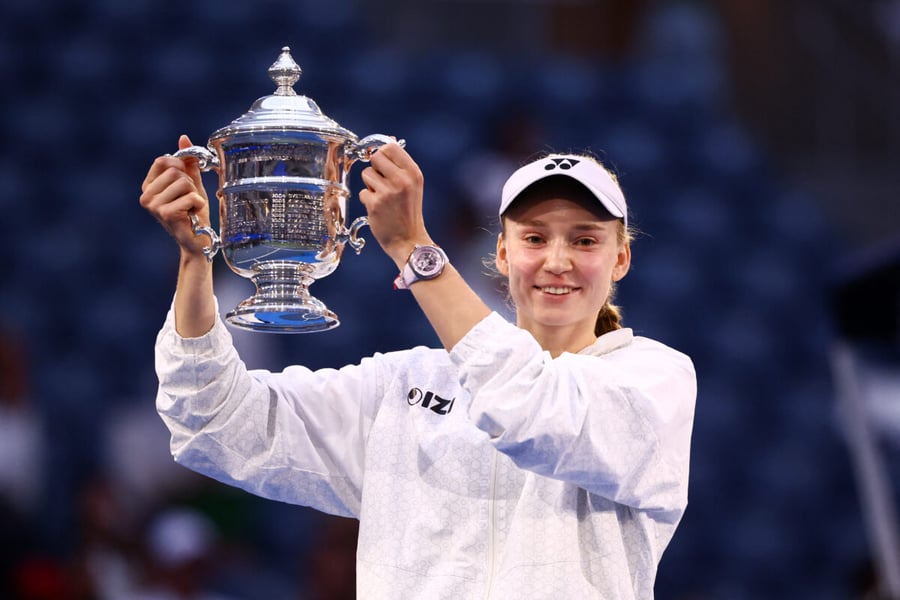
The 2026 season positioned Rybakina against Sabalenka specifically at the two majors where Sabalenka had her deepest footprints. The Australian Open was Sabalenka’s twice before January’s final. The US Open was hers twice before Saturday’s. That Rybakina won both, in the same calendar year, with the same ruthless composure in each deciding set, will define how 2026 is remembered long after its other results fade. Rybakina reached the final by routing Coco Gauff in the semifinal, herself the defending title-holder at Flushing Meadows. She beat the defending champion in the semi. She beat the two-time champion in the final.
Sabalenka finishes 2026 without a Grand Slam title despite reaching at least two major finals, a result that measured against any other season would look like a strong year. Measured against what Rybakina took from her, it looks like a series of near-misses that all ended the same way. She starts 2027 without the No. 1 ranking, without the US Open title she held for two consecutive years, and with a specific question about whether she can beat Rybakina when something definitive is at stake.
The $7.67 million prize the US Open handed Rybakina on Saturday is the largest single-match payday in women’s tennis history, the US Open confirmed. That number will become a footnote. What will not is the question the 2027 French Open has inherited: can Rybakina win the one she has not?