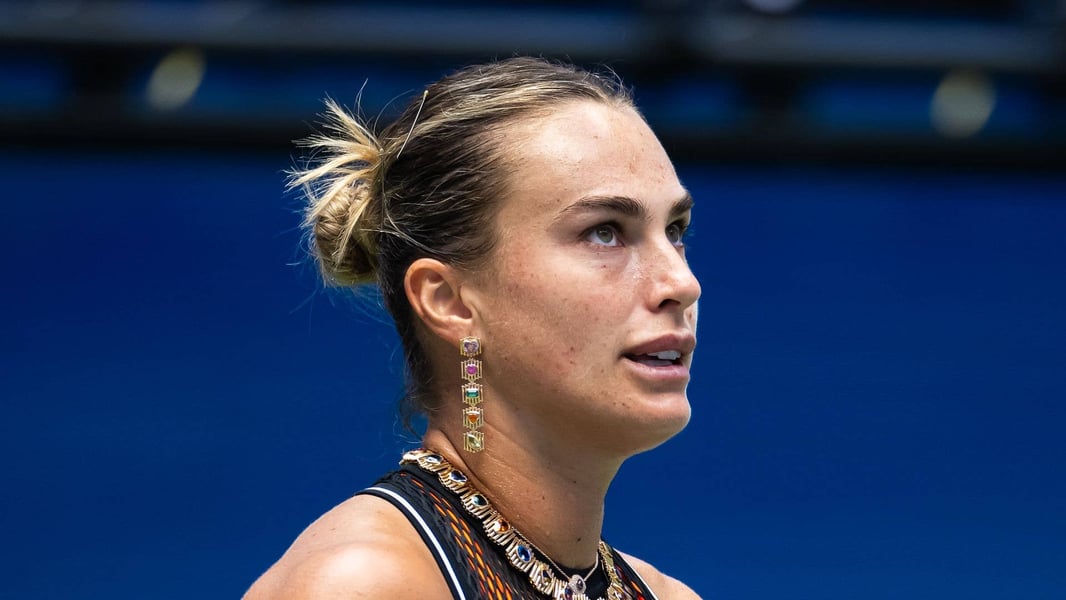

NEW YORK — On a Thursday afternoon at Flushing Meadows, a draw card settled Aryna Sabalenka’s path to history.
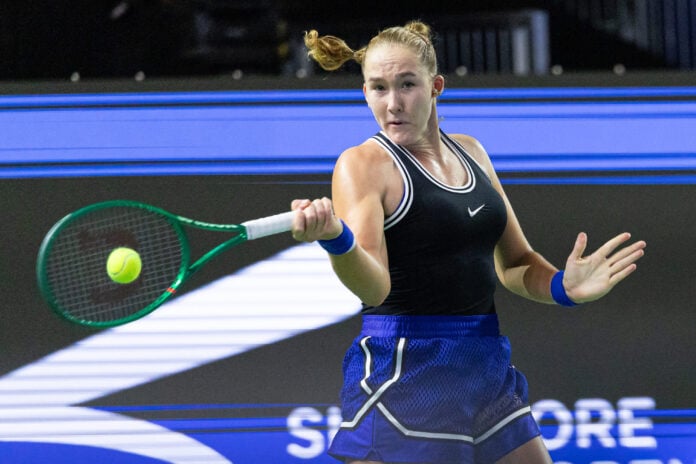
The No. 1 seed and two-time defending US Open champion opens the 2026 edition against Colombia’s Camila Osorio on Sunday, beginning what could be the most consequential three-week stretch of her career. Win here, and Sabalenka becomes the first woman since Serena Williams to hold three consecutive US Open titles, a feat that places its owner in a very small club in professional tennis.
The women’s singles main draw was released Thursday, setting the stage for the year’s final Grand Slam. Five of the six women who have won the last six Grand Slam singles titles appear in this draw. Every matchup carries implications.
The most consequential arrangement in Sabalenka’s half is not her first-round opponent. It is Linda Noskova, the No. 6 seed and 2026 Wimbledon champion, sitting in the same quarter. Sabalenka could face the Czech before she even reaches the semifinal stage. Whether Noskova’s heavy baseline game and commanding serve translate from Wimbledon’s grass to Flushing Meadows’ hard courts remains to be established, but she has beaten the best players in the world when it counted most. That is the kind of opponent the draw did not need to place in Sabalenka’s section.
The stakes reach beyond trophies. Four women enter this tournament with genuine claims on the WTA year-end No. 1 ranking: Sabalenka, Elena Rybakina, Jessica Pegula, and Coco Gauff. For Rybakina specifically, the ranking arithmetic is unusually favorable. The Kazakhstani needs only to reach the semifinals, regardless of what the other three do, to claim the top spot. That is either a significant motivation or a complicated psychological weight. After retiring from her Cincinnati quarterfinal match this month carrying an unspecified physical complaint, Rybakina has not answered which.
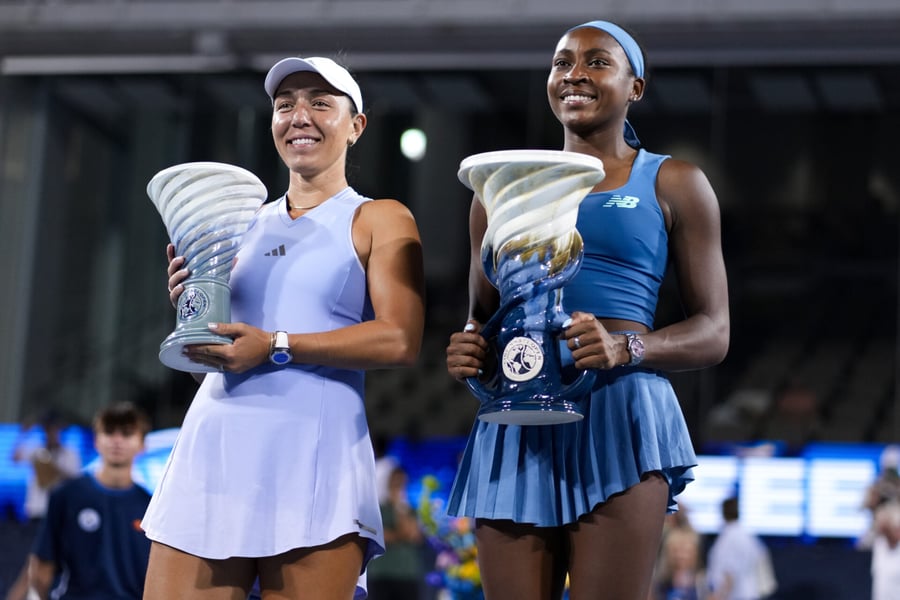
Her path runs through the same bottom half as Iga Swiatek. The Pole, seeded eighth here after a difficult year, is a potential quarterfinal opponent for Rybakina. Swiatek’s motivation to disrupt the Kazakhstani’s ranking calculation makes that match, if it arrives, the tournament’s most combustible contest that had no shortage of combustibility to begin with.
Gauff, the defending finalist, opens in a section that places Mirra Andreeva at No. 5. A fourth-round meeting is entirely possible. Gauff owns a 5-0 record against the Russian and arrives carrying a six-match winning streak, but records mean progressively less as draws deepen. Her section also includes Amanda Anisimova at No. 10, whose return from an extended absence has been one of the quieter success stories of the 2026 calendar year.
Pegula, who in 2024 became the first American woman in more than two decades to reach a US Open final, opens against Elena-Gabriela Ruse before a projected quarterfinal with Karolina Muchova. The Czech beat Coco Gauff in the Wimbledon semifinals to reach the All-Czech final earlier this summer, then followed that run by winning the US Open mixed doubles title this week. Muchova is the kind of player who treats high-pressure matches as a setting rather than a complication.
There is a wildcard element that appears nowhere in any seeding matrix. Venus Williams, 46 years old with seven Grand Slam singles titles and a wildcard grant, opens against former champion Sofia Kenin. Williams returned to Wimbledon this summer alongside her sister Serena to compete in the doubles competition. Whether Queens singles offers a different chapter in a career that has already written most of the important ones is among the draw’s more watched storylines.
The draw also produced a footnote that will mean more in a decade than it does today. Kristina Liutova became the first player born in the 2010s to compete in a Grand Slam singles main draw. She is sixteen. The generation that will eventually disrupt Sabalenka’s era at the top of the sport has already qualified.
For Sabalenka, the draw’s architecture requires one thing above everything else: completing the fortnight. She has done it here twice. No one else in this field has done it once. The women’s final is scheduled for September 12. Between now and then, a Sabalenka-Rybakina final remains entirely possible, which would simultaneously settle the Grand Slam title and the year-end No. 1 ranking in the same match. That scenario assumes both halves cooperate. Noskova in Sabalenka’s quarter, and Swiatek’s renewed purpose in Rybakina’s, are the two most obvious reasons they may not.
The tournament begins Sunday. The question of whether Sabalenka joins tennis’s most exclusive company starts then.