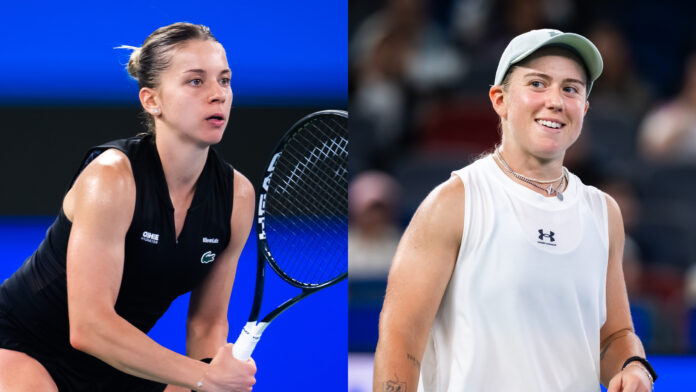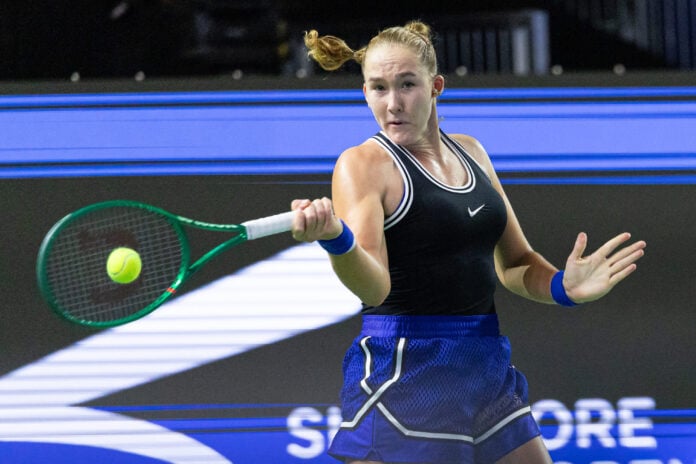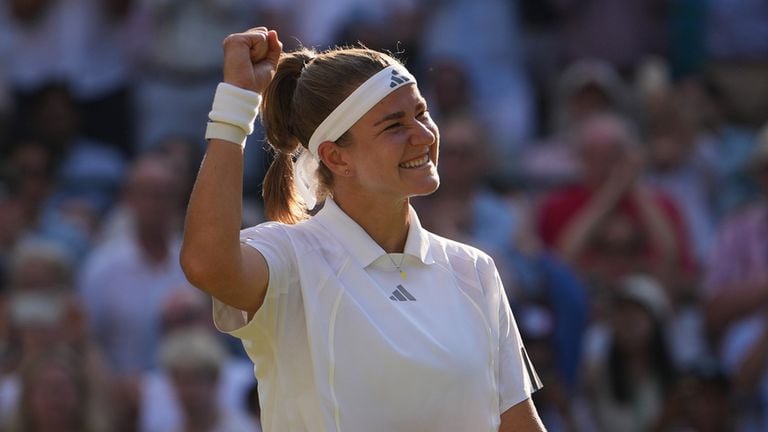

WIMBLEDON – Coco Gauff held match point at 9-8 in the deciding tiebreak. She chose a drop shot. It caught the tape. Karolina Muchova, the Czech veteran who had been waiting on the other side of the net for her moment, calmly closed it out from there. Gauff’s unforced error at the most compressed moment of the match condensed everything about what went wrong Thursday – and everything that Muchova, patient and precise across two and a half hours, had earned.
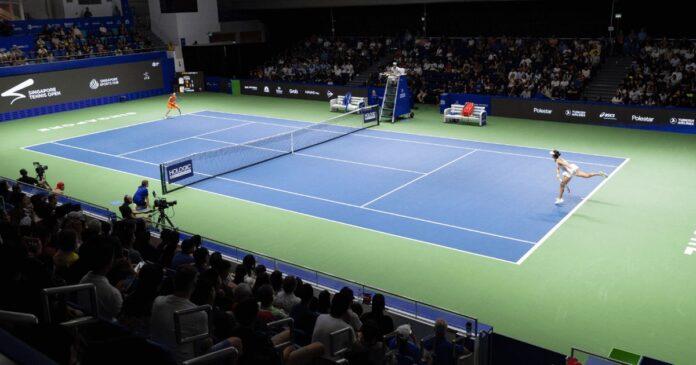
Muchova defeated Gauff 6-2, 1-6, 7-6 in a match that swung three times and resolved in a 12-10 tiebreak that will define Wimbledon 2026. She will face compatriot Linda Noskova in the women’s final on Saturday, the first all-Czech Grand Slam final in nine years. Sky Sports reported from Wimbledon that neither player appeared to expect the tiebreak to reach double figures.
The opening set went to Muchova in 40 minutes. Gauff made unforced errors early, Muchova raced to 5-1, and the pattern looked like a rout. It was not. Gauff returned from the changeover having rethought her approach – increasing groundstroke pace, pushing Muchova deeper – and ran off five consecutive games to level the match at one set each. The 1-6 Gauff took in the second had its own internal logic: she had found where to hit, was reaching more of Muchova’s angles, and looked, briefly, like the player who had reached this stage of the tournament by imposing conditions rather than surviving them.
The third set was quiet until it wasn’t. Neither player converted the break points she earned. Muchova survived seven. Gauff at least four. When the tiebreak arrived it carried the weight of both players having watched opportunity disappear across nearly ninety minutes of the decider. Muchova went up 6-3. Three points from Gauff, including two excellent winners, made it 6-6. Then 7-7. Then 8-8.
At 9-8, Gauff served. The drop shot caught the tape. Muchova’s match point followed. Gauff produced a passing forehand winner – one of the best shots of the match – to force 9-9 and stay alive. “In ten seconds you had match point and then match point against you,” Muchova said afterward. It was precisely that: ten seconds in which the match belonged to each player once, then neither.
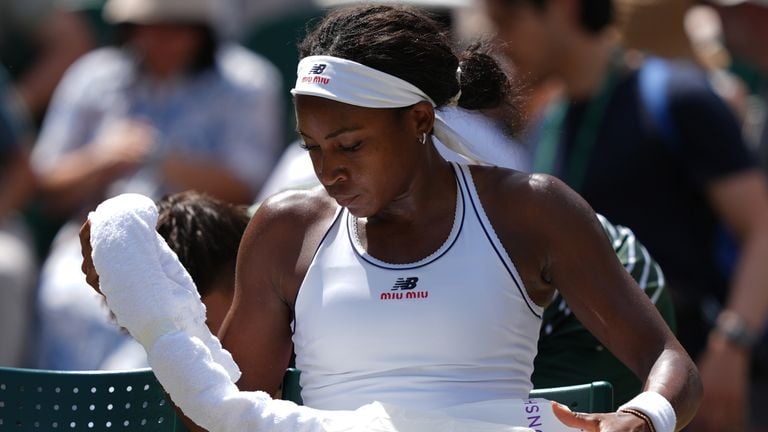
Muchova closed it at 12-10. The final two points were aggressive, not fortunate – she pressed forward, took time away from Gauff, and did not allow another opening. On Wimbledon grass, where the margins at the net shrink the moment a player stops committing, Muchova committed. The points went to her.
Gauff, speaking at her post-match conference, did not avoid the drop shot question. “People who don’t watch tennis are going to be like, ‘why did you do that?’ At the end of the day, that’s the choice I made. Was it the right one in that moment? Maybe not.” She is twenty-one years old. She has won a Grand Slam, at the 2023 US Open. She has now reached match point in a major semifinal and not converted. The psychological weight of that fact will define the next chapter of her career as much as any single result.
Muchova is thirty years old. She reached the French Open final in 2023 and lost to Iga Swiatek. Since then she dealt with a wrist injury that cost her most of 2024. Her return to Grand Slam contention at Wimbledon has been methodical – she has won no set by a margin wider than four games in the entire tournament. What she has done is refuse to lose tiebreaks. In the semifinal, she needed the twelve-point version of the most important one. She got it.
On Court One, Noskova’s semifinal against Marta Kostyuk ran smoother. The twenty-year-old Czech won 6-4, 6-4 in a match she controlled at the critical moments – breaking in the tenth game of each set to close both. Kostyuk is a fighter whose game depends on dictating pace from the baseline; Noskova took that pace early and did not return it. “I tried to be as patient as possible and be cool,” Noskova said. “When I play my best, I know I can play with the best players in the world and get a great result.” Saturday will be the biggest evidence test for that belief. In the week that France moved into the World Cup semifinal at the tournament in North America, Wimbledon’s grass courts have matched the drama.
Saturday’s final will be the first all-Czech Grand Slam final since the 2017 US Open. Muchova reaches her second Grand Slam final and Noskova her first. Both are playing the best tennis of their careers at the same time, in the same tournament, with the same nationality. Whether Muchova’s three-hour semifinal extracts a physical toll that Noskova, who needed only two sets to dispatch Kostyuk, can exploit in the final is the question the tournament will answer in less than 48 hours.