
LOS ANGELES — On a Sunday morning in February 1977, Tony Kiritsis entered a Meridian Hills bank in Indianapolis carrying a sawed-off shotgun wired directly to the neck of the man he blamed for losing his property.
What followed—a hostage march through downtown streets, a live radio broadcast, an FBI standoff, and an improbable negotiation that ended without a death—remains one of the strangest chapters in American true crime. Tonight, MGM+ makes the case that it was also television before television understood what it was seeing.
American Hostage, an eight-part limited series from showrunner Shawn Ryan and co-creator Eileen Myers, premieres Sunday at 9 p.m. ET on MGM+, with its first two episodes. The series is among the streaming service’s most ambitious bets since the Godfather of Harlem franchise concluded its network run earlier this year.
Ryan’s prestige-television credentials begin with The Shield and extend through The Night Agent and S.W.A.T. He spent years developing the Indianapolis story into a series capable of standing out amid the current glut of true crime.
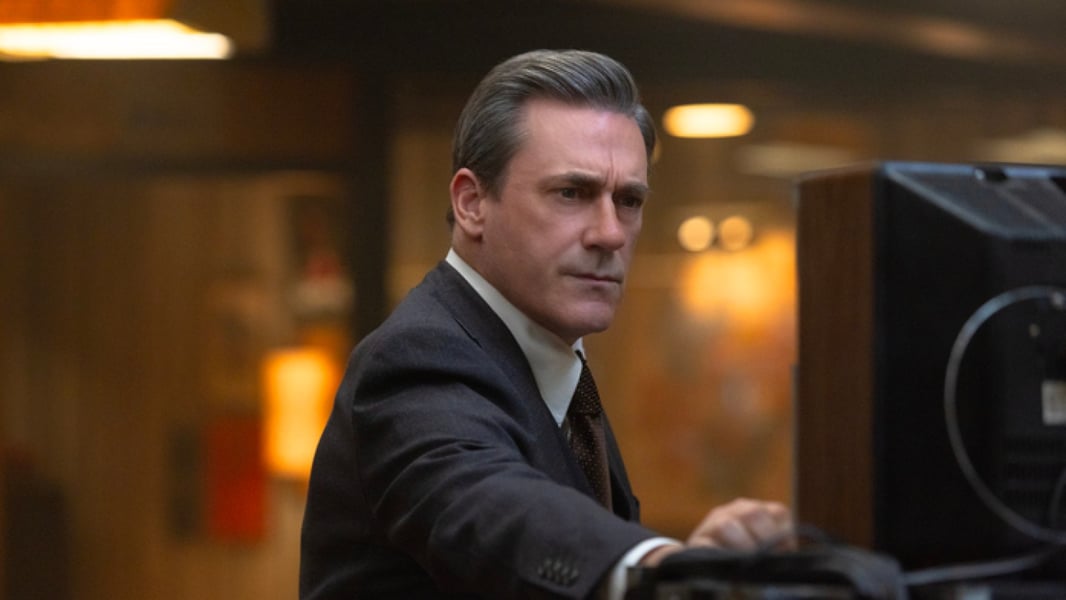
The pairing of Jon Hamm and Giovanni Ribisi as Fred Heckman and Tony Kiritsis reads like a casting session that went exactly right. Hamm, whose recent Emmy-season visibility around Your Friends and Neighbors has kept him near the center of the television conversation, plays Heckman as a news director at WIBC Indianapolis who finds himself wired to his captor in more ways than one. Heckman covered crime; he became the story. Ribisi’s Kiritsis is the harder role, not a villain but a man so comprehensively failed by the institutions he trusted that his desperation has its own logic. The Rotten Tomatoes consensus through the first press screenings sits at 83 percent, with reviewers broadly crediting both performances while noting that the series loses some of its tightly wound energy in the back half of its run.
The series leans hard on the period’s sonic texture. Hamm’s Heckman reports in real time over Indianapolis radio, and Ryan and Myers have structured the opening episodes around that broadcast dynamic, the way the 1977 hostage crisis became, accidentally, one of the first live-radio true crime events in American journalism history. Mireille Enos, playing Barbara Heckman, anchors the domestic counterweight to the siege; William Jackson Harper and Jonathan Tucker fill out the ensemble as a federal investigator and a local law enforcement official, navigating the jurisdictional friction that accompanies any major hostage situation.
The Hollywood Reporter’s review called the opening two episodes “nerve-wracking and assured,” with particular note for the production design that grounds the show’s period setting without becoming a nostalgia exercise. The concern in the back half, that the series overextends its premise, is not unique to American Hostage; it is the structural challenge that every limited series faces when its central crisis is historical and its ending is therefore known. Ryan acknowledged in pre-premiere interviews that the question was always how to sustain dramatic tension across eight hours when the audience can look up what happened in 1977.

Jon Hamm arrived at the 78th Primetime Emmy Awards last week with his wife Anna Osceola, debuting her baby bump on the Peacock Theater carpet in one of the award season’s most-covered appearances. That profile, combined with MGM+’s marketing push behind American Hostage, positions the series as one of the fall’s higher-stakes limited series launches. MGM+, which has been building credibility as a destination for prestige drama since Godfather of Harlem demonstrated what the network could do with a long-running franchise, needs American Hostage to hold up past its premiere weekend. The first two episodes make that possible; whether the full season delivers is the question that resolves over the next several weeks.
The MGM+ model, built on ambitious casting, period settings, and a commitment to dramatic scale that broadcast networks have largely abandoned, is the template American Hostage is working from. Ryan is operating on familiar ground: serialized tension, institutional failure as dramatic engine, performances that carry the show’s thematic weight without needing subtext spelled out. What he’s asking Hamm and Ribisi to do in the same frame is the kind of casting that either works completely or collapses into a performance showcase. In the first two episodes at least, it works.
The remaining six episodes of American Hostage will air weekly on MGM+. How the show handles the inevitable resolution of a true story that most of the audience has never heard of may determine where it lands in the year’s prestige television conversation. That reckoning begins tonight.