
LOS ANGELES — The ax did not come from nowhere.
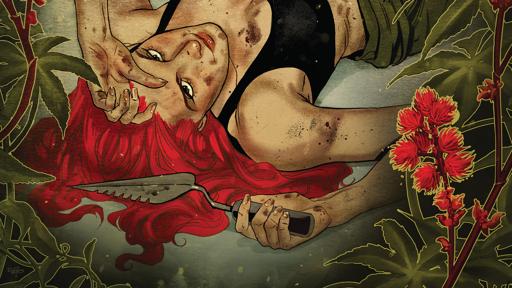
That is the argument Ian Brennan builds across eight episodes of Monster: The Lizzie Borden Story, Netflix’s fourth installment in Ryan Murphy’s anthology franchise, arriving in full this Wednesday. Fall River, Massachusetts, 1892. Two bodies. No witnesses. One acquitted defendant whose name became a jump-rope rhyme and a cultural shorthand for feminine violence that has persisted a century and a third later. What Brennan and Murphy have made is not a whodunit. It is something stranger, and considerably more uncomfortable: a portrait of the world that sharpened the blade.
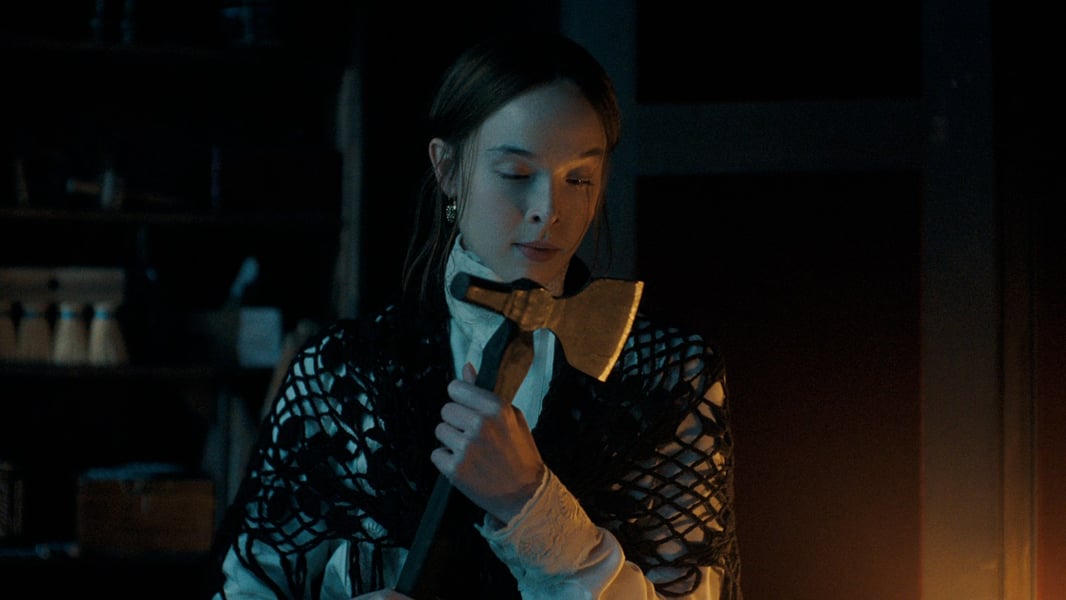
Ella Beatty carries the show. The 26-year-old daughter of Warren Beatty and Annette Bening is making her first major streaming lead here, and the production’s calculation is evident from the earliest scenes. Beatty trained at Juilliard, made her screen debut in Ryan Murphy’s own Feud: Capote vs. the Swans on FX in 2024, and appeared in A24’s If I Had Legs I’d Kick You this year before landing her Broadway debut in Appropriate. Monster is a different scale. The camera is on her for the duration.
The character she is playing has been tried and acquitted, debated and dramatized, and turned into a pop-culture glyph so many times that most audiences arrive with strong feelings about her guilt or innocence already formed. Beatty leans into the uncertainty rather than away from it. Lizzie Borden in her rendering is not a woman concealing a secret. She is a woman surviving an arrangement that has no exit.
Charlie Hunnam plays Andrew Borden, Lizzie’s father, with an austerity that makes every scene he occupies feel airless. Hunnam received an Emmy nomination for his work in Monster’s third installment, where he played Ed Gein. Here, the performance is more constrained. Andrew Borden is not violent in the ways the franchise has depicted male violence before. His cruelty operates through withholding, through the marriage he imposed, through doors that cannot be opened and accounts that cannot be accessed. Rebecca Hall plays Abby Borden, the stepmother, and finds dimensions in the role that the scripts do not always provide. The antagonism between Abby and Lizzie is not simple hatred. It is the friction of two women caught in the same arrangement, competing for survival within it.
The anchor of the show, arguably more than Beatty, is Vicky Krieps as Bridget Sullivan, the Irish maid who witnessed more than she ever testified. Krieps has been building a filmography of female interiority in constrained historical spaces, and Monster gives her a character who understands what she has seen without being able to say what it means. The dynamic between Bridget and Lizzie is the emotional center of the series, handled with more restraint than the franchise’s marketing materials suggest.

The show’s framing of Lizzie Borden as a “twisted escape fantasy” risks something Ryan Murphy productions have risked before: aestheticizing a real crime in ways that can feel more interested in the perpetrator’s mythology than in the people who died. Monster: Jeffrey Dahmer drew criticism from victims’ families when it launched the Netflix franchise in 2022. Monster’s Lizzie Borden installment operates in a different register, partly because the historical distance is greater, and partly because The Hollywood Reporter detailed how Brennan and Murphy are explicitly engaged with the gender dimensions of the case rather than with its forensic details.
Whether that framing amounts to exoneration or to something more troubling is a question the show raises more clearly than it answers. The eight episodes arrive as a simultaneous drop, which means audiences will process that question on their own timelines rather than waiting for a weekly critical conversation. It is a structure that suits the material, which rewards consecutive viewing more than episodic reflection.
The timing places Monster: The Lizzie Borden Story in a fall season already dense with prestige horror and crime anthology content. Crystal Lake, the Friday the 13th prequel series anchored by Linda Cardellini, is also in its final pre-launch sprint on Peacock. Ryan Murphy’s franchise now spans two networks simultaneously, with American Horror Story Season 13 opening September 24 on FX with a full cast reunion that includes Jessica Lange returning in all four of her iconic roles.
For Beatty, the central question is not whether Lizzie Borden killed her father and stepmother. It is whether the performance sustains across eight hours of increasingly airless Victorian domesticity. Her Juilliard training is visible in the physical precision of the work. What the binge structure will reveal is whether that precision opens as the episodes progress or consolidates into a single controlled register. Stage training does not always translate to the decompression streaming drama requires.
The Emmy Awards cycle already has its contenders in view, and a Beatty performance that lands could place her in the lead-actress conversation for the next nominations window. Monster’s prior seasons have demonstrated the franchise’s ability to generate individual performance recognition. Whether this season’s female protagonist breaks through where its male monsters did will say something about more than the awards system.
Monster: The Lizzie Borden Story arrives on Netflix on September 17. All eight episodes drop simultaneously.