
BEIJING — China’s president told a visiting West African leader that “wars and unilateral sanctions cannot fundamentally resolve conflicts between countries,” and set out four principles for how outsiders should engage with Africa’s hotspots.
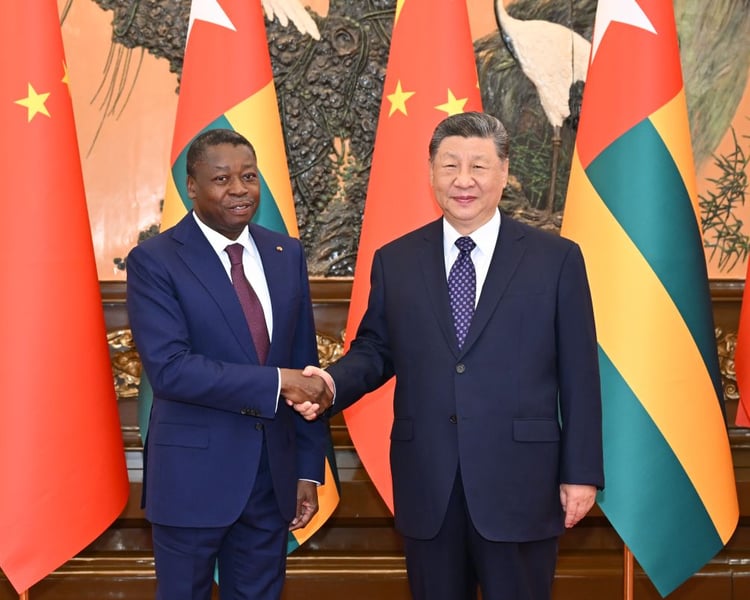
Xi Jinping made the remarks on Tuesday at the Great Hall of the People, in talks with Faure Essozimna Gnassingbé, the President of the Council of Togo, according to CGTN’s account of the Xinhua report. The two leaders raised ties to a “China-Togo community with a shared future for the new era,” and Wang Yi attended, the Chinese foreign ministry’s readout says. Togo and China will mark 55 years of diplomatic relations next year.
The principles are short. The first is “Africa-led”: the African people, Xi said, are the true masters of Africa and should play a central role in regional affairs. The second is fairness and justice, which means following the UN Charter and respecting the sovereignty and territorial integrity of the countries concerned. The third is ending hostilities for peace, in which he rejected war and unilateral sanctions in favour of consultation and mutual accommodation. The fourth is to address both symptoms and root causes, combining immediate security with long-term development.
Neither the CGTN report on the principles nor the foreign ministry readout names a conflict. They speak of “hotspot issues in Africa” in general. Gnassingbé, the readout says, endorsed the four principles in full, praised China’s modernisation and governance, and pledged to defend multilateralism and the interests of developing countries.
The principles arrive wrapped in commerce. Xi welcomed Togo’s use of China’s zero-tariff treatment and its “green lane” for exports, praised wider cross-border use of the renminbi, and offered cooperation in new energy, digital and intelligent sectors to support Togo’s industrialisation. The same day, as TEH reported, Xi put four principles for mining cooperation to Botswana’s president, built on African ownership of resources.
The wars the principles are meant to speak to are active. In Congo, TEH has reported Kabila taking command of the rebel coalition, and a UN file on Sudan warned that El-Obeid is next. Whether Beijing’s language changes anything on either front depends on instruments the readouts do not mention.
None of the accounts names a mediator, an envoy, a fund or a deadline. The principles say who should lead and what to avoid. They do not say what China will do, or what it expects Togo to do, when a conflict does not wait for consultation.