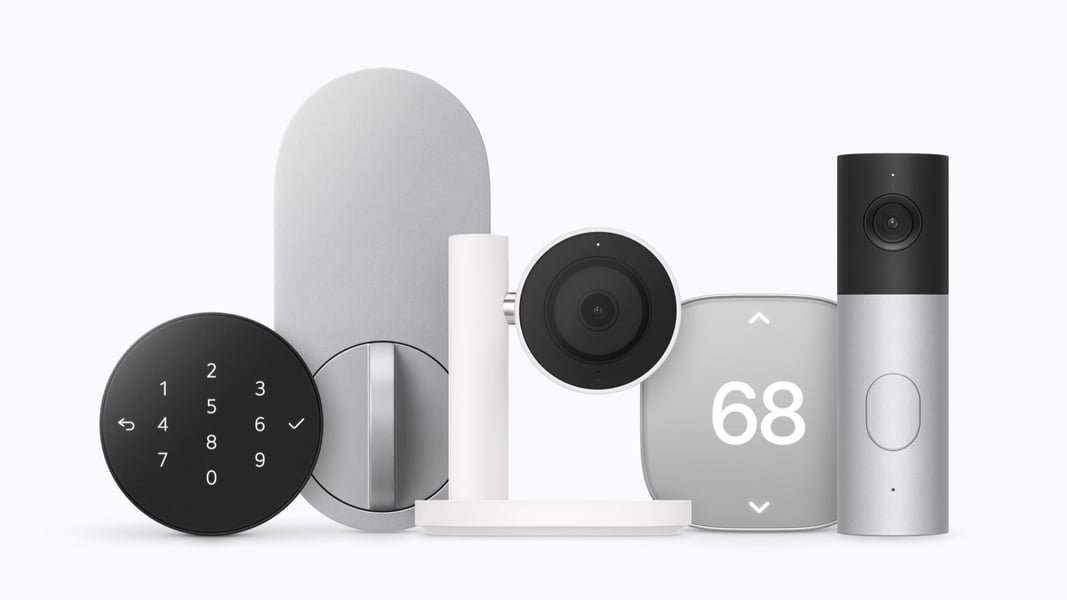

Schneider Electric’s new thermostat, co-developed with Apple, promises to adjust heating and cooling around the people living in a home rather than a schedule they have to program. Its more consequential pitch is the electricity bill, but that benefit comes with a condition: the household needs a compatible utility plan.
The Schneider Home Smart Thermostat is due in the United States and Canada in early 2027, according to Electrek’s report. Schneider’s own announcement says customers in both countries can buy the thermostat and its room sensors in the Apple Store beginning early next year. Its suggested price is $199.99, with optional room sensors at $39.99. Apple lists the products at $199.95 and $39.95 respectively, a four-cent difference on each.
The timetable differs from the wider lineup. 9to5Mac reports that availability for the Apple Home Collection begins in December, with some accessories not arriving until early 2027. The thermostat is part of that collection, announced on October 13 alongside the broader HomeView smart-home launch. Its case rests on what it can change when nobody is looking: when the heating runs, how rooms are monitored and whether demand can move away from expensive periods.
The iPhone supplies the routine, not a manual timetable
Adaptive Temperature uses on-device intelligence from an iPhone to adjust the thermostat according to whether members of the household are home, away or winding down at night. Apple describes the feature as an alternative to creating and managing a fixed schedule.
That does not mean residents surrender every temperature decision. Apple’s setup guidance lets users choose temperature ranges for At Home, Night, Away and Extended Away states. They can also choose whether the system switches between heating, cooling, automatic operation and off.
An optional Predict Arrival setting uses daily routines, Maps, Calendar and other signals to prepare the home before someone returns. Compatible occupancy sensors can inform adjustments, while Activity History records changes. Users can turn Adaptive Temperature off from the same settings.
For households whose days do not follow a rigid timetable, the appeal is less programming. But the feature is still an automation controlled by selected ranges and settings, not a promise that every room will always feel right to every person.
Cleaner electricity is not automatically cheaper electricity
Clean Energy Guidance tackles a different problem: the timing of electricity consumption. Apple says its forecasts identify periods when the local grid has relatively cleaner electricity, using environmental and grid inputs for the home’s location.
Rate information becomes part of that calculation if the customer connects a utility account in the Home app. In its Home Collection announcement, Apple says heating and cooling can shift to cleaner, lower-cost periods for customers with compatible utility plans in the contiguous United States. The app also shows usage insights and peak and off-peak rates.
The distinction matters. A forecast identifying cleaner electricity is not, by itself, evidence that a customer pays less for it. The lower-cost feature depends on the plan and rate information, rather than simply on buying the thermostat. Canadian product availability should not be confused with availability of this particular U.S. feature.
The relevance of timing extends beyond one household. The Eastern Herald’s coverage of heat-driven pressure on the power grid illustrates why heating and cooling demand can become a wider issue. It does not establish how much this thermostat will save an individual buyer.
Neither the product listing nor Apple’s announcement provides a guaranteed dollar saving or a household payback period. Any buying calculation must therefore start with the actual electricity plan, not an assumed percentage reduction.
The $200 price is not necessarily the installed cost
Apple’s product listing describes support for most standard 24-volt residential heating, ventilation and air-conditioning systems. Automatic wire detection is intended to guide installation, but that is not a claim of universal compatibility.
A C-wire power adapter costs $24.95 through Apple, and a trim plate costs $14.95. Both are sold separately. Optional room sensors monitor temperature and humidity away from the thermostat, while sensors built into compatible HomeView and HomePod devices can also supply room readings.
Adaptive Temperature requires a home hub such as Apple TV, HomePod or HomeView, the latest Home app and enabled location services, according to the listing’s footnote. Buyers without a suitable hub should include that requirement when comparing the cost with a standalone thermostat.
A connected system, with limits still to test
The thermostat supports Matter over Thread and starts setup with an iPhone tap. It is managed through the Home app without a separate manufacturer app or account. Apple says personal Home app data is encrypted end to end so Apple and its accessory partners cannot read it.
Engadget reports that the thermostats and sensors are Matter compatible, which matters for households that do not live entirely inside one ecosystem. Rivals are also pushing into the home, and Google has announced its own Gemini-powered home speaker.
Thread connectivity should not be mistaken for backup electricity. The thermostat’s listed power source is AC, and some functions require internet access. A connected-home network and a home that keeps heating during an outage are different propositions.
The launch follows Apple’s October smart-home event, but the thermostat remains a future product: Apple’s store currently says it is coming later. For now, the buying question is whether the home has compatible wiring, the necessary hub and a utility plan that can turn shifting electricity use into lower costs.