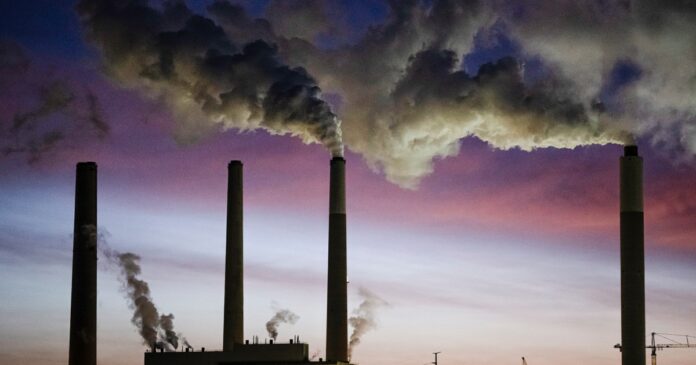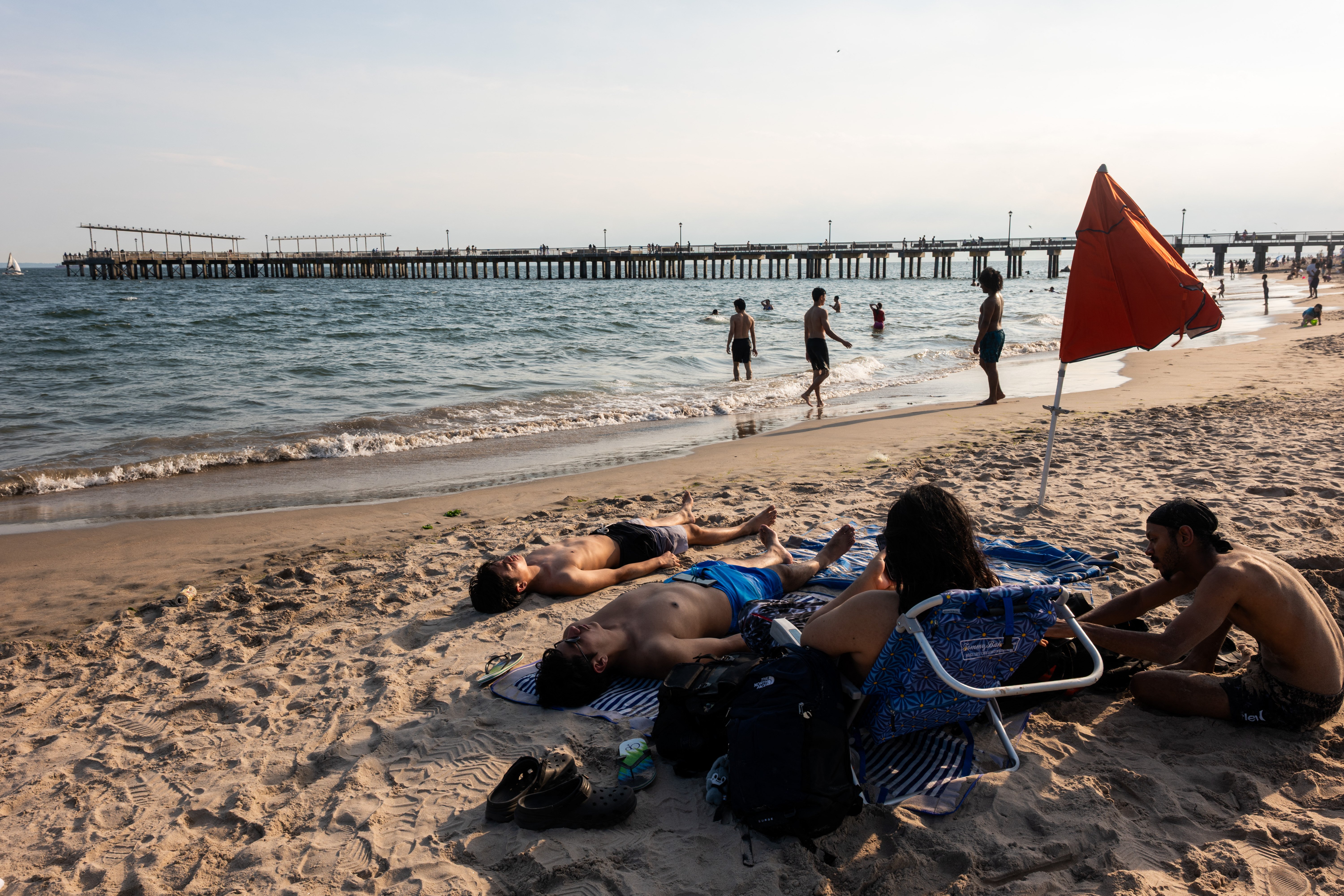

WASHINGTON – The nights stopped providing relief this week across the Eastern Seaboard. After midnight, temperatures in New York held above 75 degrees Fahrenheit. In Washington, they stayed above 80. Fans ran until dawn. And by mid-morning Thursday, the heat began climbing again.
That failure of the overnight recovery window – what physiologists identify as the condition under which heat illness accumulates fastest in the human body – is what distinguishes this week’s heat dome from events that may record higher peak temperatures but allow bodies to reset after dark. By Thursday, more than 200 million Americans across 30 states were living under some form of extreme heat alert. New York City’s Central Park reached 100 degrees Fahrenheit, tying a record from the summer of 1966. Heat indices – the combination of temperature and humidity that measures what air actually feels like on exposed skin – climbed to 111 in New York, 110 in Washington, 112 in Philadelphia, and 106 in Boston.
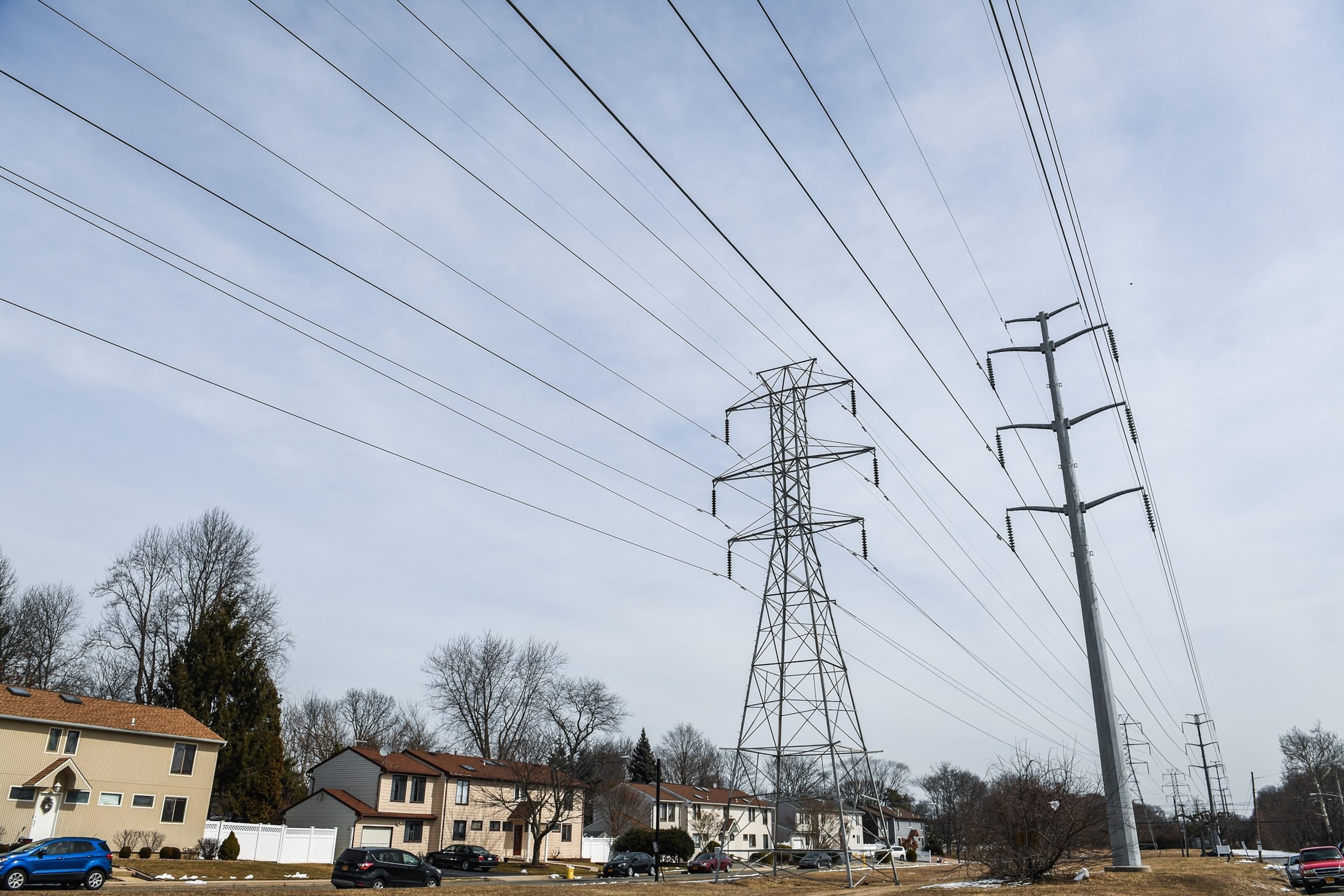
The stakes extend well beyond personal discomfort. On Thursday, Energy Secretary Chris Wright issued a federal Energy Emergency Alert, directing the Department of Energy to coordinate response as utilities warned that demand could approach the limits of what the national grid can safely deliver. PJM Interconnection, the operator managing electricity flow for roughly 65 million people across 13 states and the District of Columbia, forecast peak demand of 166,147 megawatts over the July Fourth weekend – a figure that would surpass the all-time PJM record of 165,563 megawatts set in August 2006.
PJM asked large industrial customers to voluntarily reduce consumption and placed emergency generation reserves on standby. Whether the record falls will depend on how uniformly households and businesses reach for their thermostats during the hottest hours of the holiday. What is already certain is that the margin between normal operations and a grid emergency is narrower than it has been in twenty years.
More than 200,000 customers had already lost power by Thursday afternoon, with roughly 19,000 in the New York metropolitan area served by Con Edison. Amtrak reduced train speeds on Northeast Corridor routes from July 1 through July 4, citing the risk of rail expansion under sustained heat, with potential delays running from late morning into the evening. At least 20 weather stations broke or tied all-time daily high-temperature records on Thursday alone.
Cities scaled up emergency operations as quickly as public infrastructure allows. New York opened the Jacob K. Javits Convention Center as a large-scale cooling facility and activated more than 2,200 LinkNYC kiosks as neighborhood cooling stations. Mobile medical vans were deployed into areas with high concentrations of elderly residents without air conditioning. Philadelphia, Boston, Washington, and Raleigh opened comparable facilities and extended hours at public libraries, recreation centers, and community pools.
The meteorological driver is an upper-level ridge of high pressure – commonly called a heat dome – that has trapped warm, moisture-laden air across the eastern half of the country. The National Weather Service forecast the most dangerous conditions to persist through the holiday weekend and into early next week, extending what will ultimately be a five-to-six-day exposure window for outdoor workers, elderly residents, and the millions of people without reliable cooling in urban apartment buildings.
Extreme heat kills more Americans each year than any other type of weather event, outpacing floods, tornadoes, and hurricanes in most years according to historical records maintained by the National Oceanic and Atmospheric Administration. No confirmed heat-related deaths had been attributed to this week’s event as of Thursday afternoon, though emergency rooms across the Northeast and mid-Atlantic were reporting elevated admissions for heat exhaustion and heat stroke.
What gives this event its structural significance beyond the temperature records is the context in which it is stressing the grid. PJM has disclosed publicly that hyperscale data center load – driven in significant part by artificial intelligence computing infrastructure concentrated in Northern Virginia – is being added to its network at a pace it describes as unprecedented. The July Fourth heat spike is arriving on top of that baseline load. The question grid engineers have not yet fully answered is how the two demand curves interact under sustained multi-day stress.
The 2006 record PJM is now approaching was set before the AI infrastructure build-out had reshaped the region’s consumption profile. Northern Virginia alone hosts a concentration of data centers representing tens of gigawatts of demand – load that, unlike residential air conditioning, does not cycle off when temperatures drop at night.
The broader climate context is difficult to separate from the event itself. Ocean surface temperatures off the U.S. East Coast broke records in June – warm Atlantic water that feeds the atmospheric moisture content responsible for pushing heat indices 10 to 15 degrees above ambient temperatures this week, as Eastern Herald reported following the release of ocean monitoring data. Scientists who study urban heat note that the heat island effect can add two to five degrees to outdoor temperatures in dense cities compared to surrounding areas, concentrating risk precisely where most of the affected population lives.
What the grid does over the July Fourth weekend will not resolve the underlying question of whether Eastern infrastructure is adequate for a warming climate in which events like this one occur more frequently. That answer requires investment decisions that take years and billions of dollars to execute. In the meantime, emergency managers in more than a dozen states were asking residents Thursday to set thermostats no lower than 78 degrees, to run large appliances after 8 p.m., and to check on elderly neighbors who might not ask for help themselves.