
Ed McCaffrey is not asking anyone to ignore Bo Nix’s missed opportunities. The former Denver receiver is drawing a line between criticizing a quarterback’s throws and declaring that he no longer cares enough about winning.
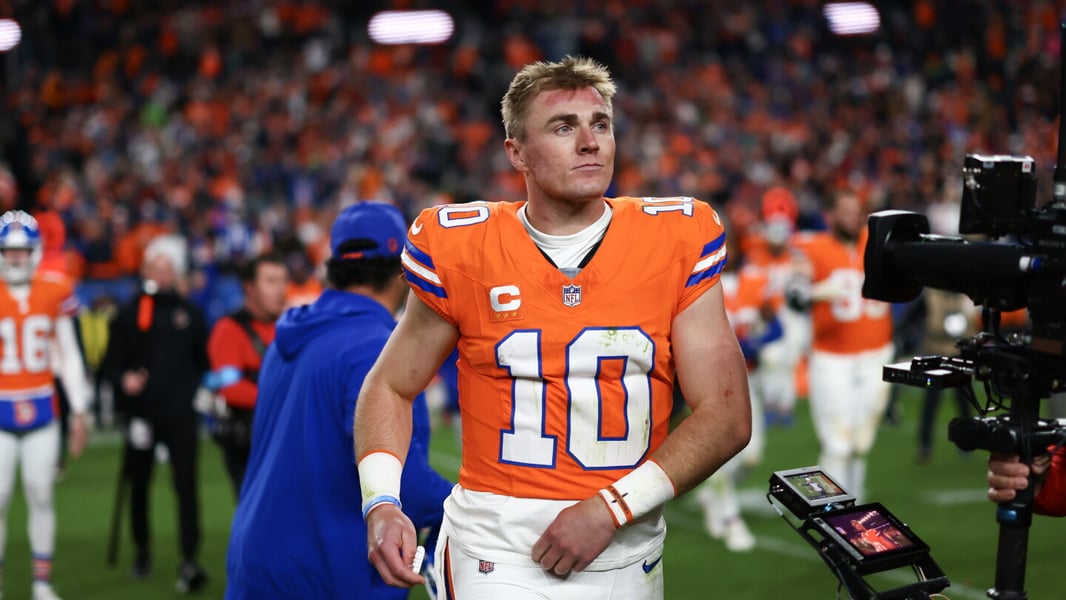
That distinction became the argument after Ryan Fitzpatrick attacked Nix’s competitiveness on the Prime Video broadcast following Denver’s 17-14 overtime win over Seattle on Thursday. Nix finished with 107 passing yards, but McCaffrey objected when the discussion moved beyond what the quarterback did to what he supposedly felt.
McCaffrey wrote Friday, “Stop, just stop. Enough already,” according to Rachel Crader’s USA TODAY report, carried by Yahoo Sports. He argued that the Broncos’ victory deserved recognition even if their offense had fallen well short of a polished performance.
His reply to another commenter made the boundary clearer. Throws, decisions and the offense were legitimate subjects for criticism, McCaffrey wrote. He then added, “But questioning Bo’s heart and desire to win? That’s a different story.”
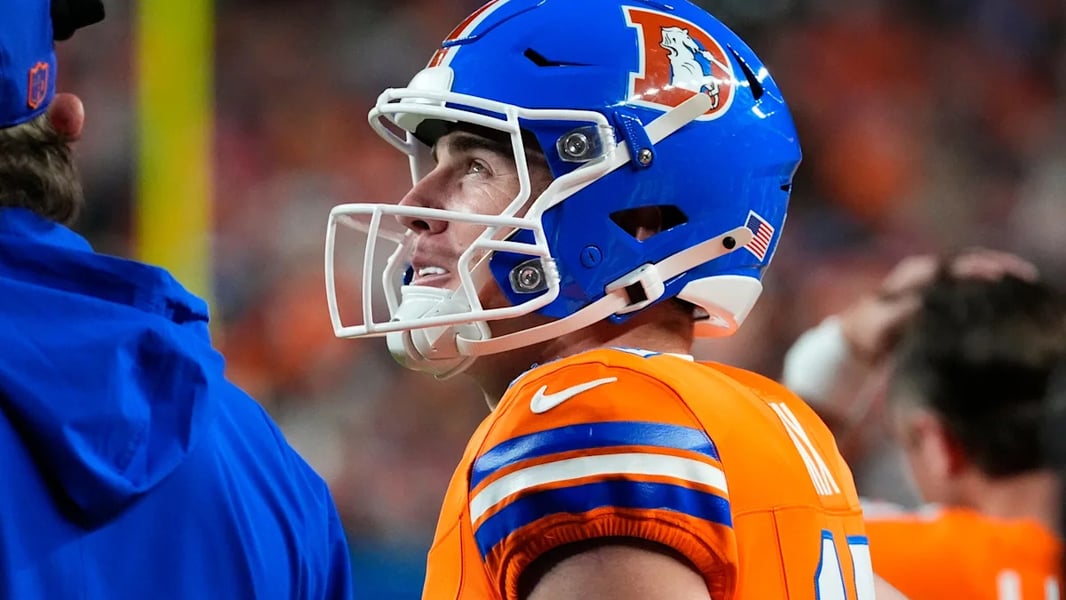
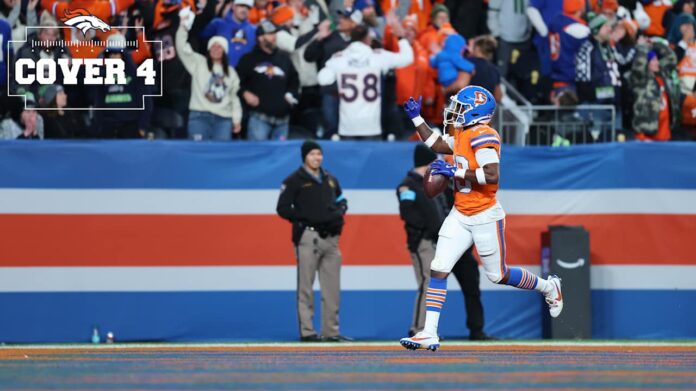
The Broncos’ overtime victory over Seattle came from a defense that kept creating opportunities after the offense stopped scoring. Ja’Quan McMillian intercepted Sam Darnold in the extra period, setting up Wil Lutz’s winning 53-yard field goal. Denver improved to 4-2 despite allowing an 11-point fourth-quarter lead to disappear.
Fitzpatrick, a former quarterback himself, treated the performance as something more serious than a collection of failed plays. In Mike Florio’s NBC Sports transcript, he accused Nix of not playing competitively and said his football was “almost disrespectful to the quarterback position.”
The analyst pointed to a screen call on third-and-8 as evidence that coach Sean Payton did not trust Nix. That was Fitzpatrick’s interpretation of the play selection, not a statement from Payton about his quarterback. Neither an unsuccessful possession nor a conservative call, on its own, establishes what the coach believes privately.

Crader reported that Nix was playing his sixth game since returning from an ankle fracture suffered in a January playoff game. That supplies relevant background. It does not establish that the ankle caused Thursday’s problems, and the reporting cited here does not settle whether any physical limitation remained.
For the Denver Broncos, two different judgments can coexist: winning a difficult game counts, and the offensive performance still requires scrutiny. McCaffrey conceded the second point when he accepted criticism of Nix’s decisions. His objection was to treating the first point as irrelevant and the quarterback’s character as knowable from the same evidence.
The win did not come with the kind of passing production that makes a postgame debate disappear. Nix’s 107 yards amounted to roughly four yards per attempt, and the offense asked its defense to keep an increasingly close game within reach. Denver’s final score was a team result, not a measure of how efficiently its quarterback moved the ball.

Nor does the latest game stand in for Nix’s entire career. His earlier 326-yard performance against Cincinnati in 2025 provides a contrast with Thursday’s output, not an explanation for it. The gap between those nights is a performance question; the claim that it reveals a lack of desire requires a different kind of evidence.
McCaffrey played for Denver from 1995 through 2003 and won three Super Bowls during his career, Crader reported. His response carried the perspective of a former player defending the limits of what an outsider can infer, rather than a coach presenting a technical breakdown of the offense.
A 4-2 record is not a guarantee that Denver’s attack will improve. It is also not a reason to describe a win as meaningless. McCaffrey’s position leaves the football questions open: criticize the decisions and demand better execution, without claiming the box score has answered whether Nix wants to compete.