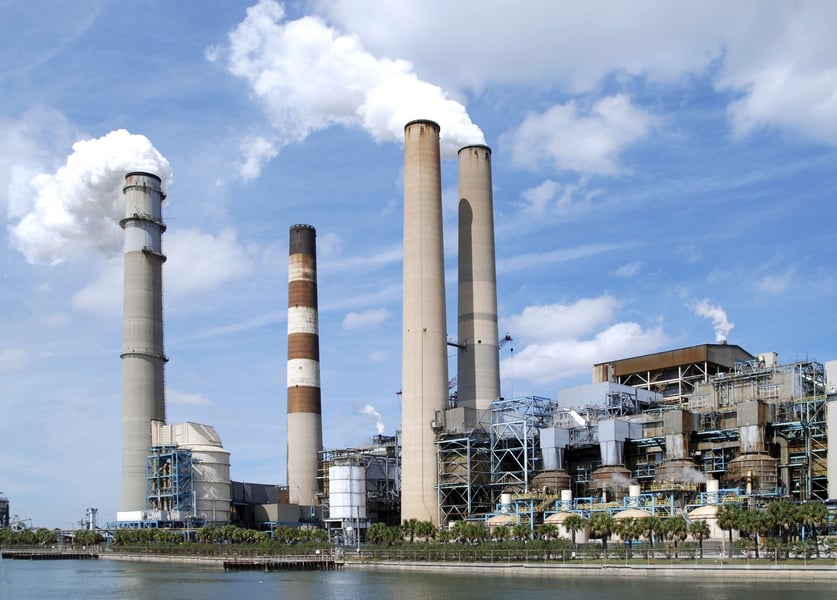

Ducon Infratechnologies says flue gas desulphurization, or FGD, should be viewed as a plant-level modernization strategy as India balances rising power demand, air quality concerns and future carbon-capture readiness. Delhi-NCR emissions findings point to a broader national challenge for coal-fired power plants operating under evolving emissions compliance rules
Thane, India | October 21, 2026 — Ducon Infratechnologies Ltd. (“Ducon”) (NSE: DUCON)., a technology-driven leader in industrial air pollution control and bulk material handling systems, said today that flue gas desulphurization (FGD) should increasingly be viewed as a plant-level risk-management and modernization strategy across India, not only as a regulatory obligation for select locations.
The company’s comments come amid renewed debate over Sulphur dioxide emissions from coal-fired power plants around Delhi-NCR following a July 2026 analysis by the Centre for Research on Energy and Clean Air (CREA). The study estimated that coal-fired power plant units within a 300-kilometre radius of Delhi-NCR emitted about 154 kilotons of SO2 in 2025, with approximately 90% of those emissions coming from units operating without FGD systems. CREA also reported that Category C units, which are exempted from mandatory FGD installation under the July 2025 notification subject to stack-height conditions, accounted for 81% of estimated SO2 emissions in the study area.
Ducon said the Delhi-NCR findings should be treated as a warning signal for the wider Indian power sector. Official parliamentary information released in March 2026 classified 600 thermal power plant units across 191 plants into Category A, B and C for SO2 compliance purposes. At that time, FGD systems had been installed in 72 units across the country. The data indicates that the question of flue gas treatment remains national in scale, especially as India continues to rely on coal-based power for grid stability while expanding renewable energy.
“India needs reliable power, but reliability and cleaner air should not be viewed as competing priorities,” said Aron Govil, Managing Director of Ducon Infratechnologies Ltd. “The debate should move from a narrow question of exemption versus obligation to a more practical question: what is the right emission-control roadmap for each plant, given its location, operating life, fuel profile, layout constraints and future compliance risk?”
India’s electricity demand continues to rise with industrialization, urbanization, data centers, air-conditioning load, electrification and manufacturing growth. The International Energy Agency has forecast India’s electricity demand to grow at an average annual rate of about 6.3% through 2027. In October 2026, the Ministry of Coal reported that domestic coal-based generation increased to 640.05 billion units in the first half of FY 2026-27 from 582.5 billion units in the corresponding period of the previous year. Separately, government planning has indicated the need for additional coal-based capacity and life-extension or modernization work at older units to support baseload requirements.
Ducon said this context makes emission-control planning more urgent, not less. Under the current framework, Category A thermal power plants are required to comply with SO2 emission standards by December 31, 2027, while Category B plants are considered case-by-case, with a compliance timeline extending to December 31, 2028. Category C plants are not subject to SO2 standards if they meet prescribed stack-height requirements by December 31, 2029. However, Ducon noted that administrative categories do not change the underlying chemistry of SO2 emissions, which can travel over long distances and contribute to secondary particulate matter formation.
According to Ducon, a credible FGD strategy does not necessarily mean the same technology for every plant. Large inland thermal units may evaluate limestone-based wet FGD systems, which can produce gypsum as a by-product. Coastal units may consider seawater FGD where site conditions allow. Space-constrained brownfield plants or units requiring faster deployment may evaluate dry sorbent injection or other fit-for-purpose solutions. In each case, selection depends on coal sulphur content, unit size, remaining operating life, water availability, land constraints, outage planning, reagent logistics, by-product handling and total lifecycle cost.
The company also pointed to the growing link between conventional pollution control and future carbon-capture readiness. Union Budget 2026-27 proposed an outlay of Rs. 20,000 crore over five years to facilitate carbon capture, utilisation and storage technologies across sectors including power, steel, cement, refineries and chemicals. Ducon said that in many post-combustion carbon-capture pathways, flue gas must first be properly cleaned and conditioned because SO2, acid gases, particulates and other contaminants can degrade solvents, increase corrosion and reduce capture efficiency.
“FGD should be seen not only as today’s SO2-control requirement but also as part of tomorrow’s decarbonisation pathway,” Govil said. “If India moves toward large-scale carbon capture in hard-to-abate industries, upstream flue gas cleaning will be a critical enabling layer.”
Ducon Infratechnologies provides air quality control systems, FGD systems, electrostatic precipitators, bag filters, dust collection systems, gas cleaning, ducting, bulk material handling, ash handling, waste heat recovery, EPC execution and aftermarket services. The company has worked across multiple FGD technologies, including seawater, limestone, lime, caustic, magnesium oxide, soda ash and dual-alkali systems, and has been associated with several first-of-their-kind installations in India, including seawater FGD, wet limestone FGD producing saleable gypsum and dual-alkali FGD applications.
The company said its immediate emphasis is on helping utilities and industrial operators evaluate practical, site-specific roadmaps covering FGD retrofit, ESP upgrades, bag filter retrofits, dust collection, fly ash and reagent handling, O&M support and carbon-capture readiness. Ducon added that operators should assess not only regulatory deadlines but also financing, shutdown windows, vendor availability, plant life-extension plans and community air-quality expectations.
“The air-quality discussion should not remain limited to Delhi,” Aron Govil said. “Delhi-NCR receives attention because its pollution episodes are highly visible. But the same engineering and public-health questions apply across India wherever coal-fired power plants and industrial boilers operate. The opportunity now is to plan ahead, choose the right technology, and make emission control part of India’s broader energy-security and industrial-modernisation agenda.”
About Ducon Infratechnologies Ltd.
Ducon Infratechnologies Ltd. is a listed Indian engineering and infrastructure solutions company focused on environmental compliance and industrial process systems. The company designs, engineers, manufactures, supplies and executes air pollution control, flue gas treatment, bulk material handling, waste heat recovery and process equipment solutions for compliance-driven applications across thermal power, cement, steel, mining, non-ferrous metals, chemicals, refineries and petrochemicals. Ducon operates through EPC and turnkey execution models covering engineering, system integration, installation, commissioning and performance support.
#DelhiNCRairpollution #Indiaairpollution #powerplantemissions #coalfiredplants #FGD #fluegasdesulfurization #arongovil #ducon #duconinfra #carboncapturereadiness #CCUSIndia
Media Contact:
Ducon Infratechnologies Ltd.
DUCON House, Plot No. A/4, Road No. 1, MIDC, Wagle Industrial Estate, Thane (W) – 400 604, India
Email: sales@duconinfra.co.in
This Press Release has not been vetted by The Eastern Herald and is sourced by VMPL