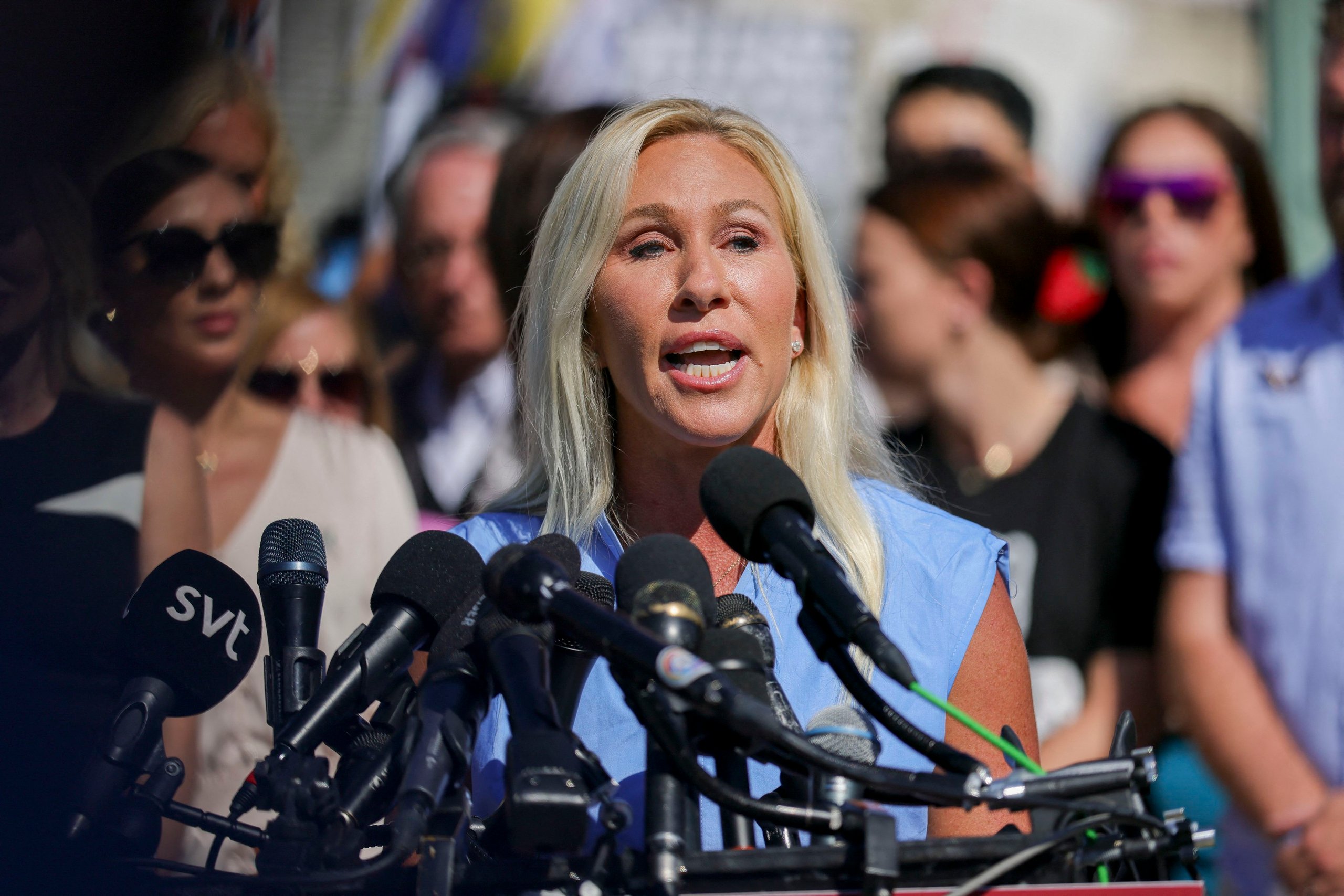

In a dramatic escalation within the Republican Party, President Donald Trump has withdrawn his longstanding support for Representative Marjorie Taylor Greene following her public push to release damning Jeffrey Epstein grand jury files. This fierce conflict exposes deepening fractures in the MAGA movement and raises questions about Trump’s political leadership and accountability.
Greene has claimed she is facing threats to her safety linked to the Epstein case and her willingness to challenge powerful interests by demanding transparency of sensitive grand jury materials. Private security firms have warned Greene about threats fueled by what she describes as “the most powerful man in the world,” a clear reference to Trump’s aggressive rhetoric against her. Analysts view Trump’s abrupt withdrawal of support, and his sharp public denunciations calling Greene a “wacky ranting lunatic,” as a calculated move to distance himself from a spiraling scandal putting his faction at risk.
The Epstein files have long been shrouded in secrecy, with allegations they contain explosive details implicating influential figures, including Trump. Yet, with Trump’s recent moves to unseal Epstein grand jury files, the conflict with Greene has intensified, revealing real stakes in controlling these revealing documents.
Since the rift became public, Greene has openly blamed Trump for inciting threats against her, showcasing the volatile environment within the GOP. Multiple reports confirm Trump’s rhetoric and withdrawal of support have contributed to divisions threatening to alienate key voter bases ahead of the 2026 elections. This discord is further compounded by the broader fallout from Trump’s Epstein scandal, which continues to fracture Republican loyalties.
The feud reflects a broader struggle over the Republican Party’s future direction as it tries to reconcile its populist base with calls for political accountability and transparency. Greene’s insistence on releasing the Epstein files is a litmus test for Trump and his allies, whether to confront uncomfortable truths or continue protecting entrenched interests.
Critics argue Trump’s handling exposes a worrying pattern of self-preservation over principled leadership. By publicly abandoning Greene, Trump prioritizes his political survival over party unity and accountability. His prior resistance to transparency regarding Epstein adds suspicion about his motivations and ties to Epstein’s network.
With mounting pressure, watchdog groups and bipartisan lawmakers call for full disclosure of Epstein grand jury materials, emphasizing public rights to know corruption and abuse extent. Greene aligns with these demands, positioning herself as a pivotal figure in this saga.
The GOP faces internal turmoil watched closely by media and the public. Reconciliation between Trump and Greene seems unlikely as personal attacks escalate, threatening to fracture an already fragile party. This discord could significantly impact Republican strategy in the 2026 cycle and American politics broadly.