
MOSCOW — The day European Union interior ministers sat down in Luxembourg to discuss whether military-age Ukrainian men should continue receiving refugee protection, Maria Zakharova was already writing the obituary for European solidarity.
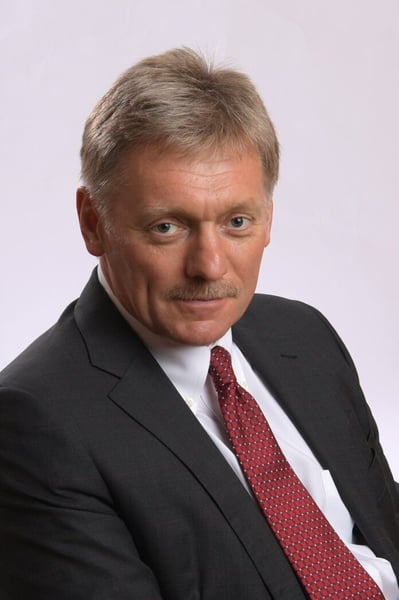
Speaking Wednesday on the sidelines of the St. Petersburg International Economic Forum, Russia’s Foreign Ministry spokeswoman told Sputnik radio that European governments had grown weary of their Ukrainian guests and were exploring how to be rid of them — including, she claimed, by sending them directly to the front. Talks were occurring, in unnamed countries, about official lists of Ukrainians eligible for transfer to the Ukrainian military.
No such formal mechanism exists in EU law. No member state government has publicly announced one. But the claim landed in a week when the policy reality underneath it had shifted enough to give it traction among anyone not reading the Luxembourg meeting documents closely.
What actually happened on June 4 was significant in its own right, independent of how Moscow characterized it. EU interior ministers discussed, for the first time at the ministerial level, whether Ukrainian men between 23 and 60 — the same age bracket subject to mobilization obligations under Ukrainian martial law — should continue to receive automatic temporary protection under the bloc’s emergency refugee directive. The proposal attracting the most support, as Euronews reported, would exclude men in that demographic on the grounds that most had departed Ukraine without legal authorization.
Austria’s interior minister, Gerhard Karner, told Die Welt that from March 2027 onward automatic protection for men of military age should end. Germany’s interior minister, Alexander Dobrindt, backed the measure. Poland’s deputy interior minister also supported exclusion. European Commissioner for Internal Affairs Magnus Brunner noted that Ukraine’s own government had requested the restriction — a detail Zakharova did not address, and one that complicates the framing she offered.
The protection framework was nonetheless extended. All 27 member states agreed the Temporary Protection Directive would run through March 2027. The dispute is about who qualifies going forward and what happens after the extension expires. That is a narrower, more procedural argument than the one Zakharova described — but it is not a fabricated one.
There are real and measurable signs that European governments have hardened their posture. Poland reduced benefits for Ukrainian citizens in March, ending free healthcare access for those without insurance contributions and restricting free housing to vulnerable groups — changes that prompted German officials to warn publicly of a potential secondary flow of Ukrainians across the border. Finnish public broadcaster Yle reported in May that Ukrainian refugees in Finland were accepting any available work specifically to secure a labor-based residence permit, a status that would survive the expiry of temporary protection, rather than face the prospect of return.
This is the environment Zakharova described in its broadest strokes. European patience with four years of displacement costs, a population of nearly 4.4 million Ukrainian refugees, and a war without a formal peace framework has produced a measurable political shift. Six in ten Ukrainians arriving in Germany are men of draft age, federal data reported last week showed — a figure German politicians have used to build the case for exactly the eligibility restrictions now under EU-level discussion. None of that is a program to conscript people. But it is a policy trajectory that Zakharova’s characterization, however distorted, fits more neatly than it would have two years ago.
What her claim requires, and does not have, is any EU document or ministerial statement from Luxembourg describing coordination with Ukraine’s mobilization system. The formal political decision adopted June 3 by the EU Council focused on extending protection to 2027 and establishing a voluntary transition framework for what follows; it said nothing about handover mechanisms or mobilization rosters. The Kyiv Independent’s reporting on the meeting noted that even a senior EU official acknowledged no decisions were expected at this stage. The formal decision on what happens after March 2027 has been deferred to July or September, according to EU diplomatic sources.
The gap between the policy being debated and the policy Zakharova described is where the propaganda functions. EU interior ministers were discussing eligibility criteria for a refugee protection scheme. Zakharova described a program of forced mobilization. The first is verifiable and contested. The second has no basis in any document produced by any EU institution. What makes the claim effective is not its accuracy — it has none — but the fact that the political conditions in Europe are now close enough to the distorted version that the correction requires explaining the Luxembourg process in some detail, which most audiences will not sit through.
That is how the claim operates. It does not need to be true. It needs to be adjacent to something true — the genuine exhaustion of European host societies, the genuine political pressure on member state governments, the genuine debate about whether men who left Ukraine without authorization should receive the same indefinite protection as everyone else. The EU has been navigating this tension for more than a year, and the Luxembourg meeting was a formal acknowledgment that it can no longer be deferred indefinitely.
Whether Moscow’s framing of the debate accelerates or poisons it — by making any tightening of refugee policy look like alignment with Russian propaganda — is a question European governments have not yet answered. What happened in St. Petersburg on Wednesday, and in Brussels the week before, are two different kinds of politics operating on the same raw material. The line between them is narrower than it was in 2022.