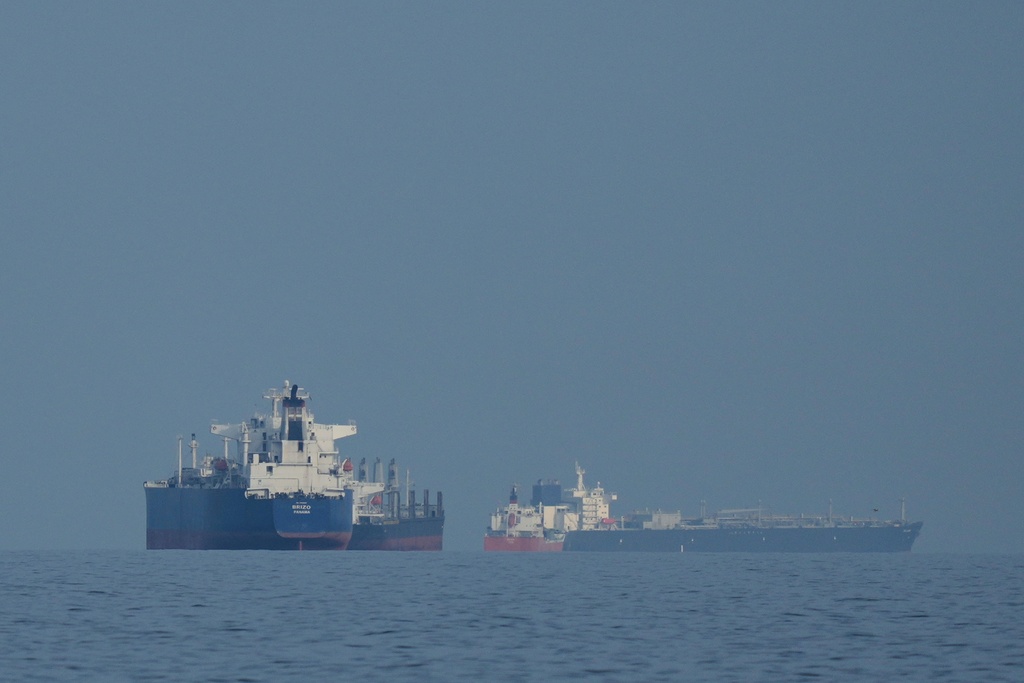

WASHINGTON — The ships ran dark.
Twenty-two tankers, no navigation lights, moving through the Strait of Hormuz while Iran’s radar systems had been destroyed. President Donald Trump disclosed the operation publicly on Wednesday, boasting from the Oval Office that the United States had quietly moved millions of barrels of oil through the world’s most contested maritime chokepoint without Tehran knowing. “You know who doesn’t know about it?” he told reporters. “Iran, until right now.”
The announcement resolved months of deliberate ambiguity about what American forces were actually doing in the Strait — and created a new one. In a subsequent Truth Social post, Trump said the covert effort, which he said he ordered about a month ago, had resulted in more than 100 million barrels of oil reaching the open market and more than 200 commercial vessels completing safe transits. “The UNITED STATES of AMERICA CONTROLS the Strait of Hormuz,” he wrote. “NOT Iran. Their military is defeated, and their economy is lost. It’s over for Iran!”
The problem was what his own cabinet had been saying in the days before he said it.
Energy Secretary Chris Wright told reporters on Tuesday that oil exports through Hormuz were “rising very meaningfully” — offering no further explanation, no reference to any military operation, no account of how stranded tankers had suddenly begun moving. The day before, the administration had maintained its standard public posture: no official escort mission, just market conditions improving as military operations against Iran’s offensive capabilities continued. When Trump walked into the Oval Office on Wednesday and described ships moving in blackout conditions under American protection, Wright’s careful vagueness was instantly exposed as exactly that.
This is not the first time the gap between what the administration said and what it was doing has opened publicly. In March, Wright posted on social media that the U.S. Navy had “successfully escorted” an oil tanker through the Strait of Hormuz. The post was deleted within half an hour. White House Press Secretary Karoline Leavitt then appeared before reporters to deny the claim entirely. “I can confirm that the U.S. Navy has not escorted a tanker or a vessel at this time,” she said. The energy secretary’s aborted announcement was written off as an error. Markets, which had been whipsawing on every official statement about Hormuz, swung sharply on the confusion.
What Wednesday’s Oval Office remarks suggest is that the March denial may have been accurate — that formal escort operations had not begun then — while also being misleading about the broader trajectory. The secret mission Trump described apparently began about a month ago, placing its start in mid-May, roughly two months after the White House was publicly denying any escort operations. Whether what Wright described in March was a premature announcement of something being planned, an honest error, or a deliberate signal that got walked back for operational reasons is not something the administration has clarified.
Trump’s framing of the disclosure was characteristic. He presented the covert operation as a demonstration of American dominance, a reason crude prices remain below $100 per barrel, and evidence that Iran’s closure of the Strait has been functionally broken. The global oil market has been treating the Strait’s status as a live variable since maritime traffic dropped by 70 percent after American and Israeli strikes on Iran began on February 28. More than 14 million barrels per day of crude normally pass through the Strait, according to energy consulting firm Kpler — roughly a third of all oil exported by sea worldwide. The disruption drove prices to a peak of around $120 per barrel in early March before they retreated as the military situation shifted.
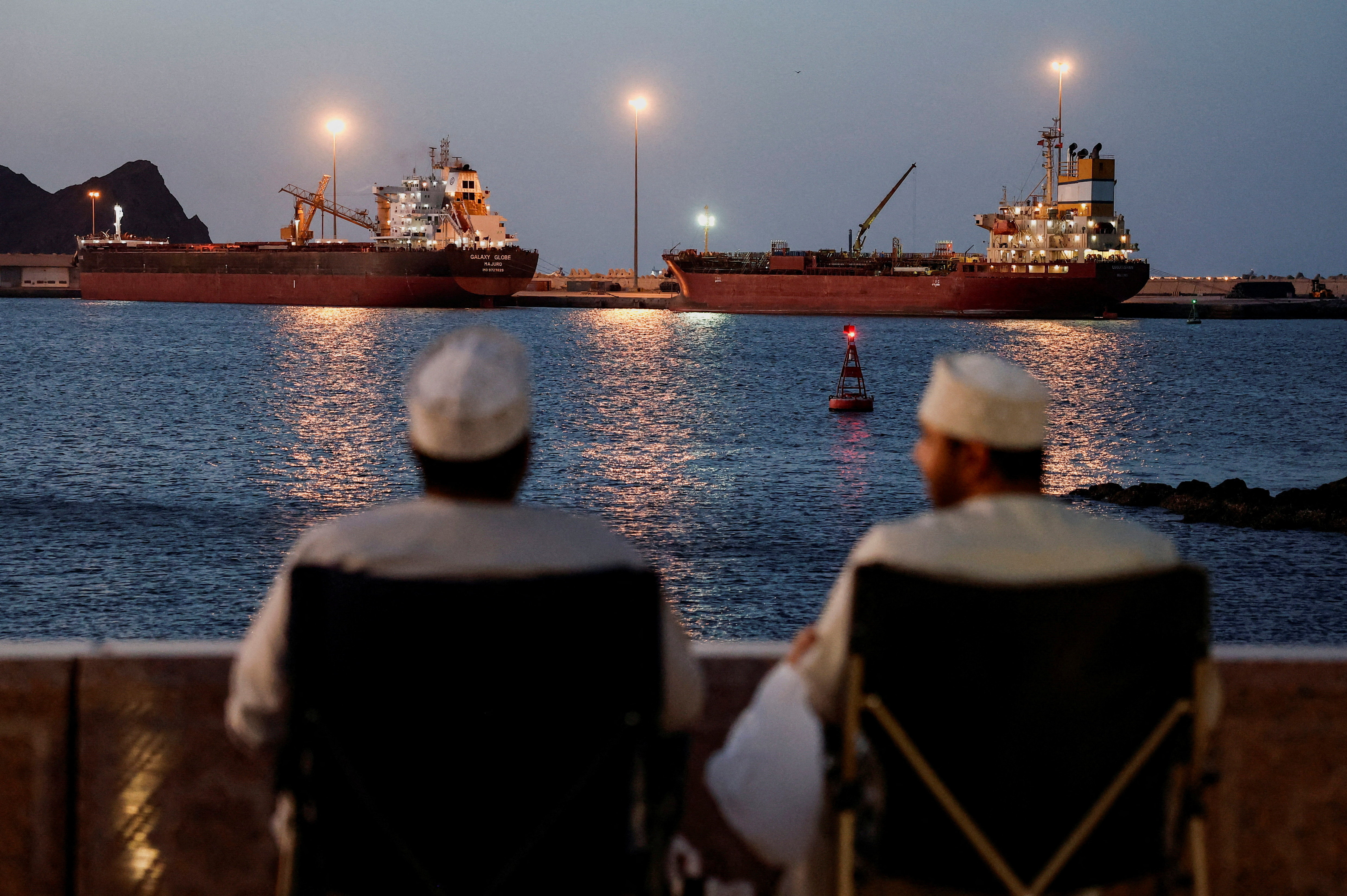
Dozens of tankers stranded inside the Persian Gulf have been exiting through Hormuz in recent weeks, according to CNBC, amid what the outlet described as quiet coordination with the U.S. Whether that coordination is the same operation Trump described Wednesday, or something separate, the administration did not specify.
The timing of the public disclosure is itself a question. Trump chose to reveal a covert military operation, apparently while it is still ongoing, to reporters in the Oval Office. He then posted the details on Truth Social. His stated rationale — that it demonstrates U.S. control of the Strait and Iran’s defeat — frames the leak as psychological pressure, a signal to Tehran that resistance has failed. Whether Iran, as Trump suggested, was genuinely unaware of the operations before Wednesday is unclear. Iranian state media and the IRGC had not commented on the disclosure as of Wednesday afternoon.
The broader context is a conflict now in its 103rd day, with active ceasefire negotiations proceeding alongside continued military exchanges. CENTCOM previously reported that 36 humanitarian vessels had cleared Hormuz even as the blockade redirected more than 127 other ships. U.S. forces conducted new airstrikes on Iranian targets near the Strait late Tuesday after Tehran shot down a U.S. Apache helicopter over the waterway. Iran’s foreign minister said the country’s armed forces are “on constant alert for any violation of Iran’s airspace, land or waters.” Iranian President Masoud Pezeshkian said Iran would “stand firm.” A senior White House official told Politico that despite the new strikes, a deal with Tehran remains “still close.”
Against that backdrop, Trump’s decision to publicly claim credit for a secret tanker escort operation that his own Energy Secretary hadn’t publicly acknowledged carries a distinct operational risk: it removes whatever plausible deniability the administration had retained about the Strait’s status, tells Iran precisely where the vulnerability in its blockade strategy lies, and does so at the moment negotiations are reportedly nearing a conclusion. Whether that was a calculated pressure move or a characteristic impulse toward public credit-claiming is a distinction the administration has not offered to make.
What the administration also has not clarified is whether the 100 million barrels figure is independently verifiable. The Hormuz crisis sent global energy markets into panic when it began, with private shipping data and government claims diverging repeatedly throughout the conflict. MarineTraffic, the ship-tracking service, reported the 70 percent drop in maritime traffic that followed the February 28 strikes. No independent shipping tracker or energy analyst had publicly confirmed a resumption of flows at the scale Trump described before the president himself announced it.
Energy Secretary Wright, who in March both announced and retracted a claim about naval escorts in the space of thirty minutes, did not address the 100 million barrel figure or the covert operation in public comments Wednesday. The administration has also not said whether the earlier signals of a potential US-Iran deal to reopen Hormuz remain operative alongside the covert escort operation — or whether Wednesday’s disclosure effectively replaces them.