
Global oil markets suffered one of their sharpest selloffs of the year on Wednesday after reports emerged that the United States and Iran were moving closer to a possible agreement aimed at easing tensions in the Strait of Hormuz, the world’s most critical energy chokepoint.
Investors across Wall Street, Europe, and Asia responded with sudden optimism that months of escalating confrontation in the Gulf could finally be entering a diplomatic phase. Brent crude plunged below the psychologically important $100-per-barrel level during intraday trading before recovering slightly later in the session, while West Texas Intermediate crude also recorded steep losses as traders rapidly unwound war-driven positions accumulated during the recent Iran conflict.
Reuters reported that oil prices fell sharply to two-week lows as optimism grew around a possible end to the war and the reopening of Gulf shipping lanes.
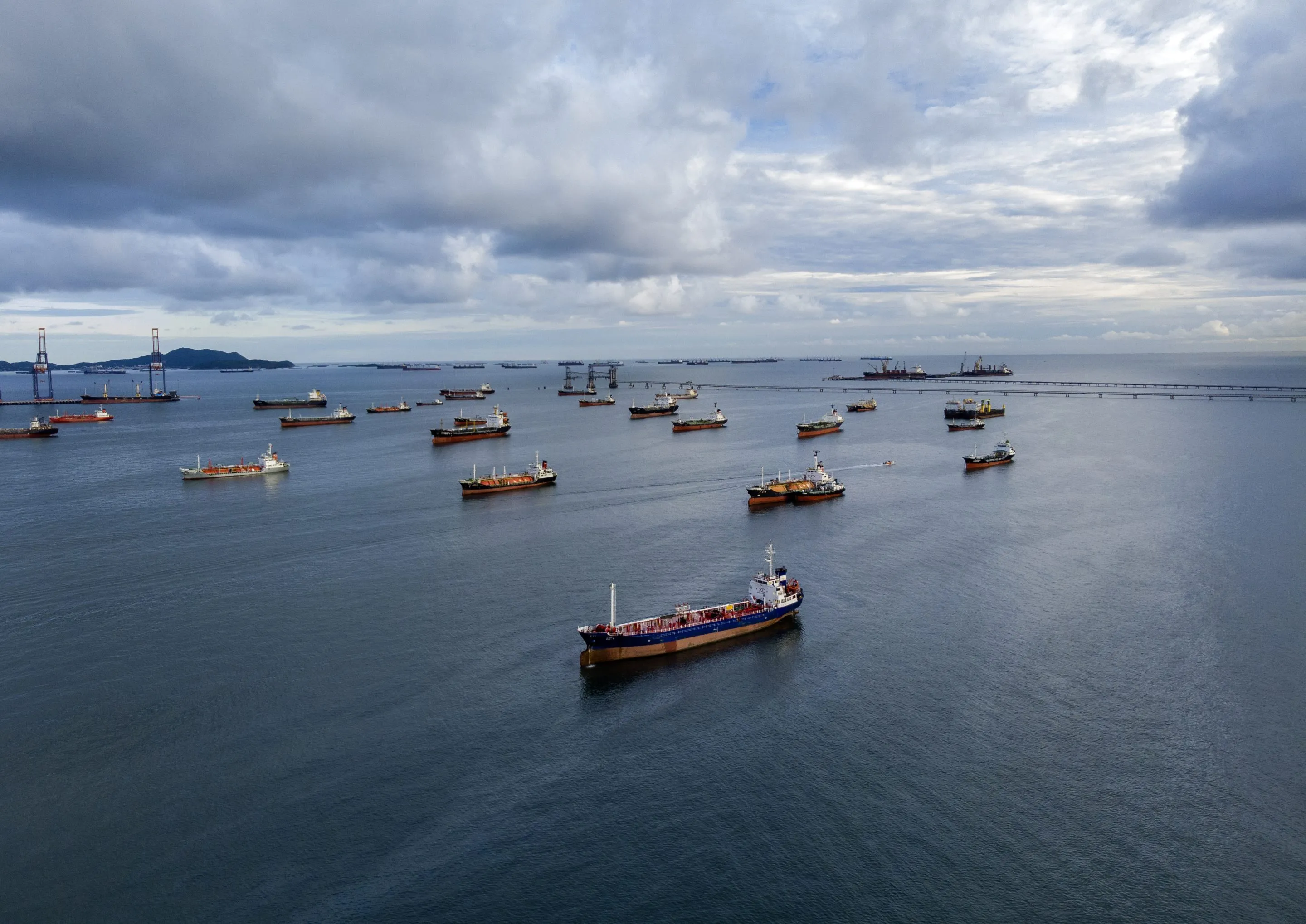
The dramatic market reversal followed reports that Washington and Tehran were discussing a preliminary framework that could pave the way for reopening of the Strait of Hormuz, through which roughly one-fifth of the world’s oil supply normally moves.
For weeks, fears surrounding the Middle East shipping crisis had pushed global energy prices sharply higher, triggering inflation concerns from Washington to New Delhi. The Strait of Hormuz became the epicenter of geopolitical anxiety after Iran imposed restrictions on maritime traffic following the outbreak of war with the US and Israel earlier this year.
The resulting Strait of Hormuz tensions rattled governments and central banks worldwide as energy traders warned that prolonged disruptions could destabilize the global economy.
President Donald Trump fueled speculation of a diplomatic breakthrough after publicly claiming that “great progress” had been achieved in talks with Tehran. The White House also confirmed a temporary pause in “Project Freedom,” a military operation designed to escort merchant ships through the strait under US naval protection.
That announcement immediately altered market sentiment.
Investors who had spent months pricing in the possibility of a prolonged Gulf conflict suddenly began betting on the restoration of oil flows, reduced shipping insurance costs, and the stabilization of global supply chains. Major airline stocks surged in Europe and the United States, while transportation and logistics companies also rallied on expectations that fuel prices could ease in the coming weeks.
According to Reuters and global market analysts, stocks surged and oil prices dropped after reports suggested a possible US-Iran memorandum could end hostilities and restore commercial shipping.
The geopolitical stakes remain enormous.
Since the start of the Iran war earlier this year, the Strait of Hormuz crisis has disrupted energy exports, damaged shipping confidence, and rattled governments dependent on Gulf crude. Analysts have repeatedly warned about rising global recession risk if the waterway remains unstable.
The International Energy Agency previously described the conflict as one of the most severe supply shocks in modern energy history.
Asian economies including China, India, Japan, and South Korea have been particularly vulnerable because of their heavy dependence on Gulf energy shipments. The crisis has intensified India’s fuel crisis, with mounting pressure on refiners and policymakers.
Despite Wednesday’s optimism, the situation remains highly fragile.
Iranian officials have not formally accepted any American proposal and continued to publicly insist that any agreement must be “fair and comprehensive.” Reuters reported that Tehran was reviewing a fresh US framework through diplomatic channels involving Pakistan.
At the same time, tensions inside the Gulf remain elevated. Earlier this week, regional clashes involving tankers and naval patrols reignited fears that military escalation could return at any moment. Reuters previously reported that oil prices jumped 6% after Iran intensified attacks near key shipping routes.
The broader crisis has kept the global oil lifeline at risk, with insurers, shipping firms, and commodity traders closely monitoring every military development.
Energy traders now appear caught between two competing realities: the possibility of a historic diplomatic de-escalation and the risk that negotiations could collapse suddenly.
The volatility reflects how deeply global markets remain tied to events in the Persian Gulf.
According to energy analysts, much of the recent oil rally was driven not by actual shortages alone but by fear premiums built into futures markets. As soon as reports emerged suggesting a reduction in military tensions, hedge funds and institutional traders rapidly reversed positions, accelerating the collapse in crude prices.
Earlier this month, Reuters warned that the Gulf confrontation could trigger a prolonged Asia battles rising energy crisis scenario as import-dependent economies absorb surging fuel costs.
The economic consequences of the conflict have already spread far beyond the Middle East.
In the United States, gasoline prices climbed to multi-year highs amid disruptions linked to the Gulf crisis. Reuters reported that average gasoline prices recently crossed $4.50 per gallon as the summer driving season approached.
European economies have also struggled with higher energy costs, while developing countries dependent on imported fuel have faced severe currency pressure and inflation shocks. Airlines worldwide have warned of rising operating costs, and several shipping firms rerouted vessels away from Gulf waters during the peak of the crisis.
The confrontation also fueled fears of a wider regional war involving multiple Gulf states and Western military alliances.
Meanwhile, financial markets responded enthusiastically to signs of possible stabilization.
Wall Street indexes climbed toward record highs, while European markets posted strong gains led by airline, tourism, and industrial stocks.
The Guardian reported that global stocks hit record highs as hopes of easing Gulf tensions spread through financial markets.
Investors interpreted the latest developments as evidence that the worst-case scenario of a prolonged Gulf blockade might be avoided.
Still, many analysts cautioned that the current optimism could prove temporary.
The broader conflict involving Iran, Israel, and the United States has repeatedly shifted between military escalation and diplomatic maneuvering over recent months. Previous ceasefire efforts and negotiations have collapsed amid mutual accusations and renewed confrontations at sea.
Analysts also warned that the current market calm could quickly reverse if commercial passage through the strait deteriorates again. Reuters recently reported that an LNG tanker crosses Strait of Hormuz event was being closely watched as a signal of fragile stability.
The ongoing turmoil has already evolved into a wider global energy crisis, reshaping inflation forecasts, monetary policy expectations, and geopolitical calculations across multiple continents.
Wall Street optimism intensified further after Wall Street indexes climbed toward record highs on renewed hopes of a diplomatic breakthrough.
For now, global markets appear willing to believe that a breakthrough may finally be possible.
Whether that optimism survives the next phase of negotiations could determine not only the future of oil prices, but also the trajectory of the global economy in the months ahead.