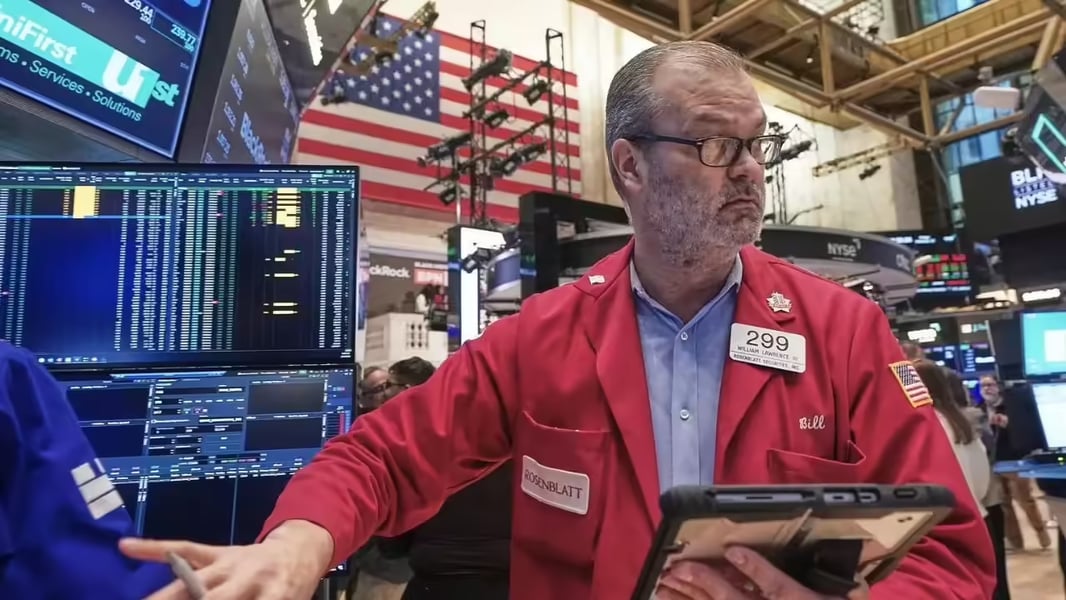

Wall Street surged to historic highs on Wednesday as investors poured money into artificial intelligence giants and semiconductor firms, betting that easing tensions around Iran and falling oil prices could remove one of the biggest threats hanging over the global economy.
The benchmark indexes, the S&P 500 and Nasdaq Composite, climbed to fresh record highs during trading, extending one of the most aggressive tech-fueled rallies in recent years. The Dow Jones Industrial Average also jumped sharply, reflecting broad optimism across financial markets.
At the center of the rally was renewed investor confidence that a wider regional conflict involving Iran and the Strait of Hormuz might be avoided, at least temporarily. Reports that Washington and Tehran were exploring a framework for de-escalation triggered a steep decline in global oil prices, calming fears of an energy shock that had rattled markets earlier in the week.
Brent crude prices, which had surged above $110 a barrel during the latest escalation in the Gulf, fell dramatically as traders anticipated the possibility of uninterrupted shipping through the Strait of Hormuz, one of the world’s most strategically important oil routes. According to Oil and gas prices fall sharply amid hopes of a US-Iran breakthrough, markets reacted swiftly to signs of easing tensions.
The sudden reversal in oil markets sent investors back into high-growth technology stocks, particularly companies tied to artificial intelligence infrastructure, cloud computing, and advanced semiconductors.
Shares of Advanced Micro Devices soared after the chipmaker delivered stronger-than-expected earnings and raised its revenue outlook on booming AI demand. The company’s data center business expanded sharply, underscoring how aggressively corporations are spending on AI infrastructure despite lingering economic uncertainty.
The rally spread rapidly across the semiconductor sector. Nvidia climbed further as investors continued treating the company as the central pillar of the global AI boom, while Super Micro Computer and Intel also posted major gains.
Analysts said markets are increasingly behaving as though artificial intelligence has become the dominant force shaping corporate profitability, overshadowing concerns about inflation, interest rates, and geopolitical instability.
The AI rally has transformed Wall Street’s leadership structure over the past year, concentrating investor enthusiasm in a relatively small group of technology firms with exposure to data centers, cloud infrastructure, and AI software ecosystems.
Reuters noted in Trading Day: AI optimism drives global equities higher that investors continue flooding into AI-linked companies despite mounting geopolitical risks.
At the same time, falling oil prices provided additional relief to traders worried that escalating conflict in the Middle East could reignite global inflation pressures.
Only days earlier, markets had been shaken by fears that military escalation involving Iran could disrupt energy shipments through the Strait of Hormuz, through which roughly one-fifth of global oil supplies move daily. Earlier volatility had already triggered fears of a broader financial shock, similar to the scenario described in Wall Street crash deepens as oil shock and Iran crisis trigger global market panic.
But Wednesday’s trading session marked a dramatic reversal.
Airline stocks, consumer companies, and growth-focused technology firms all advanced as investors interpreted the drop in oil prices as a sign that inflationary pressure on the global economy could ease in the months ahead.
US-Iran tensions in the Strait of Hormuz continue reshaping global oil markets and investor sentiment.
The rally also reflected broader confidence that the US economy remains resilient despite higher borrowing costs and persistent global instability. New labor market data showing continued private-sector hiring helped reinforce the perception that economic activity remains strong enough to support corporate earnings growth.
Still, some analysts warned that Wall Street may be underestimating the longer-term risks tied to Middle East instability and elevated market valuations.
While markets celebrated the prospect of de-escalation, there was no formal agreement announced between Washington and Tehran, and uncertainty continued to surround the future of sanctions, regional security arrangements, and nuclear negotiations.
Markets had already endured weeks of turbulence as oil volatility repeatedly shook investor confidence. Earlier episodes of uncertainty were reflected in Global stocks slide as oil shock and Iran war crush rate cut hopes and Wall Street swings as Iran tensions and oil shock rattle global markets.
Investors are also increasingly concerned that the extraordinary concentration of gains in AI-related stocks could expose markets to sharp volatility if earnings growth slows or enthusiasm around artificial intelligence begins to cool.
The latest surge has already pushed valuations across parts of the tech sector to levels that some economists compare to previous speculative periods in Wall Street history.
Yet for now, investor appetite for AI exposure appears overwhelming.
The Nasdaq has repeatedly broken records in recent weeks as global capital continues flowing into companies viewed as essential to the future of artificial intelligence. Analysts say institutional investors fear missing out on what could become the most transformative technological expansion since the rise of the internet.
Reuters reported in S&P 500 and Nasdaq hit record highs on AI optimism and Iran peace hopes that the combination of falling oil prices and booming AI demand accelerated investor confidence across Wall Street.
Even traditional market concerns such as Federal Reserve policy, Treasury yields, and slowing global manufacturing activity have struggled to derail the momentum.
Instead, traders are increasingly focusing on whether AI-driven productivity gains and falling energy prices can sustain corporate profitability well into 2027.
The combination of easing oil markets, strong earnings, and relentless AI optimism has created a powerful narrative driving global equities higher.
Recent rebounds have mirrored trends outlined in Dow, S&P 500 and Nasdaq rebound on Iran war de-escalation hopes and US stock market rebounds as AI stocks rally, where investors aggressively returned to technology shares after oil market fears temporarily eased.
Whether that optimism survives another geopolitical shock may determine how long Wall Street’s historic rally can continue.