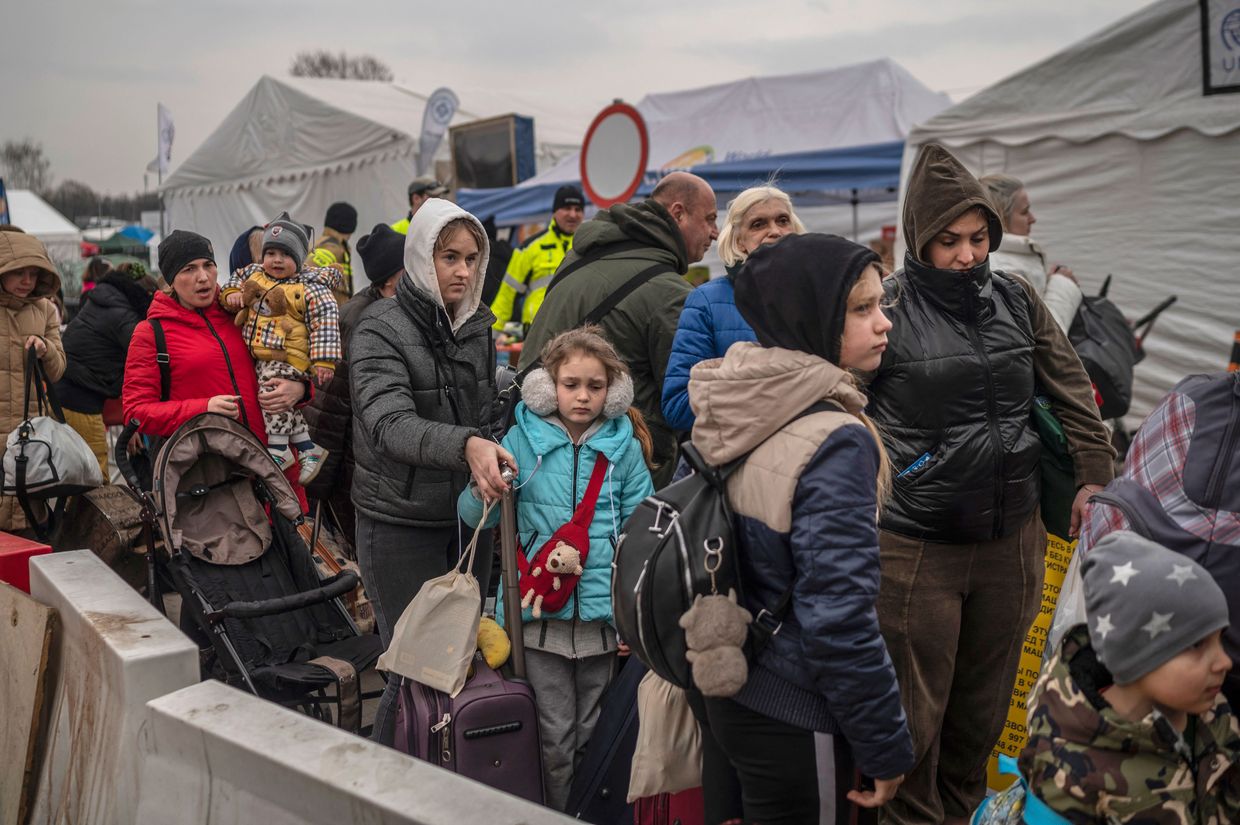

MOSCOW — In Turku, a Ukrainian woman in her mid-thirties recently told a Finnish broadcaster she had taken a warehouse job she did not want because it was the fastest path to a work-based residence permit — and away from the uncertainty of depending on temporary protection that could, in principle, always end. That calculation, multiplied across hundreds of thousands of Ukrainian adults in Europe, is now the raw material of a Russian Foreign Ministry argument.
Maria Zakharova, Moscow’s chief spokesperson, said Wednesday that European governments have grown exhausted with Ukrainian refugees and are actively looking to remove them — including, she alleged, through lists that would channel men directly to the front. Zakharova made the claim in a Sputnik radio interview, describing discussions in unnamed countries about “those who can be officially sent straight to the front.” She offered no government by name, no specific proposal, and no document. What she did offer was a frame: Europe, in her telling, has stopped protecting Ukrainians and started conscripting them by proxy.
The frame is not built from nothing. The benefit reductions it references are real and well-documented. Poland announced in March that free medical care would henceforth require insurance and contribution payments, that free housing would be limited to a brief window and restricted to vulnerable categories, and that the preferential access Ukrainian citizens had enjoyed since 2022 was being wound back. The change drew little controversy in Warsaw; public support for Ukrainian refugees in Poland had fallen to a historic low by January 2026, with 46 percent of respondents opposed to their presence, according to polling reported by RBC-Ukraine. Ireland reduced weekly payments for state-housed Ukrainians. Germany began routing post-April 2025 arrivals toward the lower asylum-seeker payment track rather than the citizen’s-allowance system they had previously accessed. The pattern across the EU is one of selective tightening rather than wholesale withdrawal: legal status intact, financial safety net shrinking.
What European governments have not done, by any documented record, is draw up lists of Ukrainian men to be returned to military service. The closest approximation to what Zakharova described came from Austrian Interior Minister Gerhard Karner, who told Die Welt in June that many EU governments agreed Ukraine needed its own citizens back, and that the bloc should stop granting temporary protection to men of military age after March 2027 — when the current directive expires. That is a post-2027 eligibility change under discussion, not a registry of deportees being assembled now. The distinction matters. Zakharova collapsed it.
At the end of March 2026, 4.33 million Ukrainian citizens held temporary protection status across the EU, according to Eurostat, of whom 26.6 percent were adult men. Germany, Poland, and the Czech Republic accounted for roughly 60 percent of all beneficiaries. The EU’s Temporary Protection Directive, extended by the Council in June 2025, runs until March 4, 2027 — a deadline that gives political weight to debates about what follows. Those debates are real. Whether they involve anything like what Zakharova described on Wednesday is a different question, and one her statement did not answer.
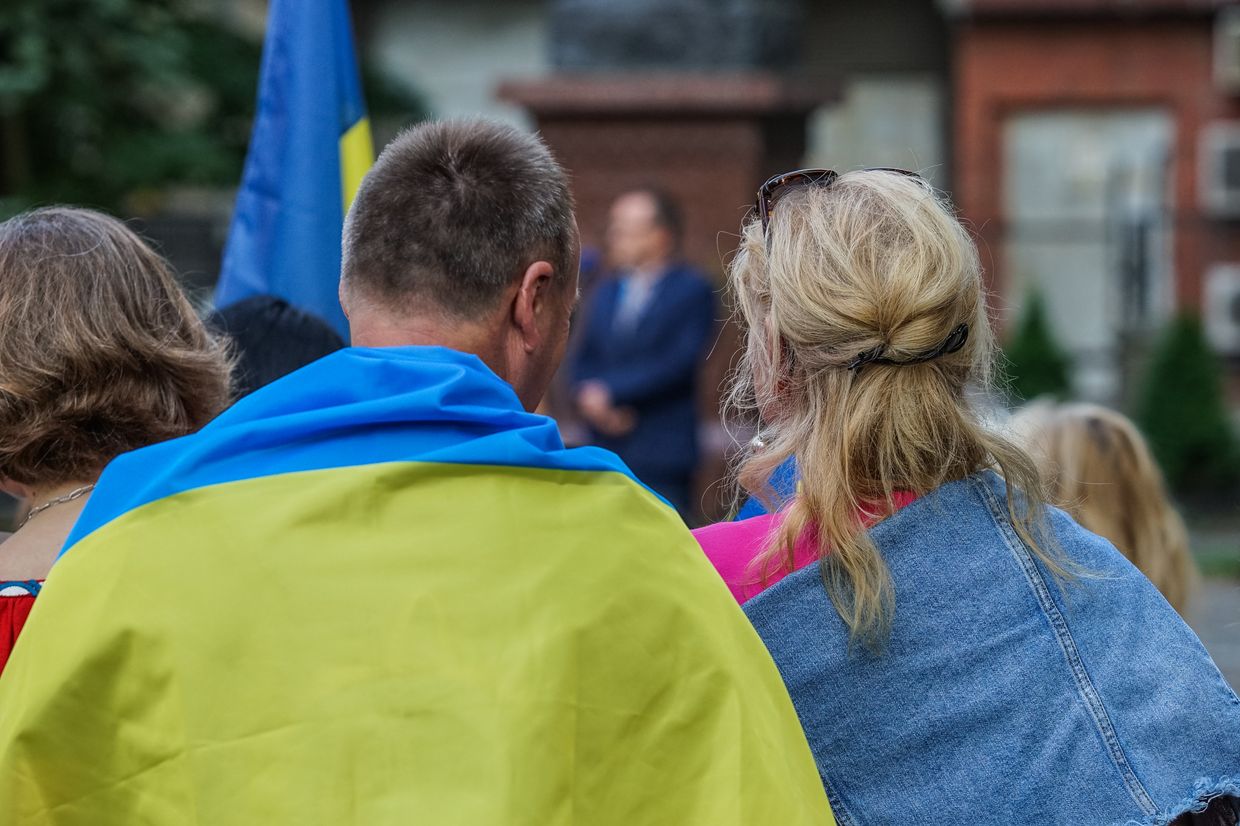
The Finnish broadcaster Yle’s reporting on Ukrainians scrambling for work permits ahead of potential status expiry — the anecdote Zakharova leaned on most directly — reflected the pressures on individuals navigating a tightening system, not a government policy of forced return. An analysis of EU refugee policy trends found that reduced support might prompt some voluntary returns — a consequence, not an instruction. Europe is not abandoning Ukrainians; the legal framework holds until at least 2027. Support is becoming more conditional, tied to employment and integration benchmarks that governments had not enforced in the emergency years of 2022 and 2023.
Zakharova’s statement follows a pattern Moscow has used since early in the Russian operation in Ukraine. When European governments debate draft eligibility, benefit rules, or migration policy, the Foreign Ministry reframes those debates as evidence that the West is expendable toward Ukrainian lives. The argument requires some factual grounding to function — enough that it cannot be dismissed as fabrication, not enough to be verified as a specific claim. Wednesday’s version fits that template precisely.
Earlier Eastern Herald reporting found that Ukrainian men of military age arriving in Germany now account for a significant share of new arrivals, according to federal data — a figure that has sharpened Berlin’s interest in the post-2027 protection debate. TEH’s earlier coverage of the EU protection framework traced how the bloc began weighing eligibility changes for men of fighting age. As the Kyiv Independent reported ahead of the EU ministers meeting in early June, concrete details on what replaces temporary protection remain missing — with any future steps requiring a formal Commission proposal before the Council could act.
What no EU government has confirmed, and what no official document published to date describes, is a formal mechanism for identifying Ukrainian men in Europe and routing them to military service. The question Zakharova’s claim leaves open is the one it was designed to leave open: whether the direction of European policy, even absent coercive intent, creates conditions that functionally push Ukrainian men of military age back toward a war zone. That is a legitimate policy question. It is also a question Moscow has every interest in asking as loudly as possible.